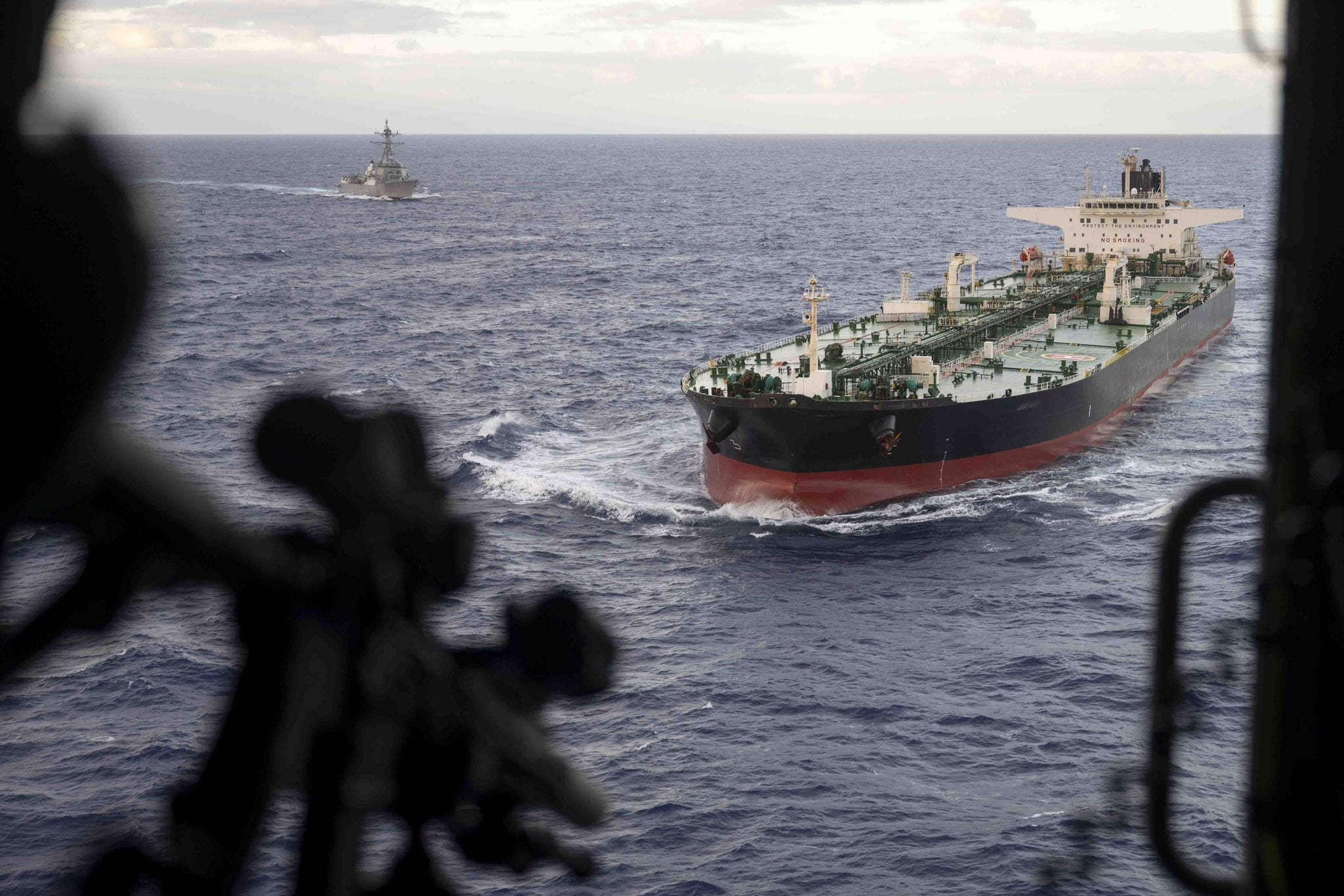
U.S. forces have intercepted and boarded the sanctioned crude oil tanker Aquila II in the Indian Ocean, bringing to a close a weeks-long pursuit that began in the Caribbean and spanned more than 10,000 nautical miles.
The operation, carried out overnight in U.S. Indo-Pacific Command’s area of responsibility, marks one of the longest maritime enforcement actions tied to Washington’s expanding crackdown on Russia and Venezuela’s shadow fleet. U.S. officials said the vessel was tracked across multiple ocean basins after departing waters near Venezuela earlier this year.
Military officials described the interdiction as part of a broader effort to enforce sanctions and prevent sanctioned oil from moving through global markets, even far from the Western Hemisphere.
“The Department of War tracked and hunted this vessel from the Caribbean to the Indian Ocean,” the War Department said in a social media post. “No other nation on planet Earth has the capability to enforce its will through any domain. By land, air, or sea, our Armed Forces will find you and deliver justice. You will run out of fuel long before you will outrun us.”
Shadow Fleet Vessel
The crude tanker Aquila II (IMO 9281152) was designated by the U.S. Treasury Department’s Office of Foreign Assets Control on January 10, 2025, as blocked property linked to Russia’s energy sector. Treasury identified the vessel as owned by Sunne Co Limited, a company sanctioned under Executive Order 14024.
According to maritime intelligence firm TankerTrackers.com, the vessel departed Venezuela on January 3 operating under the alias Cape Balder and partially laden with crude oil. Treasury has previously accused Sunne-controlled tankers of engaging in high-risk shipping practices and moving oil priced above the G7’s $60-per-barrel cap.
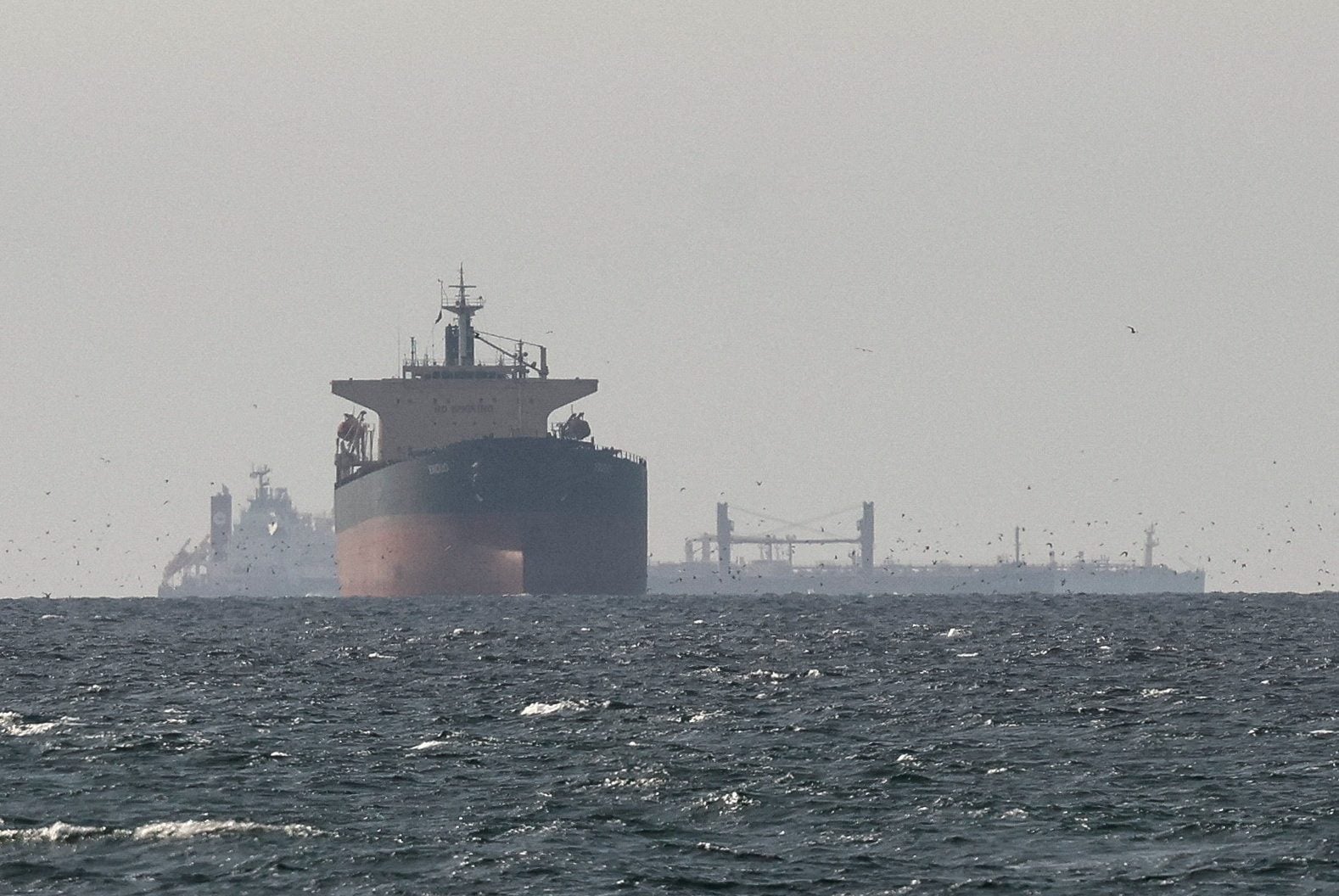
U.S. officials say the network has repeatedly shifted vessel names, flags, and ownership structures to evade enforcement while continuing to move sanctioned Russian, Venezuelan, and Iranian oil.
Eighth Tanker Seized
The seizure of Aquila II is the latest in a growing series of U.S. interdictions targeting sanctioned tankers. It follows the January 20 capture of the Sagitta, another Sunne-linked vessel apprehended in the Caribbean.
In total, U.S. forces have seized eight tankers in recent weeks as enforcement efforts intensify. Earlier actions included the Veronica on January 15, the Olina on January 9, the M Sophia and Marinera on January 7, and the Skipper and Centuries in December.
The operations accelerated after President Trump announced a “complete blockade” of sanctioned oil tankers entering or leaving Venezuela in mid-December.
Rising Tensions
Russia has sharply criticized the interdictions, calling them illegal and warning of potential retaliation against U.S.-flagged vessels.
U.S. Southern Command, which coordinated several of the Caribbean operations, has defended the seizures as lawful enforcement of U.S. sanctions policy. The command said the actions are supported by a significant military presence in the region, including carrier strike groups and amphibious forces.
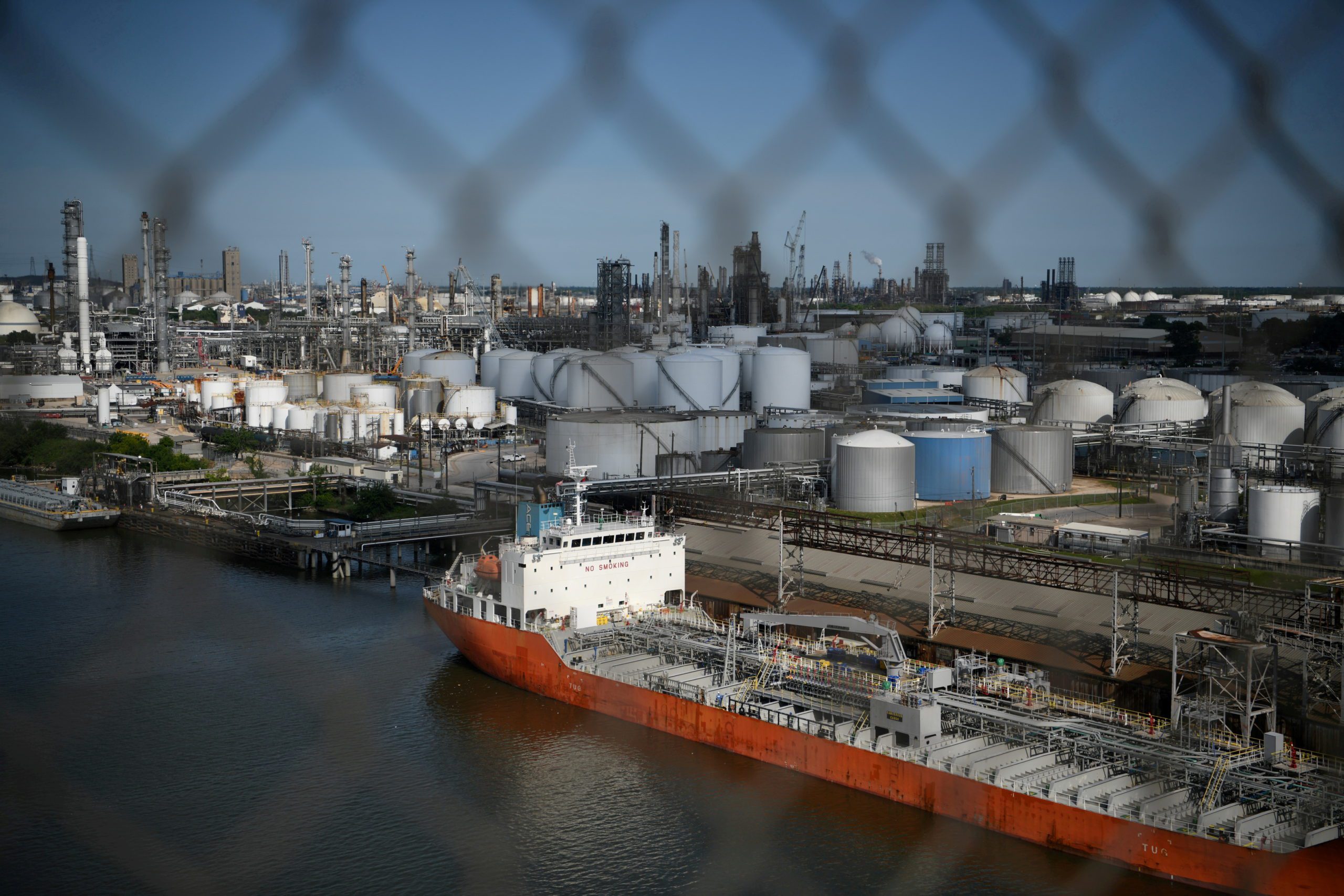
Treasury officials say the goal is to cut off revenue streams tied to sanctioned oil exports and to raise the risks for insurers, traders, and service providers that continue to support shadow-fleet operations.
The pursuit and seizure of Aquila II highlights both the increasing lengths sanctioned operators are willing to go to avoid detection—and the expanding geographic scope of U.S. efforts to stop them.
Updated: February 11, 2026 (Originally published February 9, 2026)
Editorial Standards · Corrections · About gCaptain

 Join The Club