The United States has formally ended its maritime blockade of Iran, with U.S. Central Command announcing Wednesday that all enforcement operations targeting vessels entering or leaving Iranian ports have ceased, while a new maritime advisory confirms that the Strait of Hormuz has reopened to commercial shipping.
“Today, U.S. forces lifted the blockade on all maritime traffic entering and exiting Iranian ports and coastal areas, in accordance with the President’s direction,” CENTCOM said in a statement. “American forces are not impeding the transit of vessels to or from Iranian ports on the Arabian Gulf and Gulf of Oman. All U.S. military blockade enforcement efforts have ceased.”
The announcement marks the clearest operational shift yet following the memorandum of understanding signed by Washington and Tehran aimed at ending months of conflict that disrupted one of the world’s most strategically important waterways.
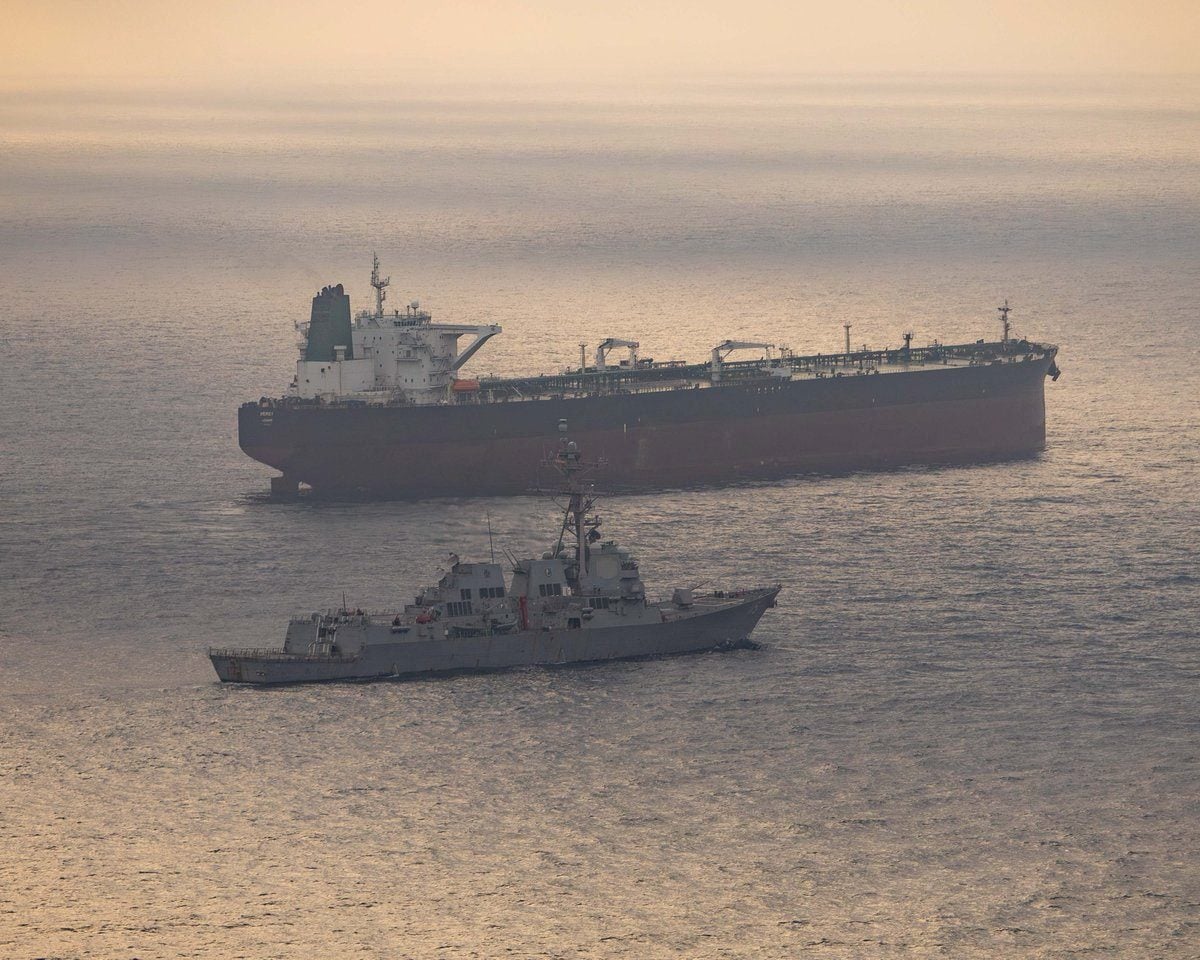
While the blockade has been lifted, CENTCOM said U.S. naval forces will remain in the region to oversee implementation of the agreement.
“Our great Naval Ships will remain in the general area to make sure that all aspects of the agreement are adhered to, obeyed and in full force and effect,” the statement said.
Separately, the Joint Maritime Information Center (JMIC) issued a new advisory declaring that the Strait of Hormuz is open and that blockade operations have ceased. The advisory reduced the regional maritime security threat level to MODERATE, citing the stated intentions of both the United States and Iran to reopen the waterway.
However, JMIC cautioned that the reopening does not mean a return to normal operations. The advisory warns mariners that active mine-clearance operations remain underway and that the International Traffic Separation Scheme—the primary shipping channel through the strait—should be avoided because of the presence of mines. JMIC disclosed one confirmed mine location and said updated charts of likely mined areas are available on request.
Instead, the organization said the southern transit route along Omani territorial waters has been confirmed clear of mines and is the recommended passage for vessels. JMIC added that several additional routes remain available and published a corridor of waypoints that it said had “proven safe” for commercial transits.
The guidance effectively formalizes what had previously been an improvised wartime arrangement. During the conflict, commercial ships transited the Strait along a so-called Deep South Route hugging Omani waters under close coordination with U.S. naval forces. That corridor now appears set to remain the primary shipping lane while mine-clearance efforts continue in the traditional channel.
As of June 14, CENTCOM forces had redirected 142 commercial ships that complied with blockade orders and disabled nine vessels that did not comply.
Although the lifting of the blockade removes the most immediate military restrictions on commercial shipping, the latest advisory makes clear that navigation through the Strait remains a carefully managed operation.
Mariners are being instructed to maintain contact with NAVCENT’s Naval Cooperation and Guidance for Shipping office for information regarding safe transit routes and should expect naval activity, congestion and VHF hailing as vessels begin returning to the waterway.

 Join The Club