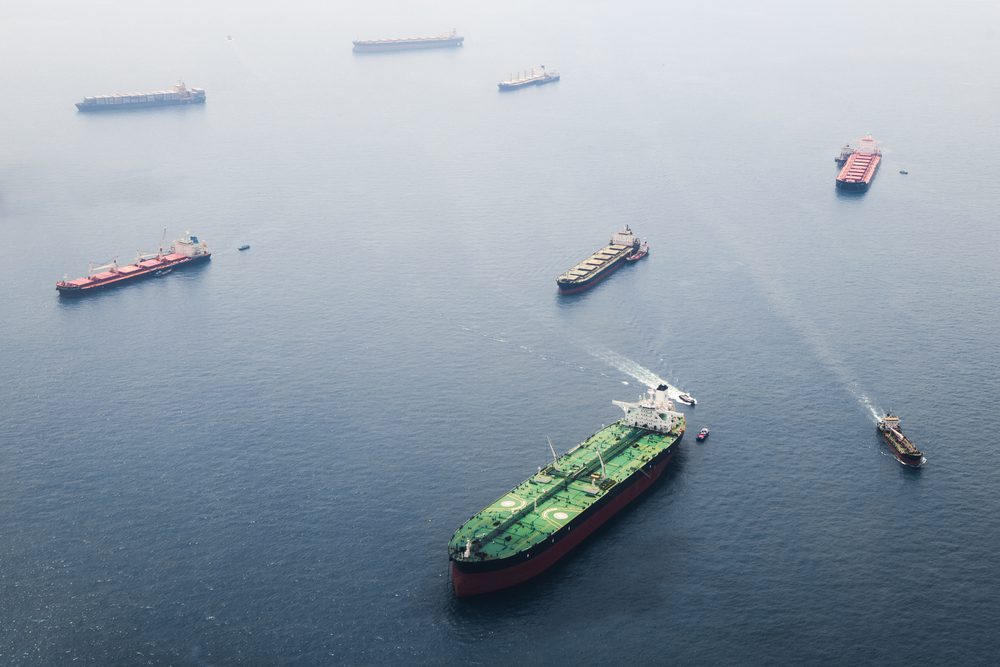
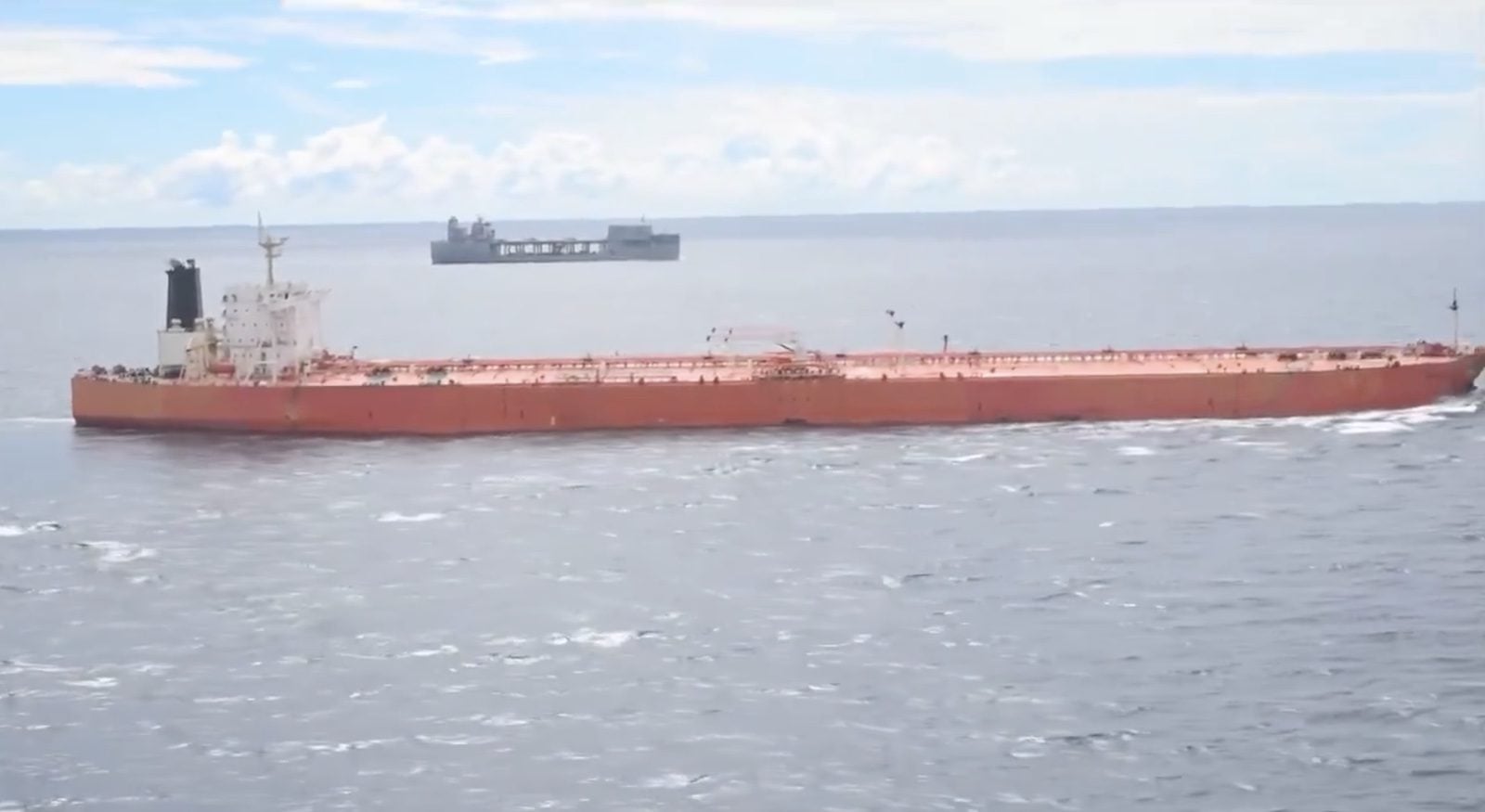
President Donald Trump said Tuesday he has directed the U.S. government to provide political risk insurance and financial guarantees for maritime trade transiting the Persian Gulf, while signaling that U.S. Navy escorts for tankers through the Strait of Hormuz could begin “as soon as possible.”
In a post on Truth Social, Trump wrote: “Effective IMMEDIATELY, I have ordered the United States Development Finance Corporation (DFC) to provide, at a very reasonable price, political risk insurance and guarantees for the Financial Security of ALL Maritime Trade, especially Energy, traveling through the Gulf. This will be available to all Shipping Lines.”
He added: “If necessary, the United States Navy will begin escorting tankers through the Strait of Hormuz, as soon as possible. No matter what, the United States will ensure the FREE FLOW of ENERGY to the WORLD.”
The announcement comes as the marine insurance market rapidly retrenches from the region following U.S. and Israeli strikes on Iran and a concentrated wave of missile and drone attacks targeting commercial vessels in Gulf waters.
Over the weekend, multiple members of the International Group of P&I Clubs — which collectively insure roughly 90% of the world’s ocean-going tonnage — issued 72-hour cancellation notices for certain war risk covers tied to Iran and adjacent Gulf waters. The Group said it is “monitoring closely the developments over the weekend and the military operations currently taking place in the Persian Gulf,” and would notify stakeholders of any changes to mutual cover.
At the same time, London’s Joint War Committee expanded its designated high-risk areas to include waters around Bahrain, Djibouti, Kuwait, Oman and Qatar “in light of recent events,” according to a market advisory reported by Reuters. Gulf war risk premiums have risen fivefold in recent days compared with last week, adding hundreds of thousands of dollars in additional cost per voyage, Reuters reported.
The tightening insurance environment has coincided with a sharp collapse in vessel movements through Hormuz. The Joint Maritime Information Center elevated the regional maritime threat level to CRITICAL this week, stating that “insurance availability may now act as a primary gating factor for transit decisions independent of formal navigational closure.” AIS data indicates transits have fallen by roughly 80% from historical averages as operators reassess exposure.
Against that backdrop, Trump’s directive appears aimed squarely at the insurance choke point. The United States International Development Finance Corporation typically provides political risk insurance and financing support for overseas development projects. Expanding its mandate to backstop commercial maritime flows through an active conflict zone would represent an extraordinary intervention into global shipping markets.
Trump framed the move as both an economic and security imperative. “The United States’ ECONOMIC and MILITARY MIGHT is the GREATEST ON EARTH — More actions to come,” he wrote.
The potential for U.S. naval escorts introduces another significant variable. The United States Navy has previously conducted convoy and reflagging operations in the Gulf during periods of heightened tension, most notably during the late-1980s tanker war. Whether any new escort mission would apply solely to U.S.-flag vessels or extend to foreign-flag tankers remains unclear.
No formal closure of the Strait of Hormuz has been declared. However, confirmed projectile and drone strikes against multiple vessels in recent days, coupled with persistent GPS interference and insurer withdrawal, have effectively curtailed traffic through one of the world’s most critical energy chokepoints.

 Join The Club