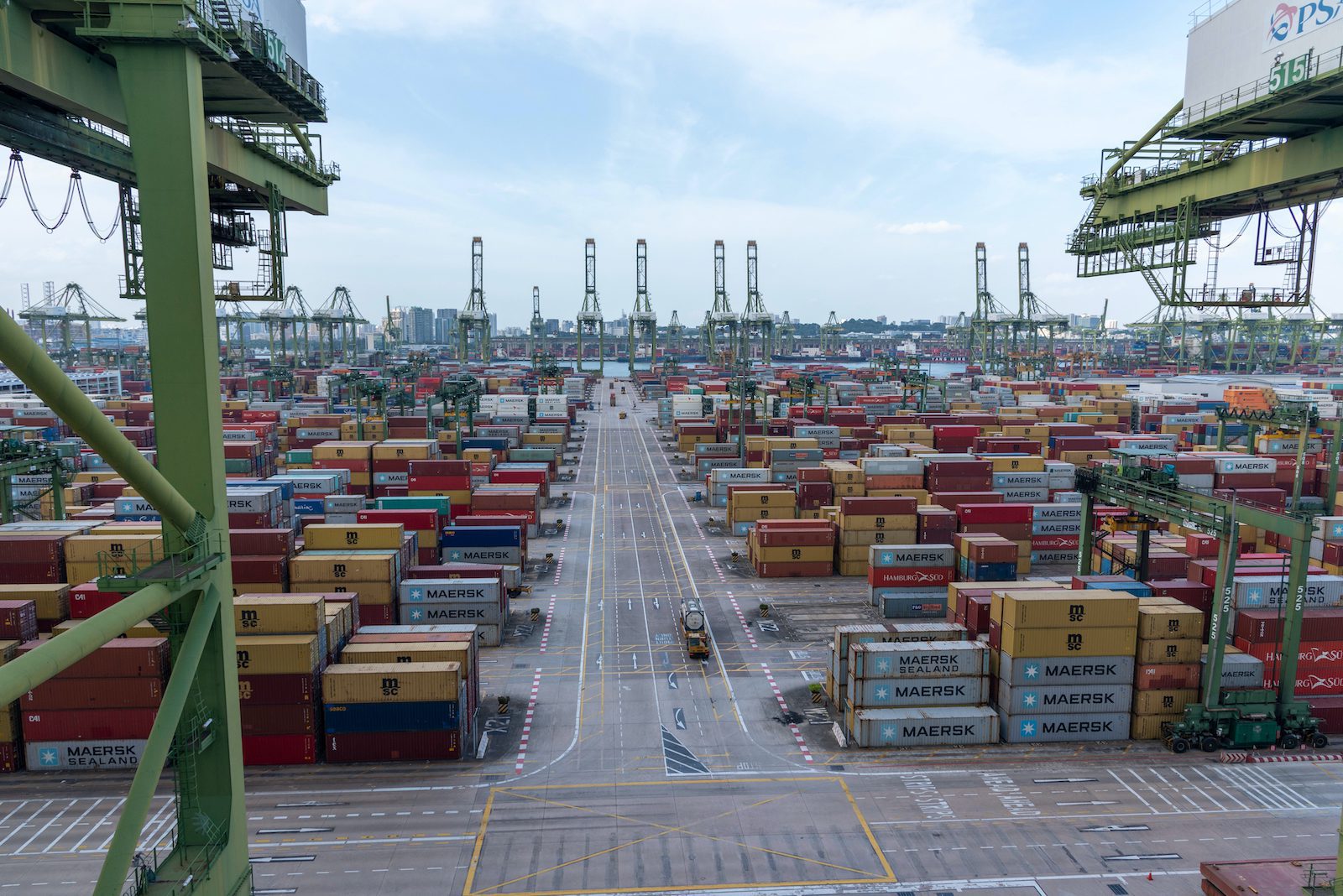
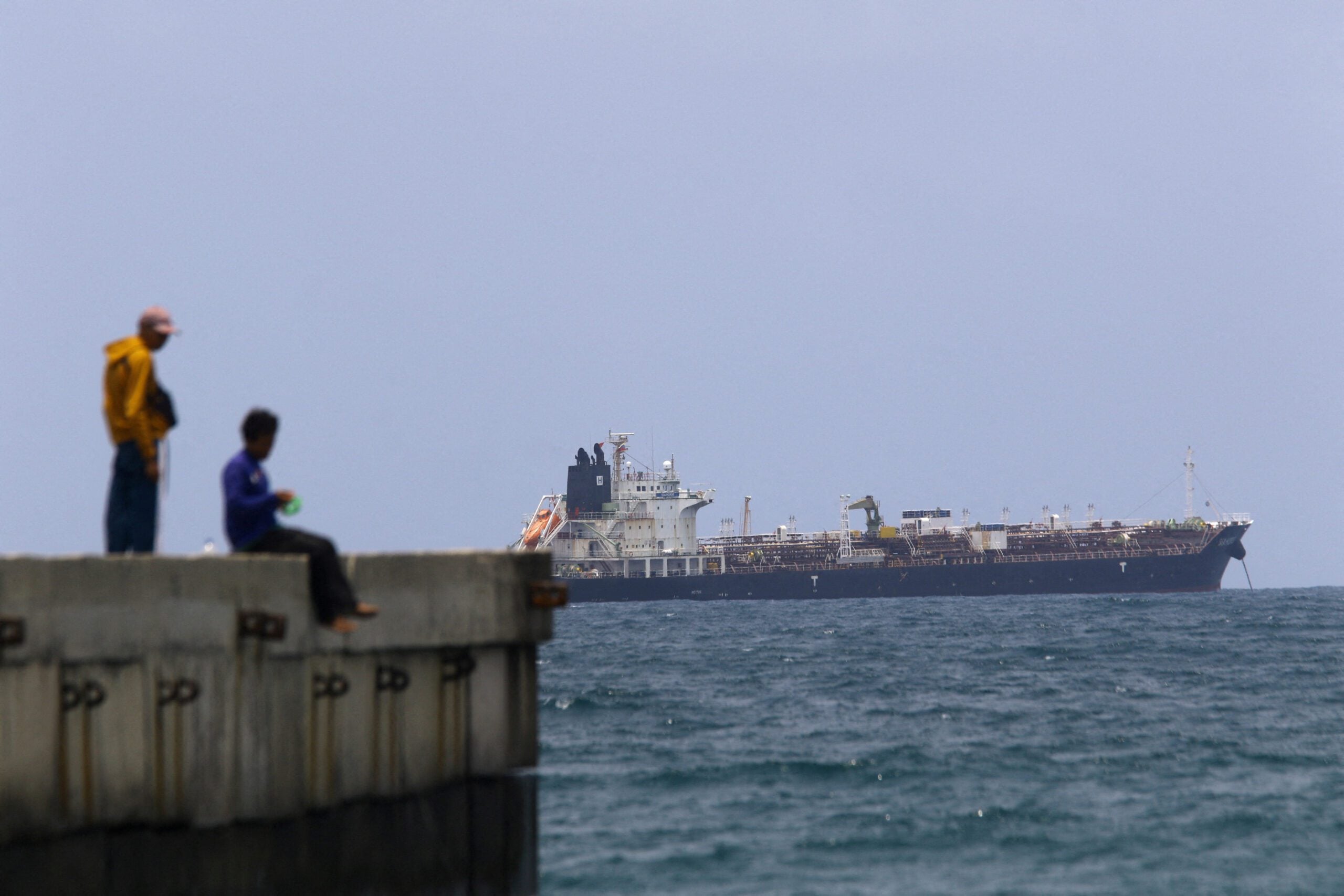
Key transhipment ports around the world are facing severe congestion in response to the Red Sea crisis, with Singapore being a prime example.
The escalating crisis is due to abrupt changes in carrier service patterns and vessel reroutings, leading to increased yard congestion and declining port productivity, according to a new report from maritime consultancy firm Drewry.
Singapore, among other transhipment ports, is now grappling with a backup of shipping containers that rivals peak levels seen during the pandemic surge.
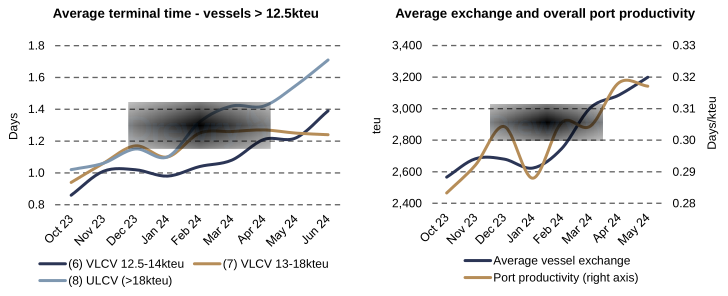
Despite an 8% YoY increase in throughput at Singapore port in the five months leading up to May, port productivity has suffered from a 22% increase in average parcel sizes, according to Drewry’s quarterly Ports and Terminals Insight report. The report reveals the handling time for 1,000 twenty-foot equivalent units (TEU) has risen by 10% to 0.32 days, translating to a 41% increase in exchange times for Ultra Large Container Vessels, from 1.1 days in January to 1.7 days in May.
Drewry pointed out that the current congestion differs from the pandemic-era congestion, which primarily impacted gateway ports due to high cargo demand and inland transport congestion. In contrast, the current crisis is directly affecting transhipment hubs due to drastic changes in individual exchanges.
The alignment of mainline-mainline vessel transfers has also been complicated by a high number of blank sailings, congested yards, off-window arrivals, and the prioritization of mainline vessels over feeder vessels, disrupting mainline-feeder services.
Drewry predicts that congestion at major transhipment ports will continue to be a significant issue. However, a slight relief is expected as carriers introduce additional capacity and restore some of their disrupted schedules.
Saudi Arabia is planning an offensive against Iran-backed Houthi militants in Yemen, with options being considered including a coastal push to secure the Red Sea shipping route or an assault on multiple fronts, regional and Western officials told Reuters.
The Drewry World Container Index edged lower this week as falling Asia-Europe rates outweighed firmer pricing on the Transpacific, with carriers preparing another round of blank sailings ahead of China’s...
Diesel prices have rallied in Europe and the United States to record highs as wars in Iran and Ukraine sharply cut exports from some of the biggest producers such as Russia, Saudi Arabia and the United Arab Emirates, with little options to prevent further gains.
September 21, 2026
Total Views: 1121
Get The Industry’s Go-To News
Subscribe to gCaptain Daily and stay informed with the latest global maritime and offshore news
— just like 106,954 professionals
Secure Your Spot
on the gCaptain Crew
Stay informed with the latest maritime and offshore news, delivered daily straight to your inbox
— trusted by our 106,954 members
Your Gateway to the Maritime World!
Essential news coupled with the finest maritime content sourced from across the globe.

 Join The Club