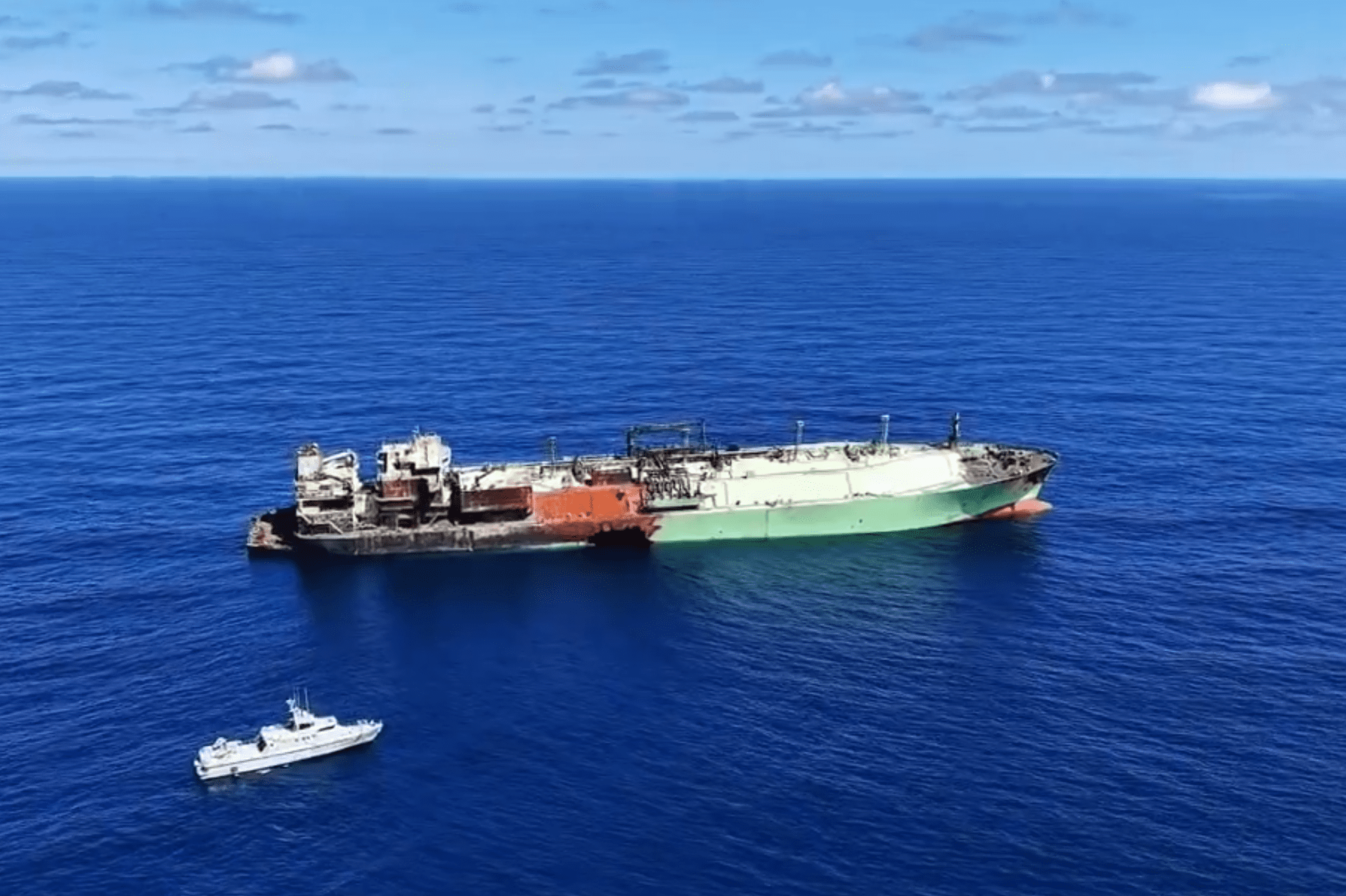
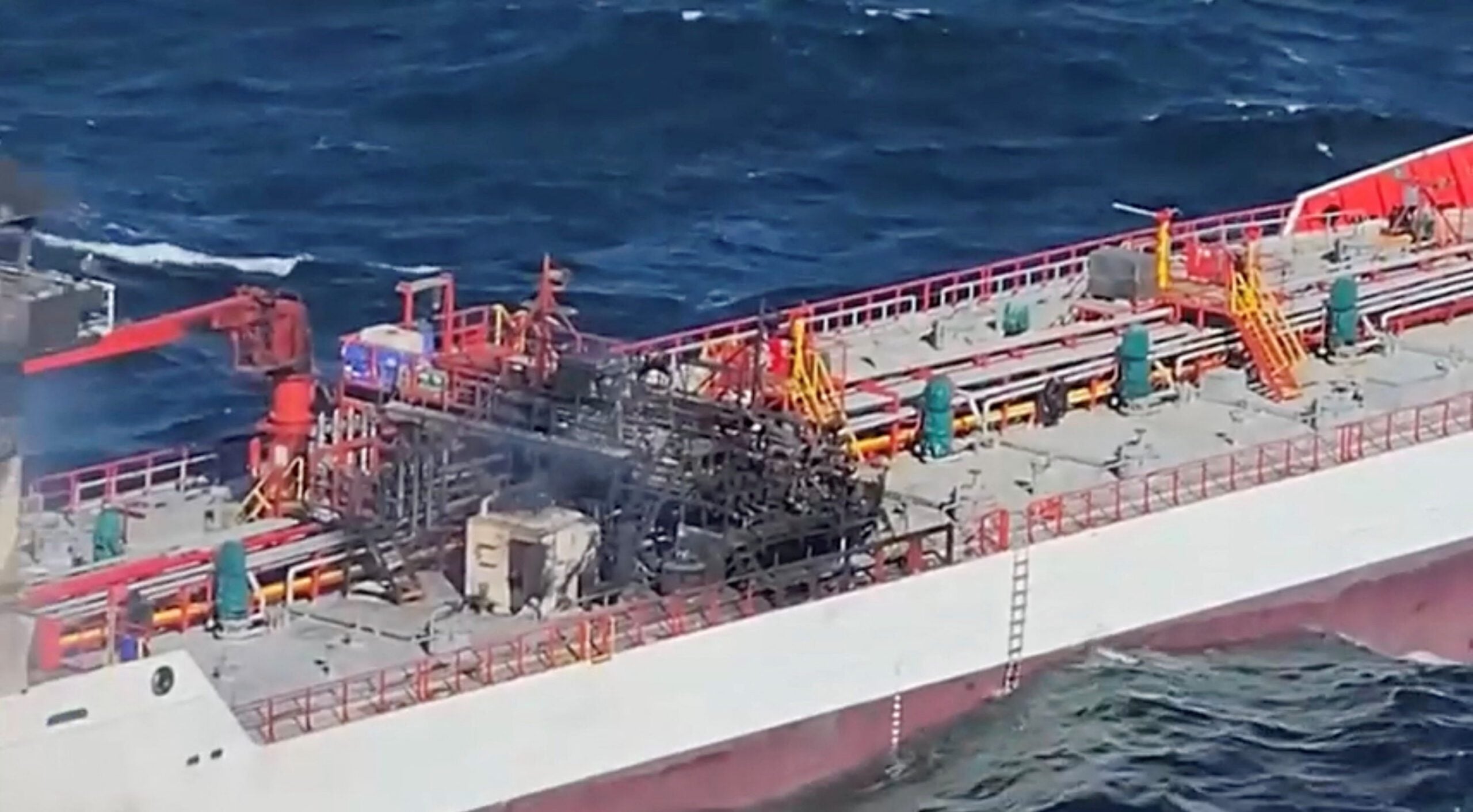
The burnt-out Russian LNG carrier Arctic Metagaz has been anchored off Libya’s eastern coast, potentially ending a two-month drift across the central Mediterranean, though uncertainty remains over how authorities will handle the stricken vessel.
Satellite imagery and maritime tracking data show the tanker holding position roughly 18 nautical miles north-northeast of Benghazi for several days, indicating Libyan authorities have succeeded in securing it after repeated failed towing attempts.
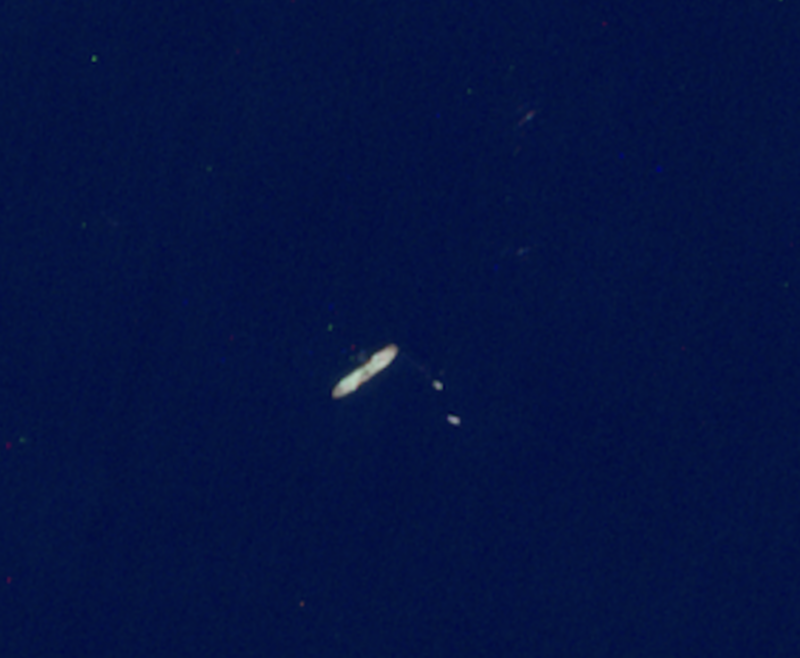
Arctic Metagaz with tugs and support vessels on April 27. (Source: Sentinel 2)
Libyan personnel made multiple attempts to tow the vessel away from the coastline, but operations were repeatedly hampered by technical failures and rough weather. Tow cables snapped on several occasions, including on April 22 that left the tanker once again drifting uncontrolled about 120 nautical miles north of Benghazi, according to an official navigational warning.
“Completely out of control and adrift,” the bulletin warned at the time, adding that the tanker posed “an environmental and navigational hazard” and requiring ships to keep a minimum distance of five nautical miles.
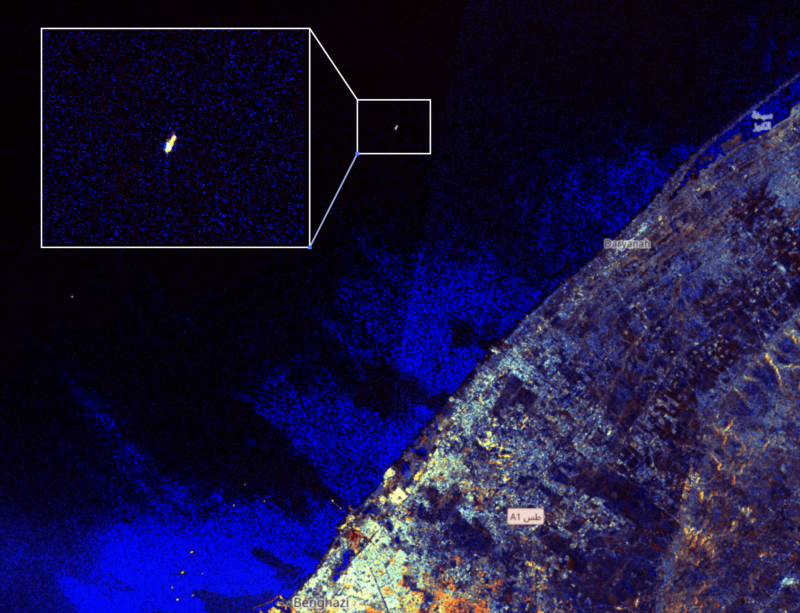
By April 28, however, a Libyan harbor tug had managed to anchor the vessel offshore, according to sources familiar with the operation and updates shared with European institutions. Sentinel-1 satellite images from April 30 confirm the tanker’s stationary position about 8 nautical miles northwest of Daryanah and 18 nautical miles north-northeast of Benghazi.
Arctic Metagaz off the coast of Benghazi on April 30. (Source: Sentinel 1)
Libya’s National Oil Corporation has indicated that much of the remaining gas onboard may have leaked, potentially reducing immediate risks, while plans are being prepared to extract residual diesel fuel and transfer it to another vessel.
Even so, significant questions remain over the vessel’s condition and the safety of the anchoring operation. The tanker has endured weeks of storms and structural stress, and it is unclear whether comprehensive inspections have been carried out.
Control of the operation now appears to rest with authorities in eastern Libya, raising further uncertainty about coordination and technical capacity for a long-term solution.
The Arctic Metagaz incident has also had wider repercussions for Russian energy shipping. Since the explosion, Russia has rerouted its shadow fleet of LNG carriers away from the Mediterranean, opting instead for longer voyages around southern Africa to avoid potential security threats.
For now, while the tanker’s anchoring marks a pause in its drift, it remains a potential environmental hazard – and a legally complex salvage case with no clear resolution in sight.
Rescuers were searching for seven missing crew on Thursday from one of two chemical tankers that caught fire overnight just outside Romanian territorial waters in the Black Sea, after Russian drones strayed into national airspace, Romanian officials said.
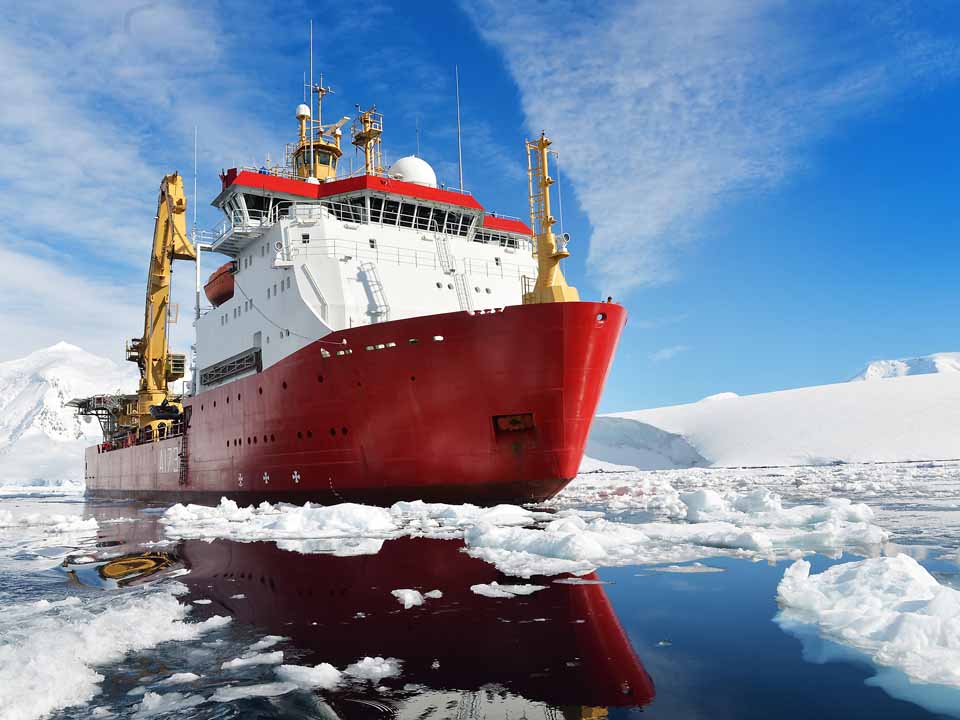
The Royal Navy’s only dedicated ice patrol ship has been towed from Teesside to Devonport following a reported defect, raising questions about Britain’s ability to maintain its maritime presence in the polar regions as the government works toward a replacement.
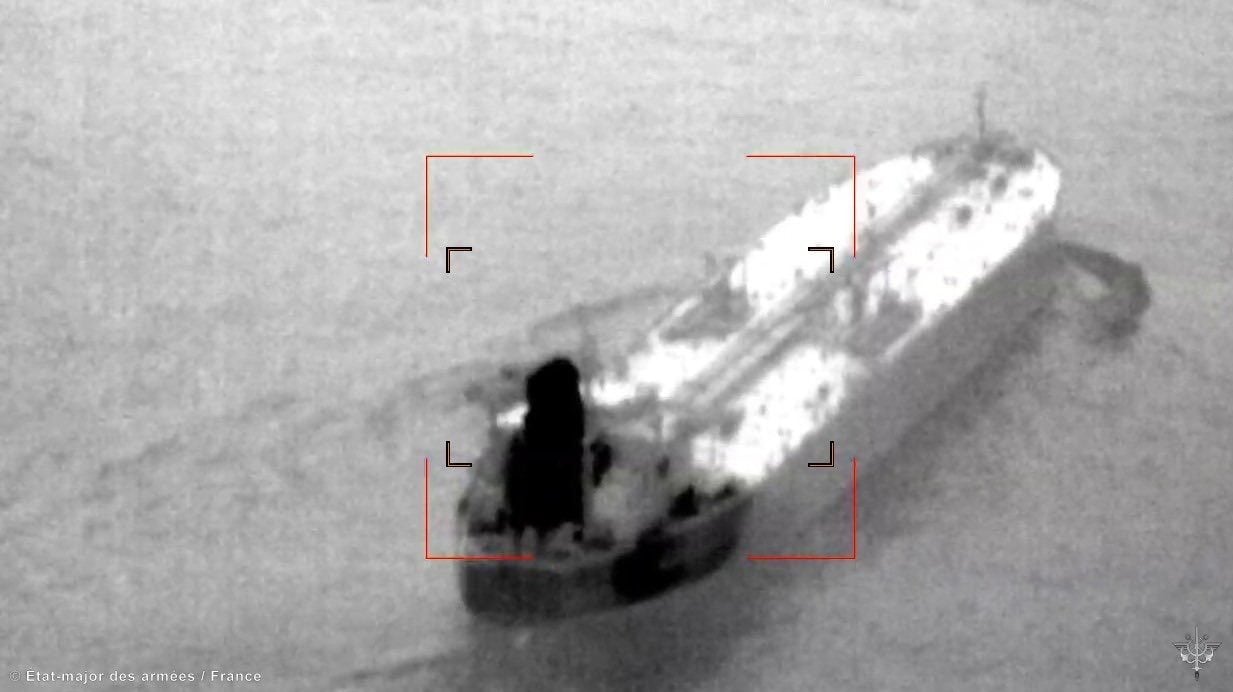
France's military was taking a tanker suspected to be part of Russia's "shadow fleet" skirting Western sanctions to Reunion island on Tuesday in what Moscow called another act of "piracy."
October 13, 2026
Total Views: 1058
Get The Industry’s Go-To News
Subscribe to gCaptain Daily and stay informed with the latest global maritime and offshore news
— just like 106,690 professionals
Secure Your Spot
on the gCaptain Crew
Stay informed with the latest maritime and offshore news, delivered daily straight to your inbox
— trusted by our 106,690 members
Your Gateway to the Maritime World!
Essential news coupled with the finest maritime content sourced from across the globe.

 Join The Club