Don’t Miss Your Daily Briefing for the Maritime Industry
Join the leading maritime news network
— trusted by our 106,690 members
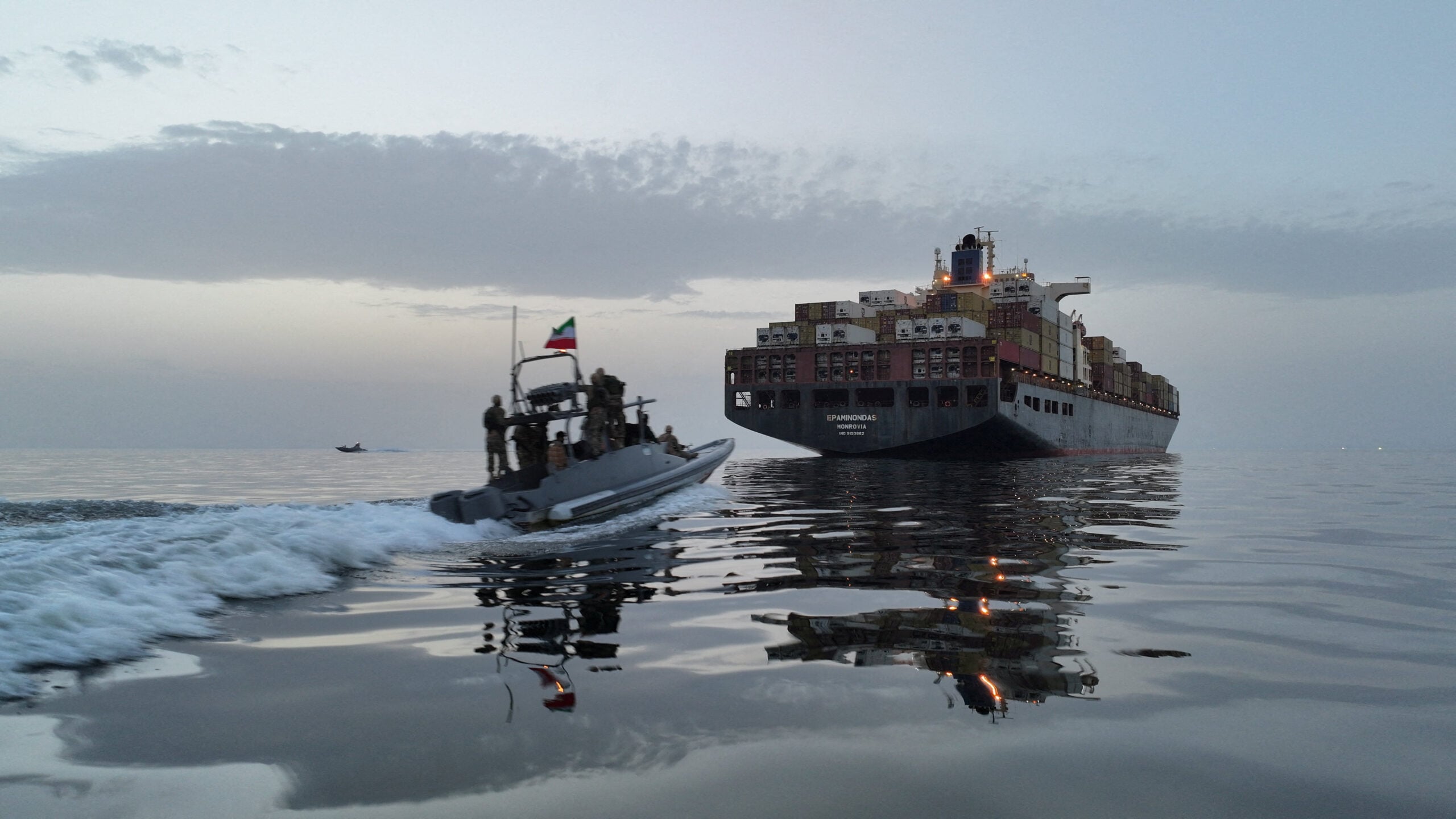
The Epaminondas ship is seen during seizure by the Islamic Revolutionary Guard Corps (IRGC) in the Strait of Hormuz, Iran, in this image obtained by Reuters on April 24, 2026. Meysam Mirzadeh/Tasnim/WANA (West Asia News Agency) via REUTERS
Strait of Hormuz Remains Near-Empty With Just A Few Iran Ships Moving
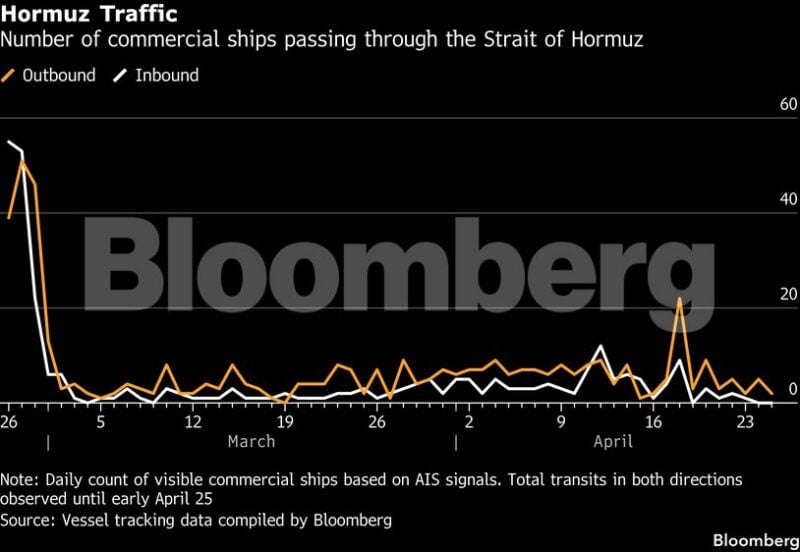
Apr 25, 2026 (Bloomberg) –The Strait of Hormuz remains largely empty of merchant ships, with only a few Tehran-linked vessels moving through the waterway, following a tense week that saw Iranian gunboat attacks and tanker interceptions by the US Navy.
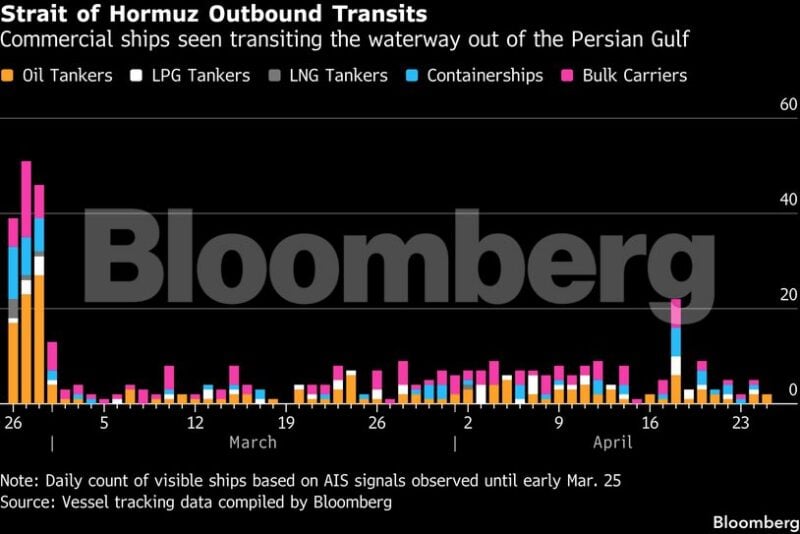
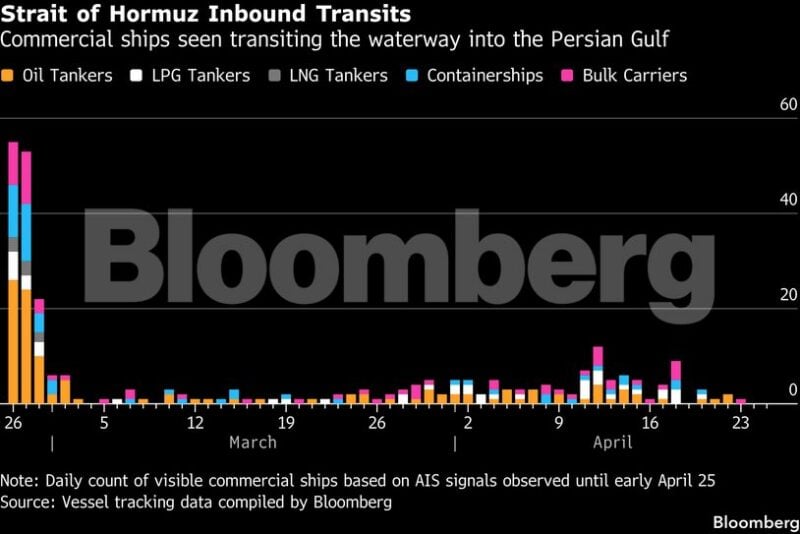
As of Saturday morning, observable traffic was down to only two very small fuel carriers and one tiny coastal cargo ship, all with ties to Tehran, leaving the Persian Gulf through the crucial waterway, vessel-tracking data compiled by Bloomberg show. No ships were observed on their way in.
While Iran continues to fill supertankers with millions of barrels, the US Navy has stalled several of them near the maritime border with Pakistan before they can leave the Gulf of Oman into the Arabian Sea, creating a bottleneck that underscores the growing difficulties for the Islamic Republic’s exports.
Tensions escalated this week as Iran demonstrated its tight grip over Hormuz and the US maintained its naval blockade, while diplomatic efforts to get both sides to negotiate a peace deal have proven elusive. Iranian Foreign Minister Abbas Araghchi arrived in Pakistan ahead of the arrival of US envoys, but prospects remain slim for direct talks to end the conflict that has upended global energy markets.
The US has added to its pressure by sanctioning Hengli Petrochemical (Dalian) Refinery Co., one of China’s largest private oil refiners, citing its purchases from Iran. The move reflects a broader push to isolate buyers of Iranian oil. China has been the top importer.
Vessels transiting Hormuz with active Automatic Identification System signals during the past day were confined to a narrow northern lane near the Iranian islands of Larak and Qeshm, the route approved by Tehran.
The US blockade may encourage Iran-linked ships entering or leaving the Persian Gulf to switch off their tracking signals to avoid detection, making it harder to get an accurate picture of traffic through the waterway. This means transit figures may sometimes be revised higher when vessels reappear far away from the riskiest waters.
It was common, even before the US imposed its latest restrictions, for Iran-linked ships to stop sending signals as they headed into the Strait of Hormuz to exit the Persian Gulf. They generally didn’t enable them again until well into the Strait of Malacca in South East Asia, about 13 days sailing from Iran’s Kharg Island.
NOTES:
Because vessels can move without transmitting their location until they’re well away from Hormuz, automated positioning signals were compiled over a large area covering the Gulf of Oman, the Arabian Sea and the Red Sea to detect those that may have departed or entered the Persian Gulf.
When potential transits are identified, signal histories are examined to determine whether the movement appears genuine or is the result of spoofing — where electronic interference can falsify the apparent position of a ship.
Some transits may not have been detected if vessels’ transponders haven’t been switched back on. Iran-linked oil tankers often steam from the Persian Gulf without broadcasting signals until they reach the Strait of Malacca about 10 days after passing Fujairah in the UAE. Other ships may be adopting similar tactics and won’t show up on tracking screens for many days.
This tracker will be published during heightened tensions involving Iran, and aims to capture traffic for all classes of commercial shipping.
Conflicting traffic figures and competing claims of control are making it increasingly difficult to establish what’s happening in the Strait of Hormuz, even as attacks on merchant shipping intensify. The...
The cost ?of shipping oil on the largest tankers fell this week from record highs as demand eased following a wave of attacks on vessels in the Middle East and as the US considered easing sanctions on the so-called shadow fleet.
The International Energy Agency (IEA) has agreed to accelerate the release of approximately 100 million barrels of emergency oil stocks, including more than 20 million barrels of diesel, as the...
18 hours ago
Total Views: 233
Get The Industry’s Go-To News
Subscribe to gCaptain Daily and stay informed with the latest global maritime and offshore news
— just like 106,690 professionals
Secure Your Spot
on the gCaptain Crew
Stay informed with the latest maritime and offshore news, delivered daily straight to your inbox
— trusted by our 106,690 members
Your Gateway to the Maritime World!
Essential news coupled with the finest maritime content sourced from across the globe.

 Join The Club