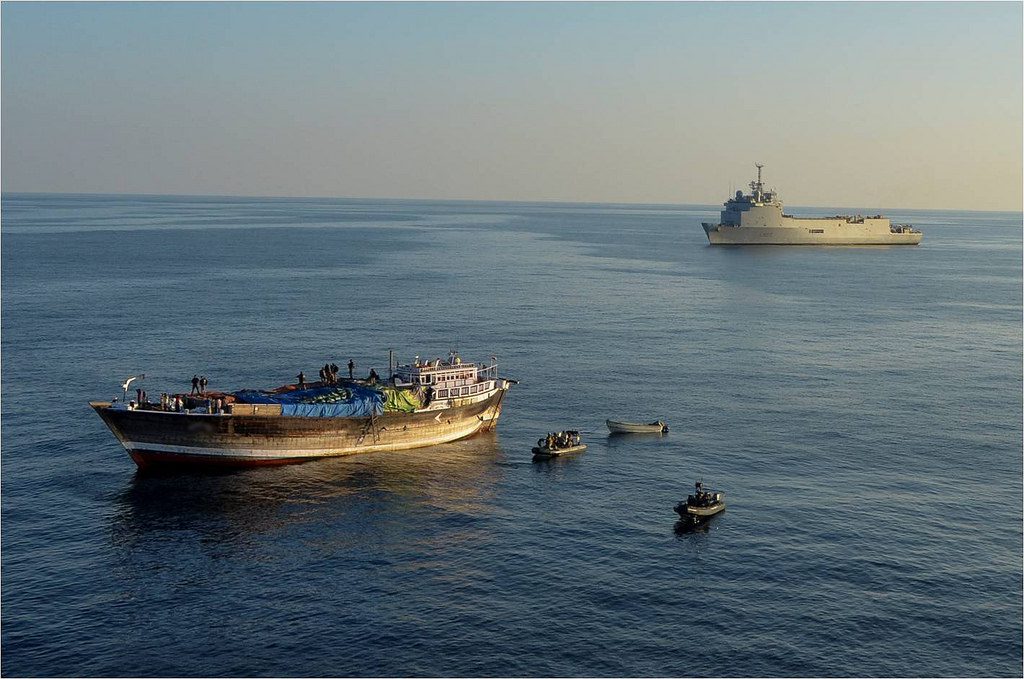
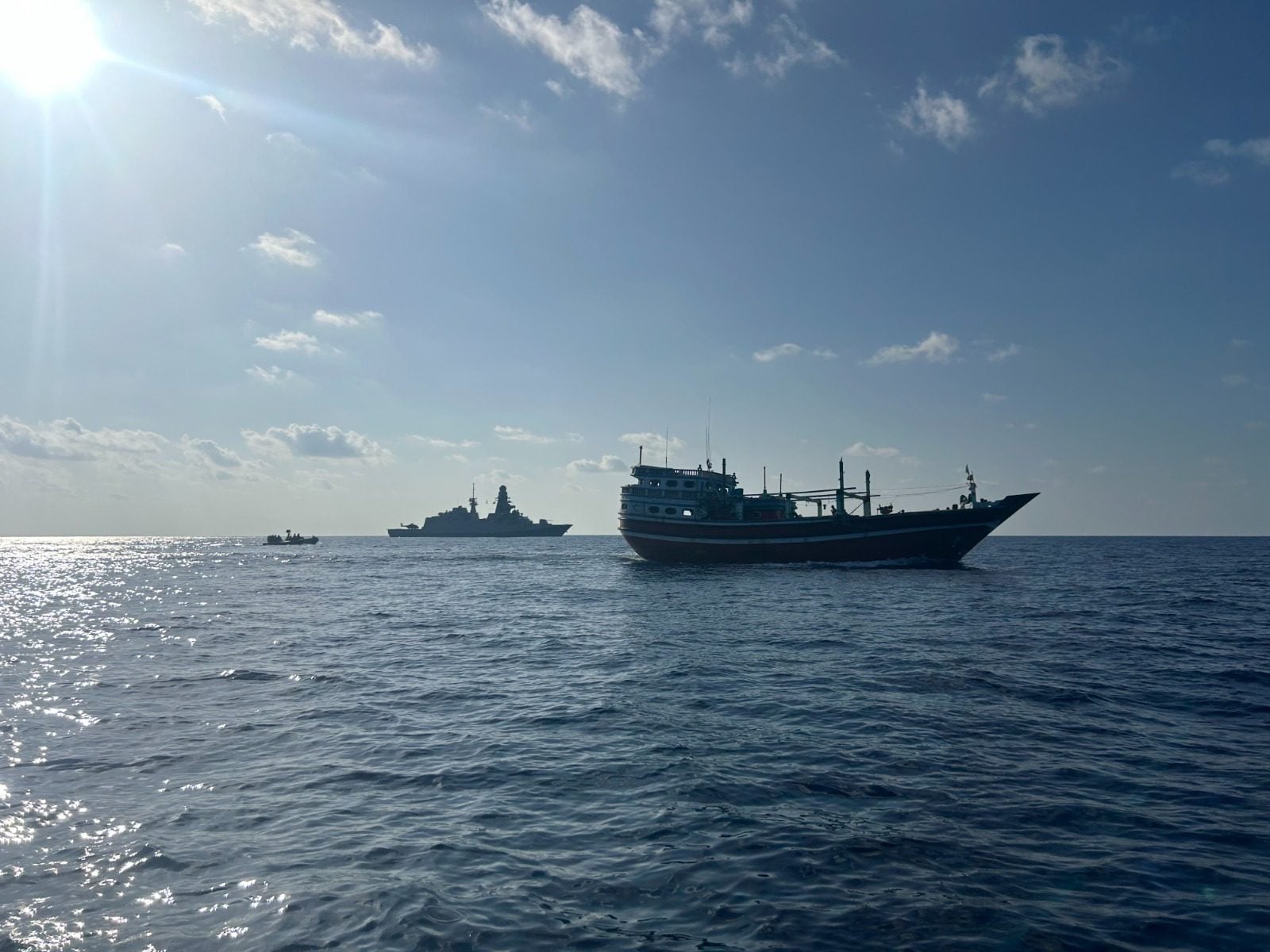
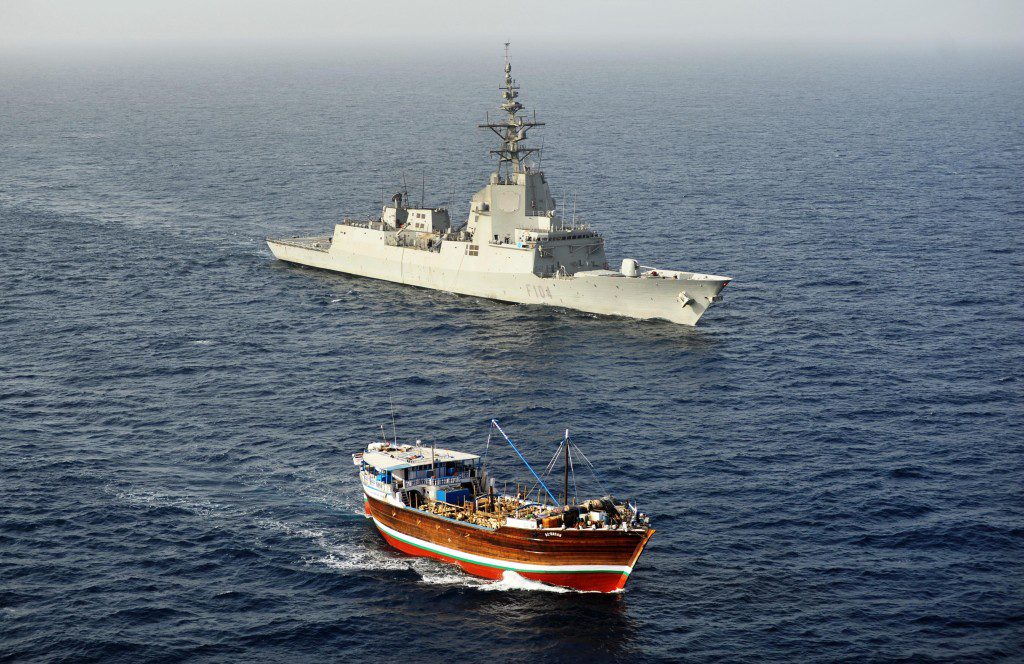
During the height of Somali piracy, pirates gangs used ‘motherships’ to hunt down large commercial vessels further out in the Indian Ocean. In this 2013 photo, a Spanish warship tracks down a suspected mothership while on patrol off Somalia. Photo: EU Naval Force Somalia
By Abdiqani Hassan
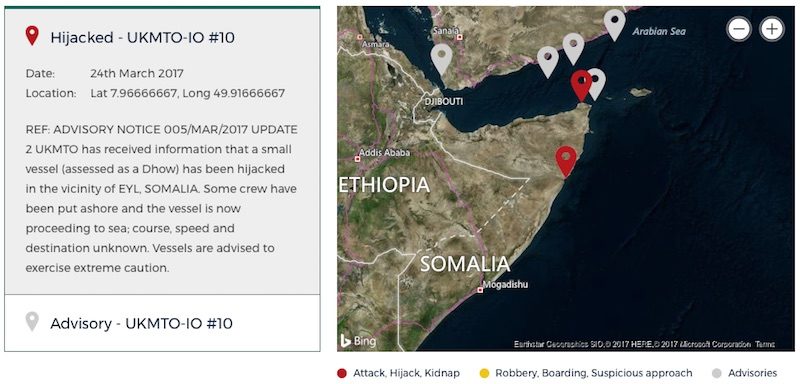
BOSASSO, Somalia, March 24 (Reuters) – Pirates have seized control of a Somali fishing boat to use as a base from which to attack larger ships, police said on Friday, a week after Somali pirates hijacked their first commercial vessel since 2012.
Ten Yemeni crew aboard the boat were dumped on shore, officials told Reuters.
“We understand that pirates hijacked the fishing vessel to hijack a big ship off the ocean,” said Abdirahman Mohamud, head of maritime police forces in the semi-autonomous northern region of Puntland.
“They dropped its 10 Yemeni crew and a Somali guard inland and disappeared with the boat together with the food, cook, captain and engineer,” he told Reuters.
Report from the UK Maritime Trade Operations Centre
Residents of Marrayo, a northern village near the pirate lair of Eyl, confirmed that pirates from their village had gone to hunt potential targets.
It is the second attack by pirates this month. On March 13, pirates seized a small oil tanker in the same region.
The pirates involved in Friday’s attack are not seeking to hold the ship and its crew for ransom, but rather use the vessel as a “mothership,” or launch pad for attacks on bigger ships.
“We’re starting to see copycat attacks and there is a growing realization that the shipping industry is taking huge risks,” said John Steed, a former British defense attache who has worked on piracy for around a decade.
Those risks included sailing too close to the Somali coast becoming more relaxed about security needs.
In their heyday in 2011, Somali pirates launched 237 attacks off the coast of Somalia, data from the International Maritime Bureau showed, and held hundreds of hostages.
But attacks fell as shipping firms tightened security measures, such as posting lookouts, blocking easy entry points to the ship with barbed wire and installing secure panic rooms with communication equipment, known as “citadels.”
Many ships hired private security and international warships also intensified patrols in the region. (Additional reporting by Jonathan Saul in London and Katharine Houreld in Nairobi; Writing by Aaron Maasho; Editing by Larry King and Richard Lough)
A merchant vessel transiting off Yemen’s southern coast exchanged gunfire with an armed small craft on Tuesday in an incident that appears more consistent with piracy than the missile and...
European naval forces have confirmed the hijacking of an oil tanker off Yemen after armed individuals reportedly boarded the vessel near Qana Port before steering it toward the Gulf of...
Piracy concerns are escalating rapidly off the Horn of Africa after two vessels were hijacked last week and multiple new approaches were reported across the western Indian Ocean, prompting security...
May 1, 2026
Total Views: 709
Get The Industry’s Go-To News
Subscribe to gCaptain Daily and stay informed with the latest global maritime and offshore news
— just like 105,165 professionals
Secure Your Spot
on the gCaptain Crew
Stay informed with the latest maritime and offshore news, delivered daily straight to your inbox
— trusted by our 105,165 members
Your Gateway to the Maritime World!
Essential news coupled with the finest maritime content sourced from across the globe.

 Join The Club




 By Abdiqani Hassan