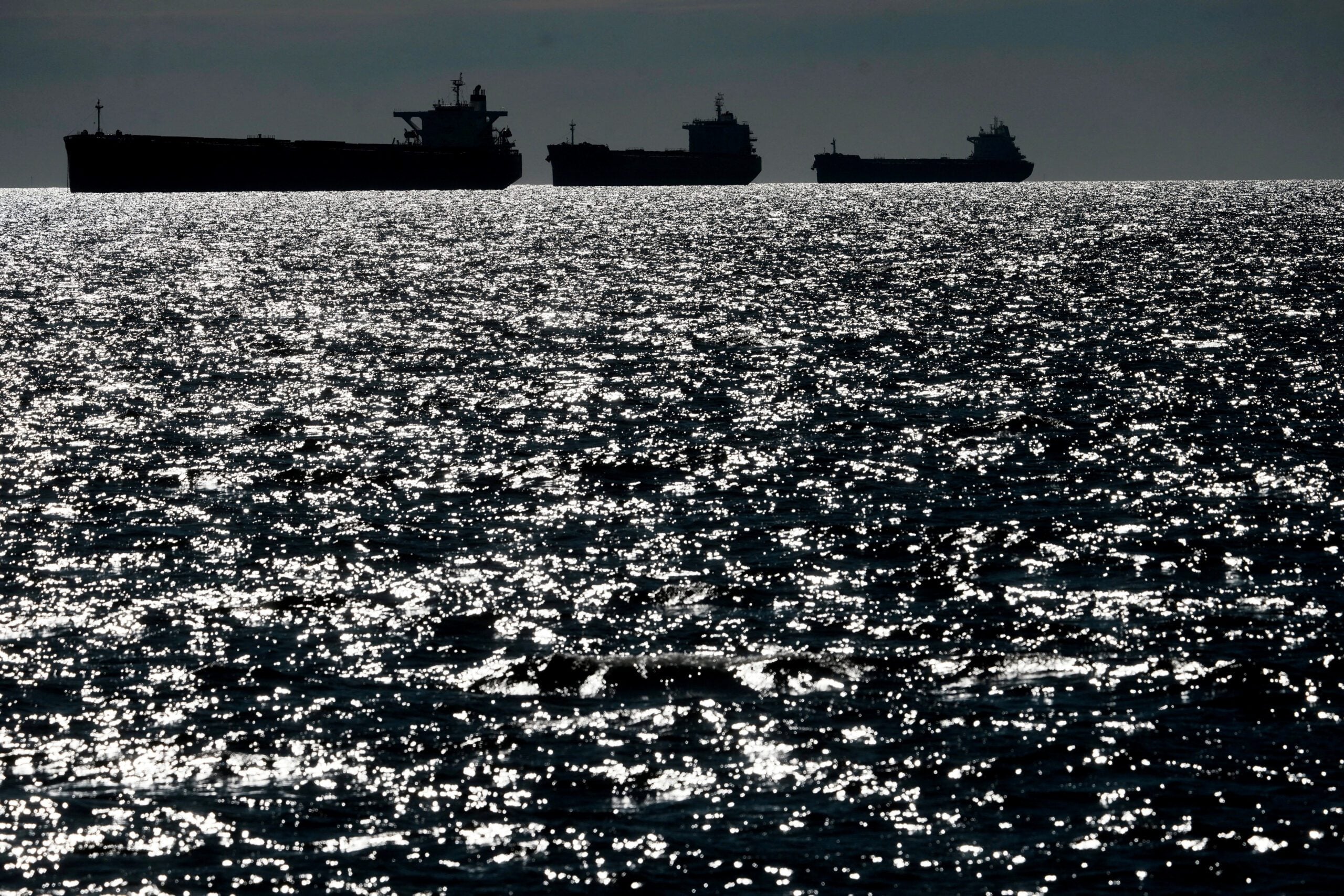
Singapore has issued a pointed call for international cooperation to tackle the growing shadow fleet challenge in the Straits of Malacca and Singapore, underscoring the mounting pressure on one of the world’s most critical maritime chokepoints as aging tankers carrying sanctioned oil increasingly exploit regulatory grey zones just beyond territorial waters.
By Paul Morgan (gCaptain) – Acting Transport Minister Jeffrey Siow told Parliament this week that Singapore fully implements United Nations Security Council resolutions and will not tolerate illegal or deceptive activities by shadow fleet vessels, stating that illicit ships may be denied entry or detained in Singapore. His remarks, delivered in a written parliamentary reply dated Wednesday, represent the most direct official acknowledgement yet of a problem that has been escalating for years but which sits awkwardly between national sovereignty, international law and the practical limits of coastal enforcement.
The challenge is stark. The Straits of Malacca and Singapore handle approximately one-third of global traded goods and more than 80,000 vessel transits annually, making them an unavoidable gateway between the Indian Ocean and the South China Sea. But that same strategic importance has turned the waterway into a magnet for shadow fleet operations, with recent tracking data showing at least 27 sanctioned vessels transiting the Singapore Strait in early December and more than 130 clustered nearby around Indonesia’s Riau Archipelago, according to Lloyd’s List Intelligence.
These are not isolated incidents. The shadow fleet has ballooned since Russia’s invasion of Ukraine and the subsequent imposition of Western sanctions on Russian, Iranian and Venezuelan oil. Data and analytics firm Kpler estimated the global shadow fleet comprised approximately 3,300 vessels in December last year, representing about six to seven percent of global crude flows. More than USD 100 billion worth of crude oil moved through shadow and sanctioned fleets in 2025 alone, sustained by fragmented ownership, rapid flag changes, manipulated location data and ship-to-ship transfers conducted at night or in areas with minimal oversight.
For Singapore, the problem is compounded by the constraints of international law. The Straits of Malacca and Singapore are designated as Straits Used for International Navigation under the United Nations Convention on the Law of the Sea, which means vessels enjoy the right of transit passage that cannot be suspended under UNCLOS. This creates a legal paradox: Singapore can monitor vessel movements and report violations to the International Maritime Organisation, but its capacity to act directly against suspect vessels operating just beyond the 22.2-kilometre limit of its territorial waters is sharply circumscribed.
Despite these limitations, Singapore has steadily strengthened its enforcement posture. Siow confirmed that the Maritime and Port Authority already works closely with neighbouring countries to combat illicit maritime activity, sharing information to support investigations and conducting coordinated patrols. Singapore also operates as one of the Vessel Traffic Service authorities for the mandatory ship-reporting system in the straits, providing navigational information and reporting breaches of IMO conventions to flag states. The clear implication is that Singapore is using every available tool within the existing legal framework, but those tools are not sufficient to address the scale and sophistication of modern shadow fleet operations.
The regional dimension is critical. Malaysia announced last July that it would tighten enforcement against unauthorised ship-to-ship transfers, closing the Tanjung Piai anchorage near the eastern entrance to the Singapore Strait and imposing new permit requirements for anchoring and STS operations. Enforcement has followed, with the recent high-profile detention of two crude carriers and the seizure of approximately USD 130 million worth of crude oil off Penang demonstrating that coastal states are prepared to act decisively when vessels operate within their jurisdiction. Yet even with heightened Malaysian enforcement, the broader regional waters remain a favoured location for illicit transfers because the regulatory coverage is patchy and the incentives for non-compliance are enormous.
The economic stakes are equally significant. Shadow fleet tankers are typically aging vessels with opaque ownership structures, often registered under flags of convenience and insured by unknown or Russian entities. These ships frequently lack the safety standards, pollution prevention equipment and crew training that characterise legitimate tonnage. The risk of casualties, environmental disasters and navigational incidents is measurably higher, and when things go wrong in one of the world’s busiest waterways, the consequences can be severe. Pollution incidents, collisions and groundings involving shadow fleet vessels have already occurred in other regions, and the prospect of a major incident in the Singapore Strait is a scenario that keeps maritime authorities awake at night.
From an operational perspective, the shadow fleet challenge also distorts the broader tanker market. Legitimate owners, operators and charterers face growing compliance burdens, heightened scrutiny from insurers and banks, and reputational risk simply from operating in waters where shadow vessels cluster. Port states are increasingly demanding documentation, AIS transparency and cargo provenance information that go beyond traditional norms, and the cost of non-compliance is rising. For the clean trade, this adds friction, delays and expense. For the shadow trade, it simply pushes operations further into the grey zone, where enforcement is weakest.
Singapore’s call for international cooperation is therefore both a statement of principle and a recognition of practical necessity. No single coastal state, however capable, can effectively police the shadow fleet phenomenon on its own. The vessels move between jurisdictions, the beneficial ownership is deliberately obscured, the documentation is falsified, and the supporting infrastructure spans multiple countries and legal systems. Effective enforcement requires coordinated intelligence sharing, harmonised regulatory standards, mutual legal assistance and, crucially, political will from the major economies that ultimately consume the oil being moved.
The question is whether that political will exists. China and India, the largest buyers of Russian crude, benefit from steep discounts on oil well below the Western-imposed USD 60 per barrel price cap. Sanctions have been imposed, but enforcement has been uneven, and the commercial incentives to keep sanctioned oil flowing remain powerful. Western governments have blacklisted vessels and entities, but the shadow fleet adapts faster than sanctions regimes can expand. The result is a cat-and-mouse game played out in international waters, with coastal states like Singapore caught in the middle.
Siow’s statement that this is “an important and complex issue that the Singapore government pays close attention to” is diplomatic understatement. What Singapore is signalling is that it recognises the threat, it is doing what it can within the limits of international law, and it expects other nations to step up. The alternative is a continued erosion of maritime governance, rising safety and environmental risks, and the normalisation of a parallel shipping economy that operates outside the rules-based order that underpins global trade.
For an industry built on transparency, predictability and the rule of law, that is an outcome nobody should accept.
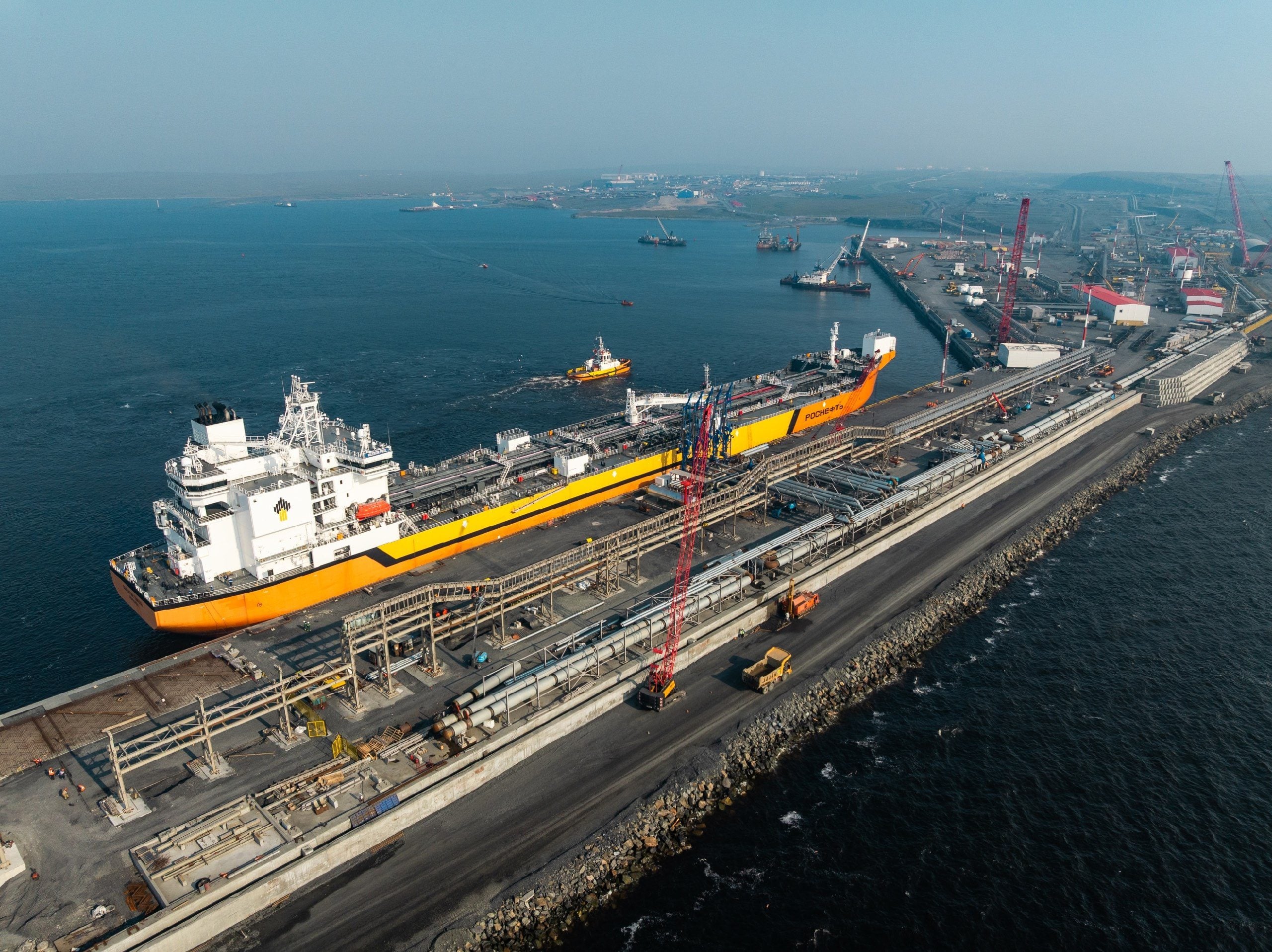
Along Russia’s remote Arctic coast last month, Igor Sechin stood beside a waiting tanker in the freezing cold with a message for Vladimir Putin: After years of construction, the country’s next great oil frontier was finally coming to life.
The United States has imposed a new round of sanctions targeting a law firm, shipping agents and nine vessels accused of helping Iran move oil and other commodities through international...
(Bloomberg) — A US plan to rehabilitate sanctioned tankers to boost oil supply may attract only a sliver of the dark fleet, as existing contracts, complex compliance checks and sky-high...
October 20, 2026
Total Views: 944
Get The Industry’s Go-To News
Subscribe to gCaptain Daily and stay informed with the latest global maritime and offshore news
— just like 106,492 professionals
Secure Your Spot
on the gCaptain Crew
Stay informed with the latest maritime and offshore news, delivered daily straight to your inbox
— trusted by our 106,492 members
Your Gateway to the Maritime World!
Essential news coupled with the finest maritime content sourced from across the globe.

 Join The Club