Don’t Miss Your Daily Briefing for the Maritime Industry
Join the leading maritime news network
— trusted by our 107,340 members
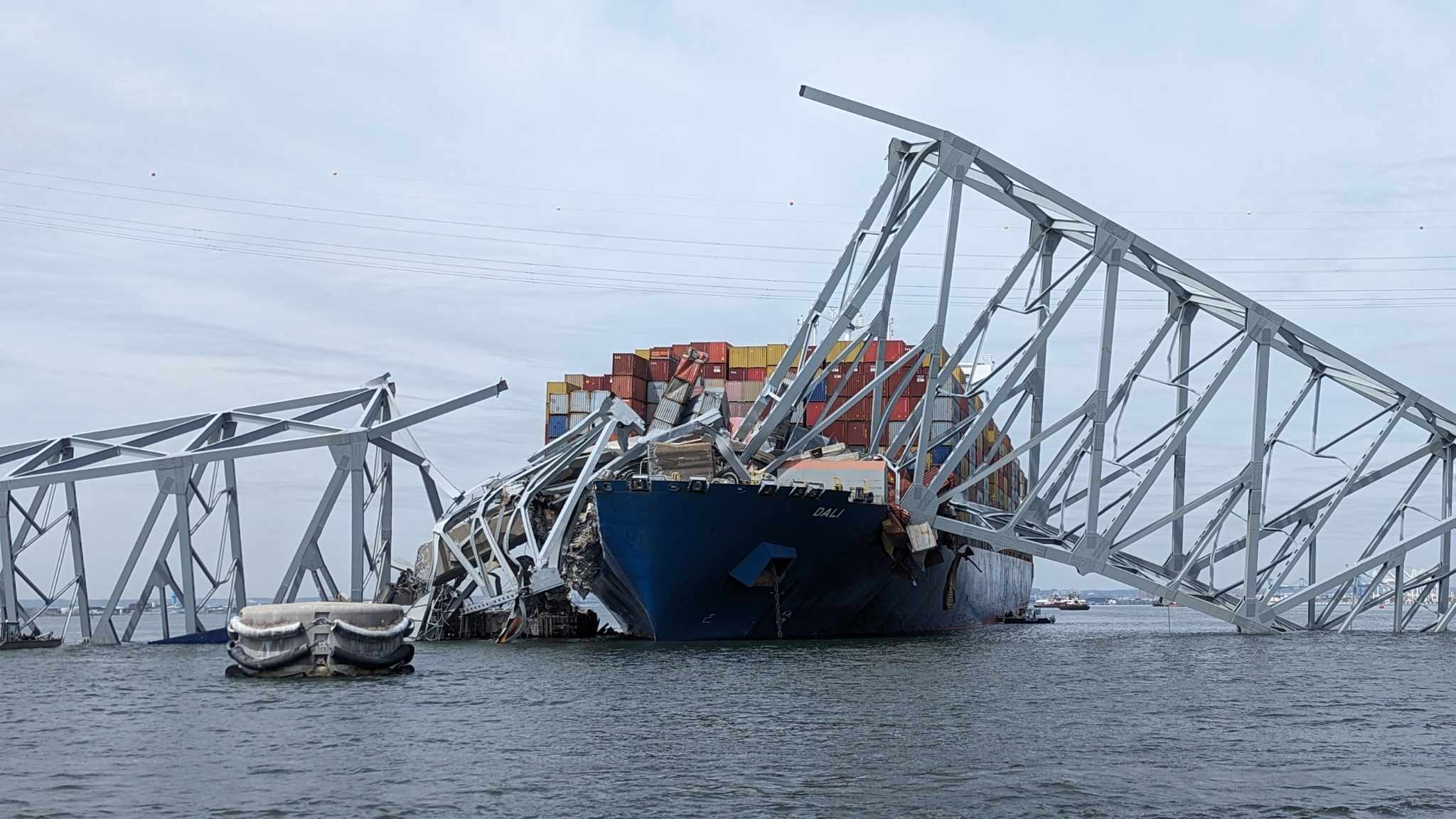
U.S. Army Corps of Engineers staff onboard Hydrographic Survey Vessel CATLETT observe the damage resulting from the collapse of the Francis Scott Key Bridge in Baltimore, March 26, 2024. USACE Photo
Shipbuilder Blames Operator Modifications for ‘Dali’ Blackout That Brought Down Key Bridge
Dali shipbuilder HD Hyundai Heavy Industries says changes made after delivery bypassed critical redundancies, triggering the second blackout that left the ship without propulsion or steering in the critical moments before the bridge strike.
HD Hyundai Heavy Industries (HHI) has issued a detailed defense of the M/V Dali’s original design following the National Transportation Safety Board’s investigation into the vessel’s collision with Baltimore’s Francis Scott Key Bridge, which killed six highway workers and caused the bridge’s collapse on March 26, 2024.
The NTSB determined that the probable cause of the collision was a loss of electrical power due to a loose signal wire connection stemming from improper wire-label banding installation, resulting in the vessel’s loss of propulsion and steering near the bridge. The agency also made a recommendation to HHI, the Dali’s builder, to incorporate proper wire-label banding installation methods into its electrical department’s standard operating procedures.
In its statement, the South Korean shipbuilder emphasized that the M/V Dali was delivered with extensive redundant systems and automatic restart capabilities designed to prevent catastrophic failures. “Container ships like the M/V Dali are—as NTSB described—’floating cities,'” the company stated, noting that such vessels have onboard power plants and are built with safeguards to deal with “the inevitable unpredictability of running a complex system in a harsh environment.”
According to HHI, the vessel was originally equipped with four independent diesel generators, two independent transformers, and fuel supply pumps set to automatic mode that would restart without crew intervention after a power outage. These redundancies, the shipbuilder noted, are required by relevant classification societies.
However, the company alleges that “some time after taking possession of the M/V Dali, the shipowner and operator circumvented the ship’s safeguards by compromising its critical redundancies.” Specifically, HHI claims the operators replaced automatic fuel supply pumps with an electrical flushing pump—a single-point system designed for cleaning, not fuel supply, that can only be restarted manually and lacks critical protections.
“Using the flushing pump as a fuel supply pump sacrificed both redundancy and automation of the fuel supply system and violated established classification rules,” the statement read.
On the day of the incident, the vessel experienced two blackouts. The first was caused by a wire disconnecting from a terminal block in the transformer system. Because the transformer was being used in manual mode rather than automatic, the crew had to manually switch to the backup transformer. However, when making this switch, “the crew did not restart the flushing pump that had been supplying fuel to the operating generators, starving the generators of fuel and resulting in another blackout,” according to HHI.
The shipbuilder contends that had the vessel’s systems been used as designed and manufactured, “power would have been restored within seconds, and the second blackout, which led to the tragedy, would not have happened.”
The NTSB also found fault with the vessel’s operations. “Although not causal to the initial underway blackout, [the NTSB] found that the crew’s operation of the flushing pump as the service pump for online diesel generators was inappropriate because the necessary fuel pressure for diesel generators 3 and 4 would not be automatically reestablished after a blackout,” the agency said in its report.
The NTSB report further explained: “As a result, the flushing pump did not restart after the initial underway blackout and stopped supplying pressurized fuel to the diesel generators 3 and 4, thus causing the second underway blackout (low-voltage and high-voltage).” The NTSB found that operational oversight by Synergy, the Dali’s operator, was inadequate.
The NTSB noted that routine inspection over the past decade should have identified the loose wire, while HHI emphasized that “it was incumbent on the ship’s owner and operator to engage in regular and appropriate inspection and maintenance to ensure that the systems and components on the ship remained in seaworthy condition.”
The NTSB also identified contributing factors beyond the vessel’s systems, including the lack of bridge countermeasures and ineffective communications to warn highway workers to evacuate. The agency issued urgent recommendations to multiple federal agencies and bridge owners nationwide to assess vulnerability and implement risk reduction strategies.
In its conclusion, HHI stated: “The M/V Dali’s shipowner and operator used the vessel’s systems improperly and neglected their continuing inspection and maintenance obligations. They cut corners and violated class rules, which ultimately led to the tragic incident.”
The company extended its condolences to the families affected and pledged to continue working with authorities to prevent similar incidents.
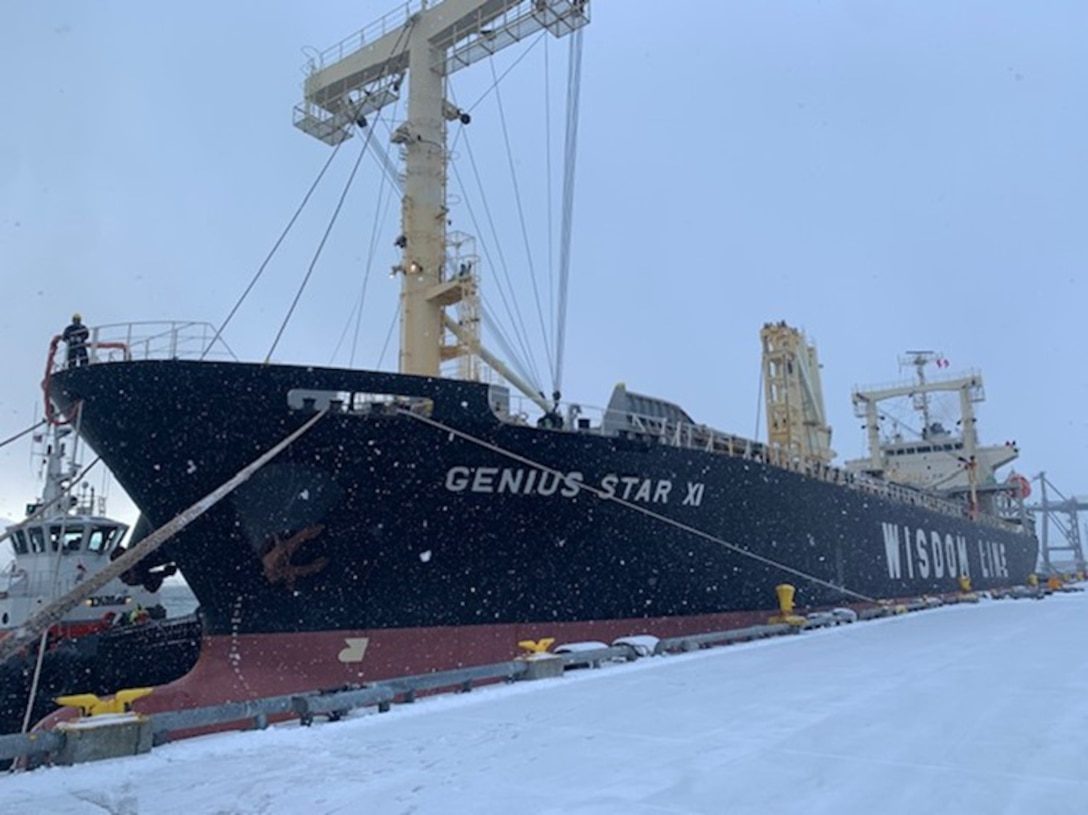
Improperly secured lithium-ion battery cargo triggered fires aboard the Genius Star XI during heavy weather on Christmas Day 2023, NTSB finds. Heavy weather and improperly secured lithium-ion battery cargo triggered two devastating...
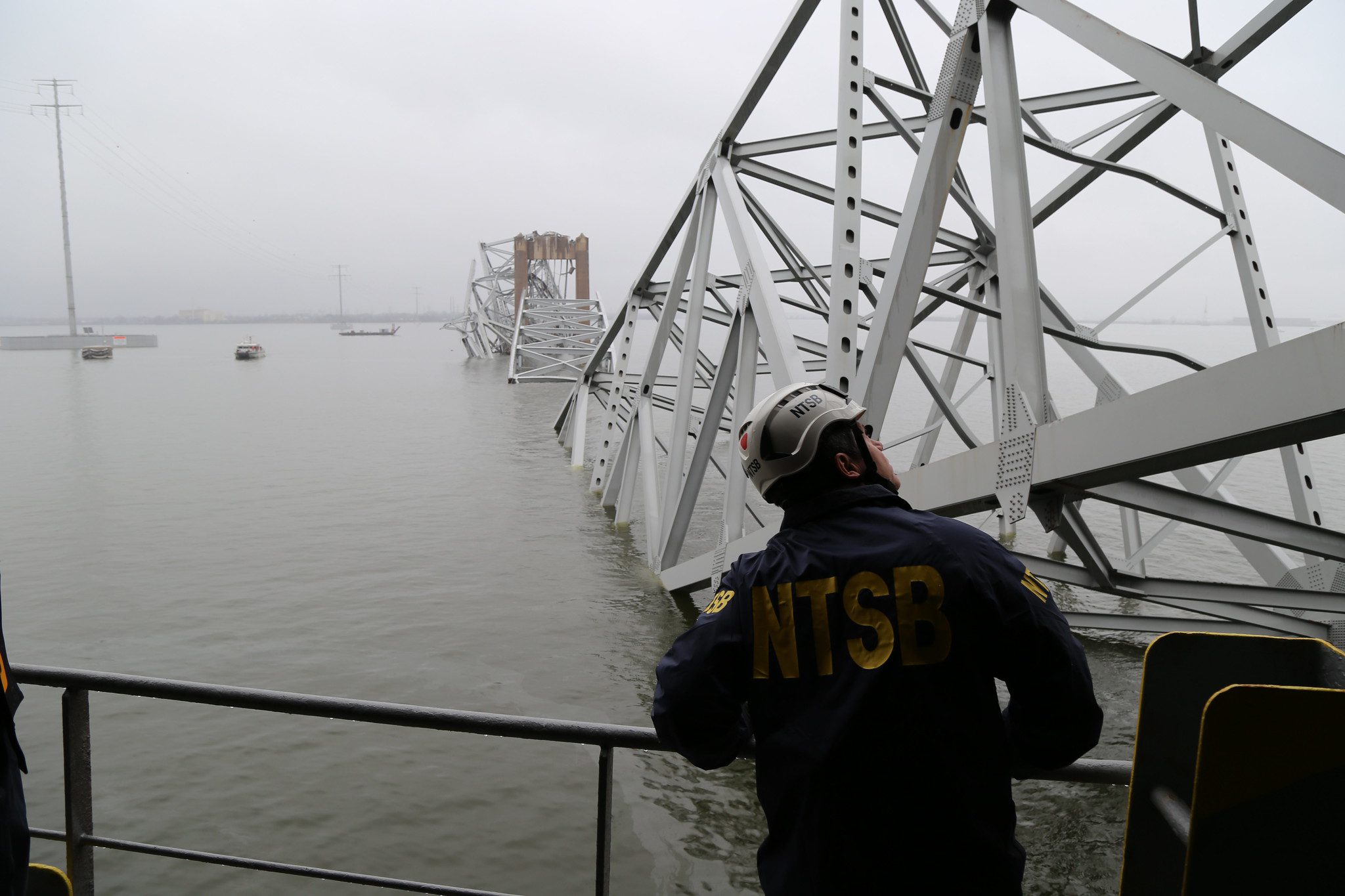
The National Transportation Safety Board has concluded that the March 2024 collapse of Baltimore’s Francis Scott Key Bridge—which killed six highway workers and severed a vital transportation artery—stemmed from an...
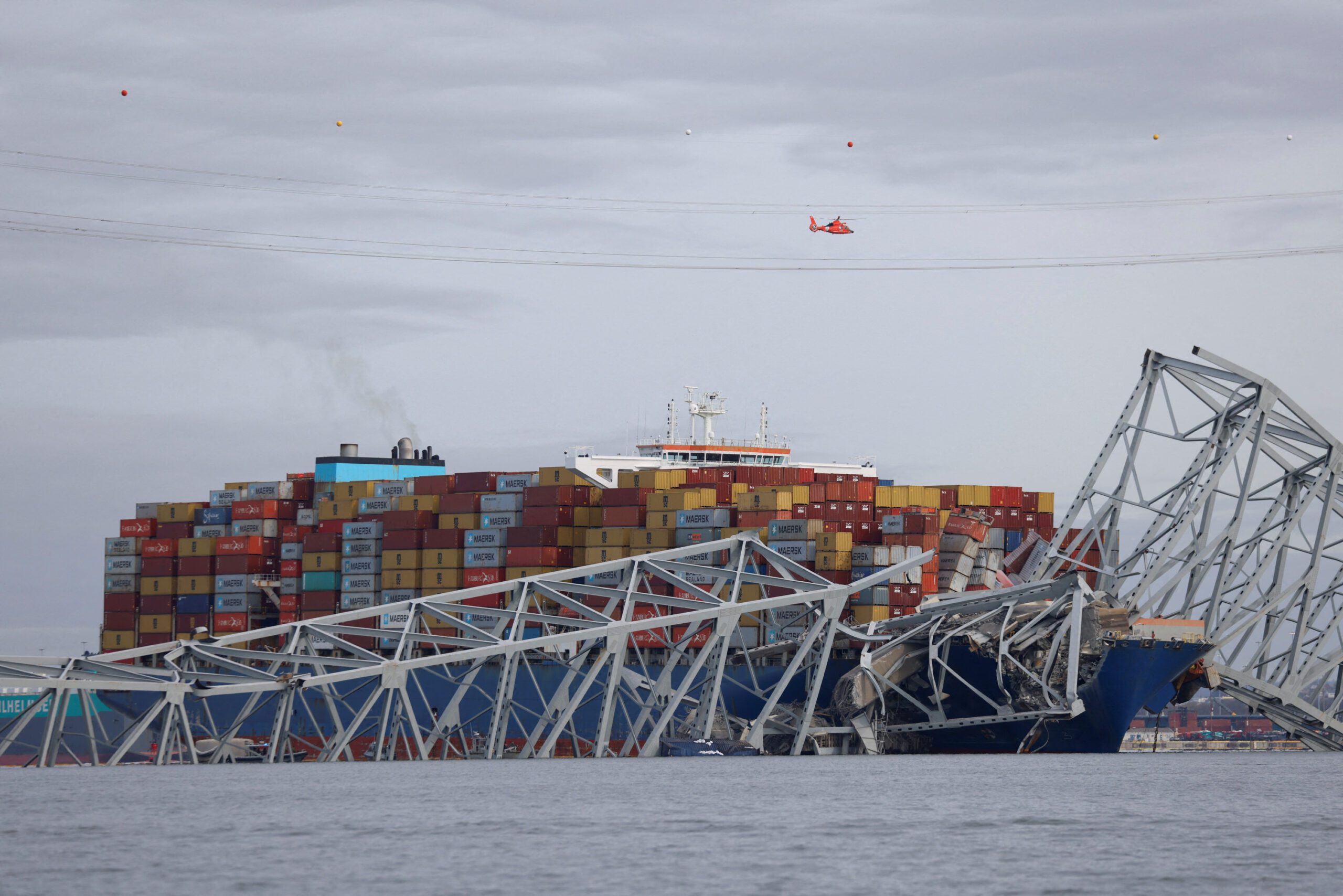
A labeling band on a single signal wire caused the electrical blackout that led to the containership Dali’s collision with Baltimore’s Francis Scott Key Bridge in March 2024, killing six...
November 18, 2025
Total Views: 7921
Get The Industry’s Go-To News
Subscribe to gCaptain Daily and stay informed with the latest global maritime and offshore news
— just like 107,340 professionals
Secure Your Spot
on the gCaptain Crew
Stay informed with the latest maritime and offshore news, delivered daily straight to your inbox
— trusted by our 107,340 members
Your Gateway to the Maritime World!
Essential news coupled with the finest maritime content sourced from across the globe.

 Join The Club