Improperly secured lithium-ion battery cargo triggered fires aboard the Genius Star XI during heavy weather on Christmas Day 2023, NTSB finds.
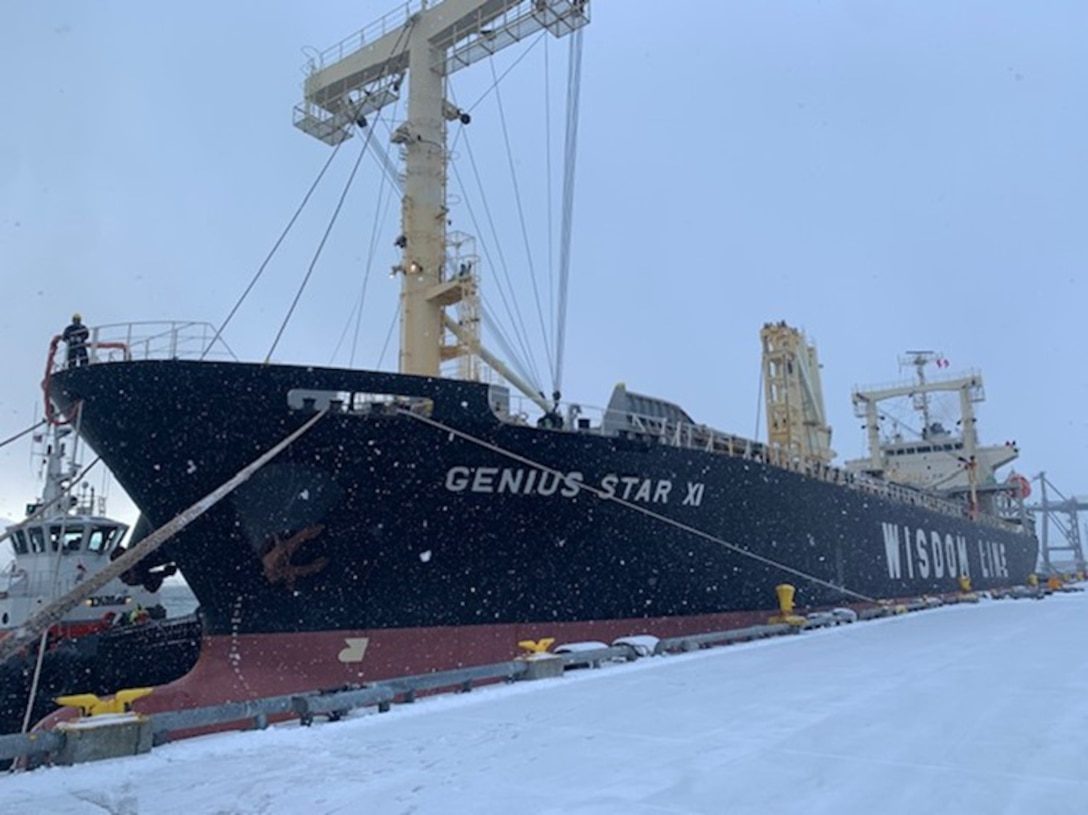
Heavy weather and improperly secured lithium-ion battery cargo triggered two devastating fires aboard the Panama-flagged bulk carrier Genius Star XI during its transit across the North Pacific Ocean on Christmas Day 2023, resulting in $3.8 million in damages, according to an investigation released by the National Transportation Safety Board. The incident highlights growing concerns about the transport of large-scale lithium-ion battery systems by sea.
The 410-foot cargo vessel was carrying 192 lithium-ion battery energy storage system (BESS) units when lashing belt failures allowed 41 units to shift in heavy seas, causing internal structural damage that led batteries in three units to enter thermal runaway—an uncontrollable heating process that can exceed 572°F.
The investigation revealed a critical equipment incompatibility that compromised the entire securing system. “The diameter of the D-ring and the inner diameter of the hook (throat opening) were not compatible,” investigators found. “The D-ring circumference was larger than the throat of the hook; essentially, the hook was not able to fully seat on the D-ring.”This design flaw concentrated securing loads at the bend of the hook rather than distributing them across the full throat, causing the hooks to fracture and separate under stress.
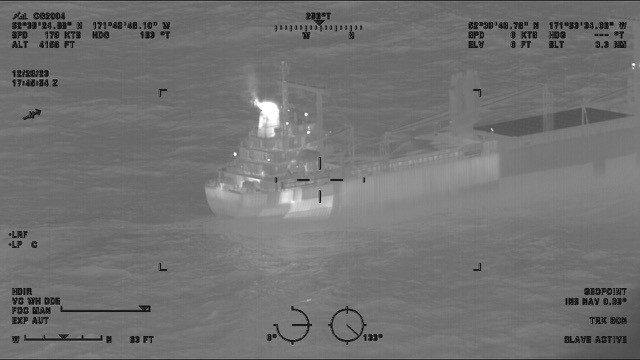
The Coast Guard is responding to a reported fire aboard the 410-foot cargo vessel Genius Star XI, approximately 200 miles southwest of Dutch Harbor, Alaska on Thursday, Dec. 29, 2023. U.S. Coast Guard Photo
The vessel encountered gale-force northwest winds of approximately 26 knots with gusts above 30 knots and combined seas and swells reaching 19 feet on December 24 as it transited near the Bering Sea. The following morning, crew discovered that all BESS units in bay 4 of hold no. 2 had shifted, and black smoke was emerging from cargo hold no. 1.
The master ordered the crew to activate the vessel’s fixed carbon dioxide fire-extinguishing system, deploying all 153 CO2 cylinders into cargo hold no. 1. With no remaining CO2 aboard to fight another fire, the vessel diverted to Dutch Harbor, Alaska. Three days later, while still en route, a second fire erupted in cargo hold no. 2. Without CO2 available, the crew fought the blaze by spraying seawater on the exterior of the hold for approximately four hours.
The Genius Star XI arrived at Dutch Harbor on December 29, where the Coast Guard directed it to anchor two miles from shore due to reflash risks. No injuries or pollution were reported.
The investigation determined that when internal shelves weighing 300 pounds detached from deformed rails and collapsed, they enabled lithium-ion battery packs to move freely and impact the interior structure of the units. “Arcing and scorch marks were found within those same 13 units, which likely occurred when the exposed battery pack busbar impacted the inside of the unit and caused the batteries to short circuit,” the report stated.
NTSB investigators emphasized critical lessons for the maritime industry in securing large stationary lithium-ion battery units. According to the report, crews must follow the vessel’s cargo securing manual and approved lashing plan, thoroughly inspect all cargo-securing arrangements during and after loading, and pay close attention to verify that lashing belt hooks, wires, and chain falls are properly seated on D-rings and attachment points.
“Proper inspection and verification are critical to preventing cargo movement, structural damage to battery units, and potential thermal runaway events during heavy weather,” investigators concluded.
The vessel, owned by GS Navigation S.A. and operated by Taiwan-based Wisdom Marine International Inc., had departed Busan, South Korea, on December 18, bound for Long Beach, California. After the incident, the delivery port was changed to San Diego, where the vessel arrived on February 24, 2024, after the damaged cargo was secured and the CO2 system replenished at Dutch Harbor.
The incident highlights growing concerns about the maritime transport of large-scale lithium-ion battery systems as the energy storage industry expands globally. The incompatibility between securing equipment went undetected despite a storage and lashing plan that had been previously used for five similar transports without known issues.
A new federal watchdog report says gaps in training, coordination and emergency planning continue to complicate the response to ship fires at U.S. ports, three years after two firefighters were...
By Daniel Katzive (gCaptain) – Unapproved use of a propane torch on deck triggered the explosion aboard a New York City municipal sludge tanker Hunts Point last May, according to...
A Houston ship pilot’s extended personal cell phone conversation and multiple failures to maintain a proper lookout led to the fatal 2024 collision between the bulk carrier Yangze 7 and the towing...
August 6, 2026
Total Views: 8661
Get The Industry’s Go-To News
Subscribe to gCaptain Daily and stay informed with the latest global maritime and offshore news
— just like 106,390 professionals
Secure Your Spot
on the gCaptain Crew
Stay informed with the latest maritime and offshore news, delivered daily straight to your inbox
— trusted by our 106,390 members
Your Gateway to the Maritime World!
Essential news coupled with the finest maritime content sourced from across the globe.

 Join The Club