The former master of a tanker linked to Iran and Venezuela’s shadow oil trade has pleaded guilty in U.S. federal court after leading the U.S. Coast Guard on a weeks-long chase across the Atlantic Ocean, one of the most high-profile maritime sanctions enforcement actions in recent years.
Avtandil Kalandadze, 47, a citizen of Georgia and former master of the tanker Bella 1, pleaded guilty Thursday in U.S. District Court for the District of Columbia to failing to obey a lawful order to heave to a Coast Guard cutter. He faces sentencing on August 7 and is expected to be deported after serving any prison sentence.
According to the Department of Justice, Kalandadze commanded the Bella 1 from September through December 2025, during which time the vessel transported approximately 1.8 million barrels of Iranian crude oil to Asia while employing a range of sanctions-evasion tactics commonly associated with so-called “ghost fleet” tankers. Those tactics included operating with its Automatic Identification System (AIS) turned off and concealing the vessel’s identity during ship-to-ship oil transfers.
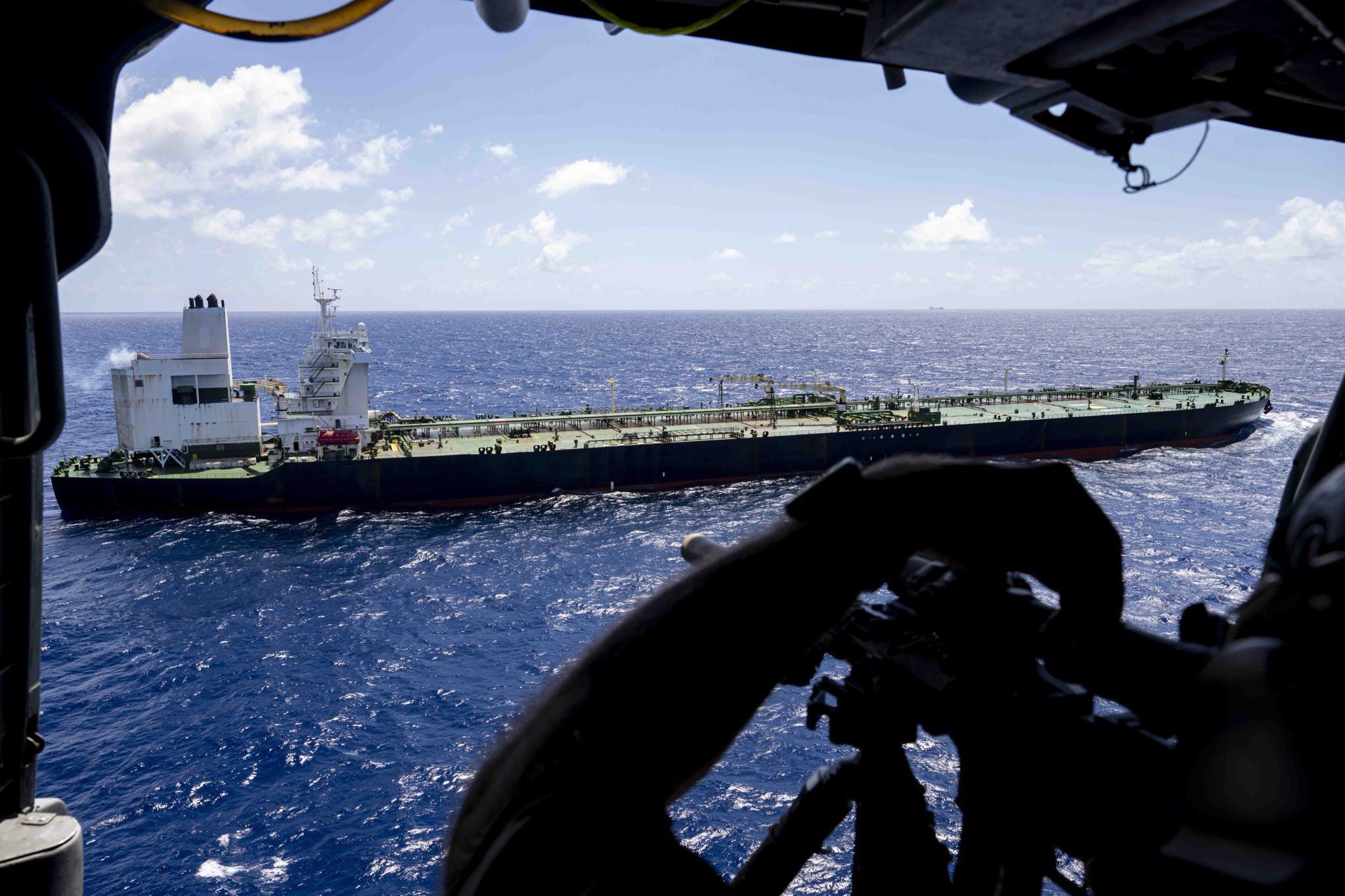
The case stems from an incident in December 2025 when the Bella 1 was intercepted by the U.S. Coast Guard Cutter Munro while en route to Venezuela. Rather than comply with orders to stop, the vessel fled into the Atlantic Ocean, triggering a pursuit that lasted more than two weeks and drew international attention.
At the time, the tanker had become the focus of intense speculation as it attempted to evade capture while crossing the North Atlantic. The vessel was subsequently re-registered in Russia and renamed Marinera, a move U.S. officials argued did not alter its legal status because it was allegedly operating under a false flag when first approached by the Coast Guard.
The chase ended on January 7, 2026, when U.S. authorities seized the tanker in the Atlantic Ocean in an operation involving the Coast Guard and U.S. military personnel executing a judicial seizure warrant after tracking the vessel for weeks. The seizure occurred amid heightened U.S. efforts to crack down on sanctions-evasion networks moving Iranian and Venezuelan oil.
The operation unfolded during an expanding U.S. blockade of tankers accused of transporting sanctioned Venezuelan oil. What began with a series of interdictions in the Caribbean would eventually grow into a globe-spanning enforcement campaign that saw at least ten vessels seized or boarded from the Caribbean to the Indian Ocean.
Federal prosecutors said Kalandadze not only ignored multiple Coast Guard orders to stop but also destroyed records and information aboard the vessel at the direction of a representative of the ship’s operator.
“This defendant put American sailors’ and Coast Guardsmen’s lives at risk while attempting to evade U.S. sanctions and move illicit oil,” U.S. Attorney Jeanine Ferris Pirro said in a statement announcing the guilty plea.
Assistant Attorney General John Eisenberg said the plea should serve as a warning to operators of shadow fleet vessels, adding that U.S. authorities would continue pursuing sanctions evaders “from the Caribbean Sea to the North Atlantic, to the Indian and Pacific Oceans, the Persian Gulf, and anywhere in between.”
The Bella 1 had long been associated with sanctions-evasion activity. Prior to its seizure, the vessel had been sanctioned by the U.S. Treasury for its alleged role in transporting oil linked to networks associated with Iran’s Islamic Revolutionary Guard Corps-Qods Force and Hezbollah. Tanker tracking organizations estimated the vessel had moved tens of millions of barrels of Iranian and Venezuelan crude since 2021.
The investigation was led by Homeland Security Investigations and the FBI, with support from the Department of Justice and the U.S. Coast Guard.

 Join The Club