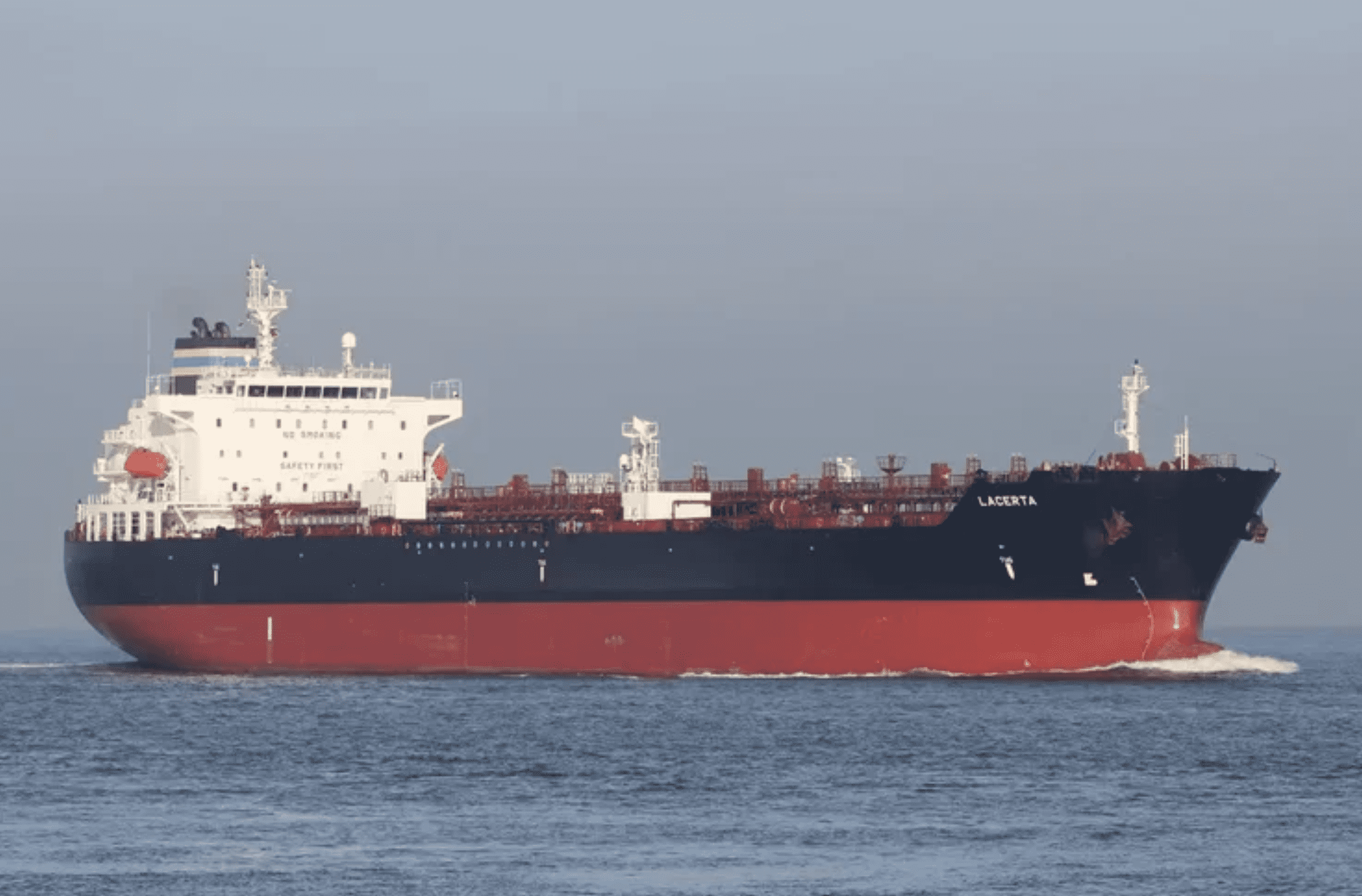
A second vessel tied to Russia’s shadow fleet has joined the sanctioned tanker Seahorse off the coast of Venezuela, days after the Seahorse was involved in a cat and mouse game with U.S. Navy forces, according to people familiar with the ship movements.
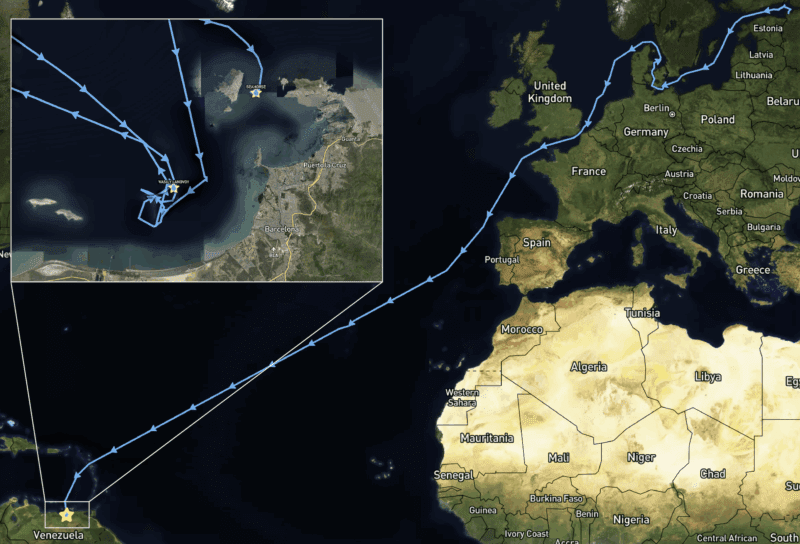
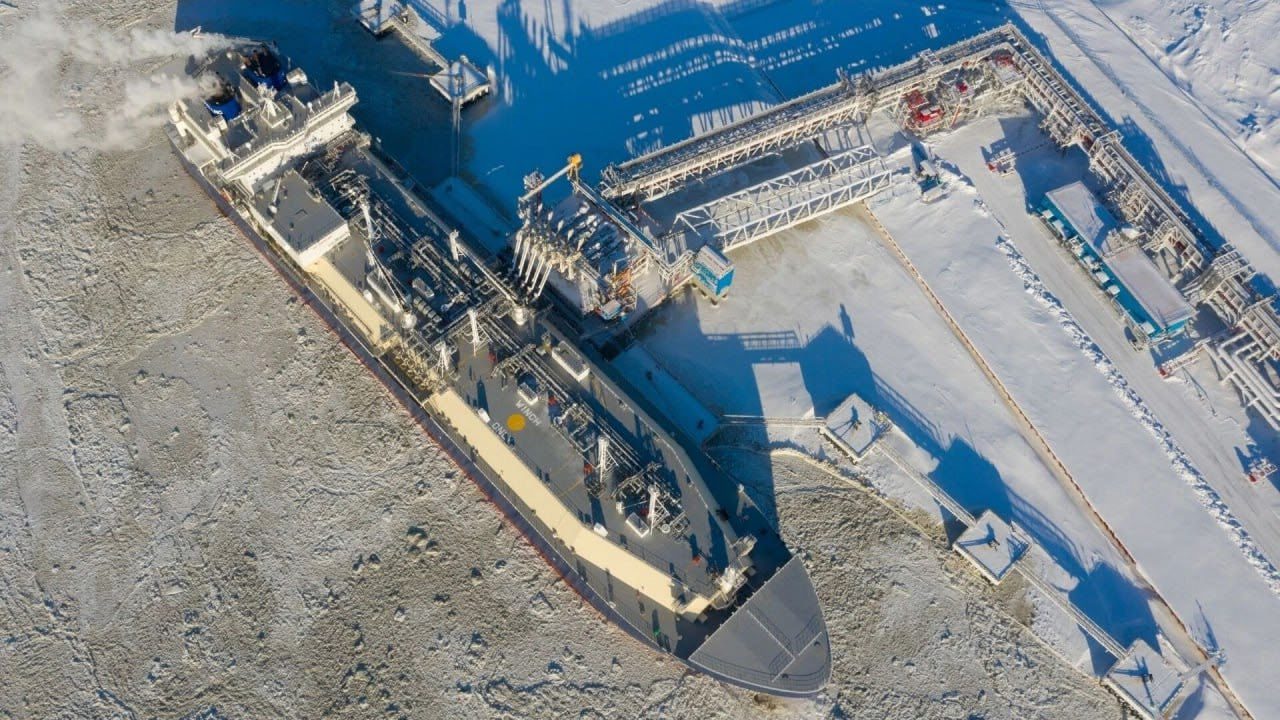
The newly arrived tanker, the Vasily Lanovoy, has previously been deployed to transport condensate linked to Russia’s sanctioned Arctic LNG 2 project – an operation already under heavy scrutiny from U.S. and European regulators. In this latest instance the vessel departed from the Baltic port of Ust-Luga on October 27 traveling across the Atlantic. It arrived at Venezuela’s oil loading complex at Puerto José on November 22.
Recent AIS tracks of Seahorse and Vasily Lanovoy across the Atlantic and in waters off Venezuela. (Source: Maritime Optima)
Its presence near the Seahorse in the Caribbean is raising renewed questions about how Russia’s vast network of opaque shipping assets is skirting international sanctions and maintaining energy flows through unconventional routes. Just two weeks ago Canada imposed sanctions on the Vasily Lanovoy following similar measures by the UK and the EU in September and October 2025. The vessel has repeatedly engaged in spoofing or disengaging its AIS signal.
The U.S. Navy’s encounter with the Seahorse earlier this month underscores the growing friction surrounding this clandestine segment of the global energy trade. American officials have not publicly detailed the nature of the standoff with the U.S. destroyer USS Stockdale, but analysts say the incident highlights escalating efforts by Washington to disrupt Russia’s sanctions-evading logistics.
The arrival of the Vasily Lanovoy – a vessel with a well-documented history of conducting high-risk cargo operations – adds an additional layer of complexity. The vessel without an ice classification picked up several loads of condensate from the Arctic LNG 2 project between August and October 2024. The vessel disengaged its AIS transponder for parts of those journeys.
Venezuelan waters have increasingly become a crossroads for ships with checkered histories, drawn by the country’s permissive regulatory environment and longstanding energy ties with Moscow.
For U.S. officials and sanction monitors, the latest development is another signal of Russia’s growing reliance on dark-fleet infrastructure—aging, poorly insured tankers operating with minimal transparency—to navigate tightening export restrictions. With China’s help the country recently engaged in the first shadow fleet ship-to-ship transfer of LNG off Malaysia’s coast.
Indian refiners have cut back Russian crude purchases for November delivery, as rising competition from China pushes up prices at a time when buyers can tap alternative shipments from the Middle East.
South Korea's presidential office on Wednesday dismissed a Ukrainian report that Russia has imported petroleum products from South Korean ports, calling the accusation inappropriate.
October 7, 2026
Total Views: 826
Get The Industry’s Go-To News
Subscribe to gCaptain Daily and stay informed with the latest global maritime and offshore news
— just like 106,597 professionals
Secure Your Spot
on the gCaptain Crew
Stay informed with the latest maritime and offshore news, delivered daily straight to your inbox
— trusted by our 106,597 members
Your Gateway to the Maritime World!
Essential news coupled with the finest maritime content sourced from across the globe.

 Join The Club