Don’t Miss Your Daily Briefing for the Maritime Industry
Join the leading maritime news network
— trusted by our 106,492 members
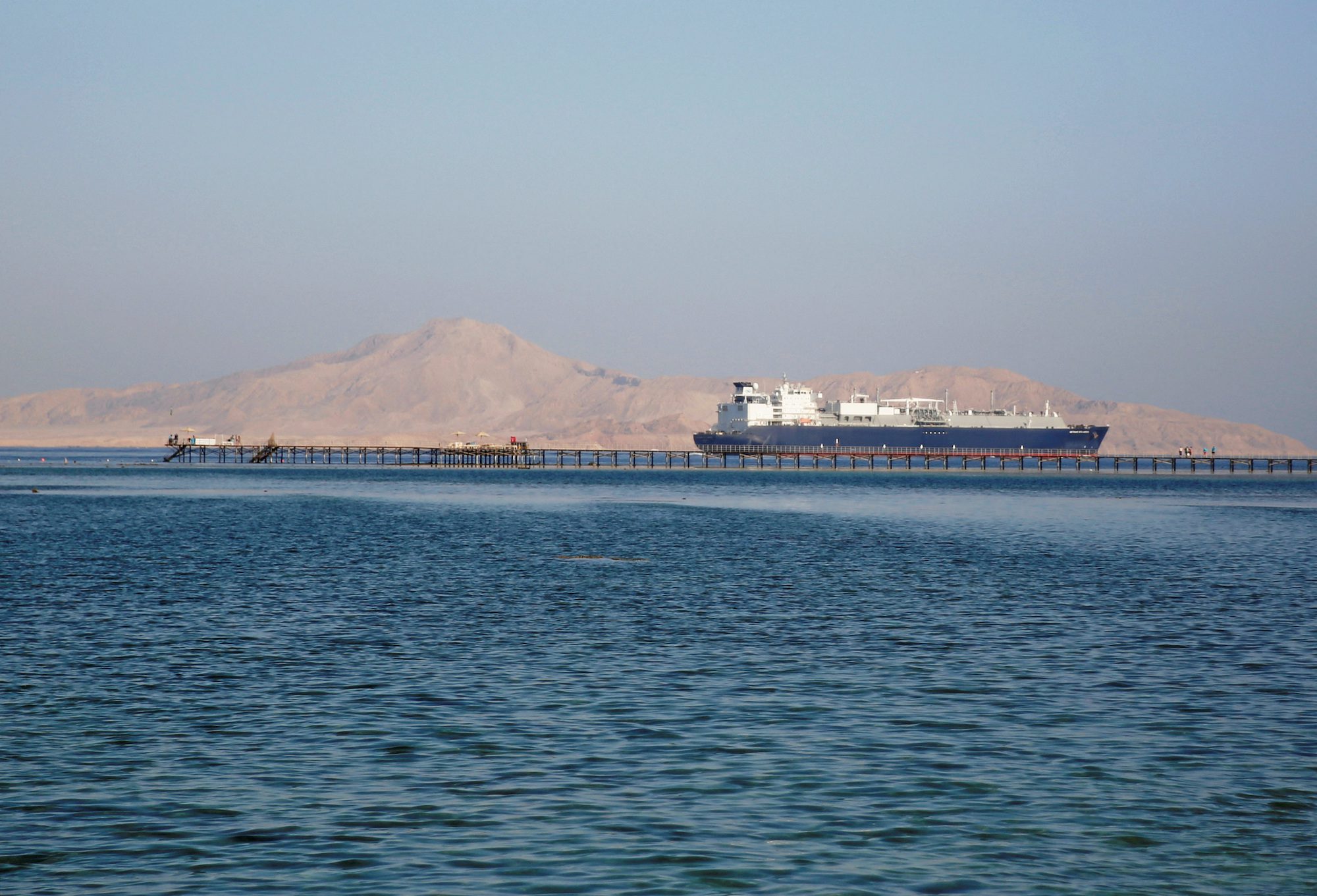
A ship passes by a beach in the Aqaba Gulf in front of Tiran island which transferred into Saudi Arabia in 2017 off the Red Sea resort of Sharm el-Sheikh, Egypt July 12, 2018. Picture taken July 12, 2018. REUTERS/Amr Abdallah Dalsh
Saudis Shuttle Oil North On Tankers To Evade Houthis
Aug 22, 2026 (Bloomberg) –Shipowners including Sinokor Group are helping Saudi Arabian crude exit the Red Sea via the safer northern route, as Iran-backed militants target the kingdom’s exports via the Bab el Mandeb chokepoint in the south.
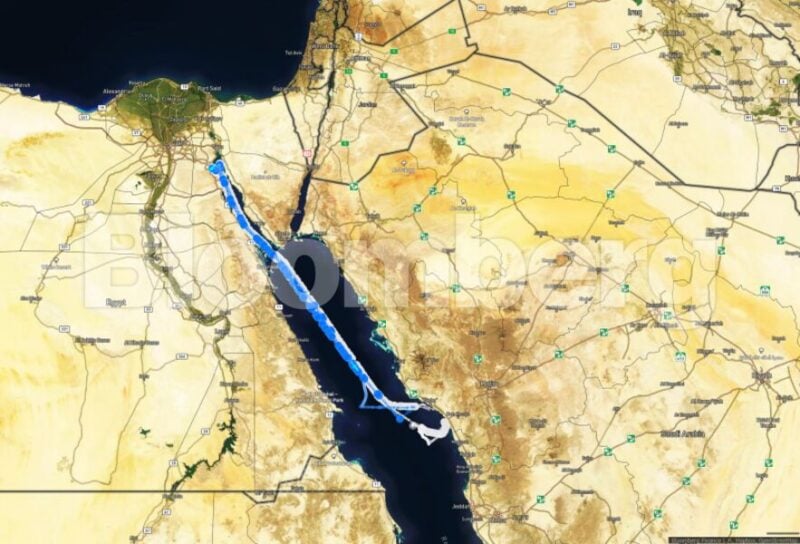
State-owned Saudi Aramco has been exporting more oil from ports such as Sidi Kerir in the Mediterranean Sea after Yemen-based Houthis started targeting ships that had loaded at the Red Sea export terminal at Yanbu. Over the past month, vessels controlled by South Korea’s Sinokor, Greece’s Dynacom and Norway’s DHT Management AS have been seen shuttling cargoes from Yanbu to Ain Sukhna, where oil is discharged and piped north.
Sinokor, Dynacom and DHT Management didn’t immediately respond to emails seeking comment.
The shuttling tankers, together with Saudi-controlled and commercial vessels that made one-way journeys out of the Red Sea via the north, have helped the OPEC producer sustain flows and keep global markets supplied. It emulates a similar move by the United Arab Emirates to transport its oil out of the Persian Gulf through the Strait of Hormuz.
Tankers have been shuttling Saudi crude between Yanbu in the lower right to Ain Sukhna in the upper left, from where it is shipped through a pipeline to the Mediterranean Sea.Source: Bloomberg
“Tanker operators with higher risk tolerance have entered the trade, facilitating shuttle tanker movements between Yanbu and Ain Sukhna so crude supplies can be transported, and Saudi Aramco customers can pick up crude directly at Sidi Kerir instead of Yanbu,” said Xavier Tang, senior market analyst at Vortexa.
Saudi crude exports via the northern Red Sea have increased by about a third since the Houthis announced their blockade on July 20, to about 1.1 million barrels a day, according to data from Kpler. At least four tankers have completed the journey from Yanbu to Ain Sukhna twice or more with cargo, transferring about 16.3 million barrels, according to ship-tracking data compiled by Bloomberg.
Saudi crude shipments via the Mediterranean mean tankers have to sail around southern Africa to reach the kingdom’s main customers in Asia. That adds weeks to the journey.
Yanbu has been central to Saudi Arabia’s efforts at bypassing the Strait of Hormuz, with the kingdom quickly rerouting Persian Gulf barrels via the East-West pipeline to keep oil flowing early in the war. Some shipowners and charterers are still risking the journey through the Bab el Mandeb Strait near Yemen.
The Greek finance ministry said on Thursday it was implementing sanctions in place linked to Iran and that it backed efforts to effectively combat money laundering and the financing of terrorism.
Iran’s Revolutionary Guards claimed Thursday that seven commercial vessels were struck overnight in the Persian Gulf and Strait of Hormuz, including four ships conducting oil transfers, prompting President Donald Trump...
The United States has imposed a new round of sanctions targeting a law firm, shipping agents and nine vessels accused of helping Iran move oil and other commodities through international...
October 21, 2026
Total Views: 744
Get The Industry’s Go-To News
Subscribe to gCaptain Daily and stay informed with the latest global maritime and offshore news
— just like 106,492 professionals
Secure Your Spot
on the gCaptain Crew
Stay informed with the latest maritime and offshore news, delivered daily straight to your inbox
— trusted by our 106,492 members
Your Gateway to the Maritime World!
Essential news coupled with the finest maritime content sourced from across the globe.

 Join The Club