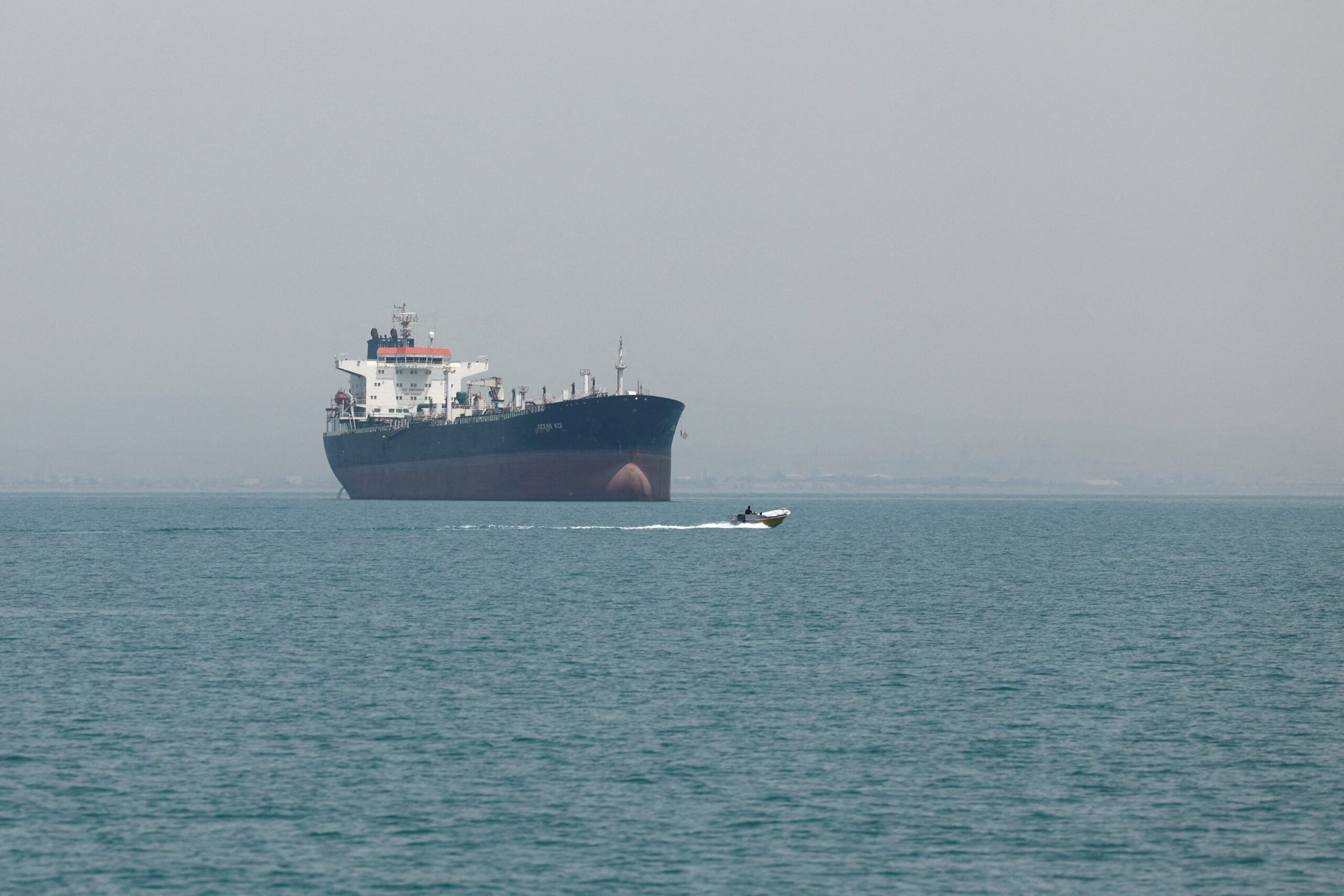
U.S. Energy Secretary Chris Wright says the military helped move more than 15 million barrels of oil and petroleum products through the Strait of Hormuz on Tuesday, an extraordinary figure that remains difficult to square with commercial shipping data.
“On Tuesday, the U.S. military helped ship over 15 million barrels of oil and products out of the Strait of Hormuz — combined with pipelines, the total leaving the region is closer to 20 million barrels,” Wright said.
He said the seven-day average through Hormuz is now above 8 million barrels per day. “Make no mistake, thanks to the U.S. Navy, oil is flowing through the Strait of Hormuz.”
The administration has not released vessel-by-vessel data supporting the figures.
The claim follows an Axios report from Wednesday, August 19, saying a U.S. military-coordinated shipping corridor through the southern Omani side of Hormuz has been moving 15 to 20 tankers in and out each night under military protection. U.S. officials told Axios the operation is moving roughly 10 million barrels per day, with as much as 15 million to 20 million barrels leaving on particularly busy nights.
Axios reporter Barak Ravid reported Saturday that the operation appears to be accelerating, with around 40 tankers transiting in and out through the southern deep channel Friday night. Three U.S. officials told Ravid that approximately 16 million barrels of oil moved out of the Strait during the operation.
That would represent a sharp increase from the 15 to 20 tanker movements per night previously described by U.S. officials.
But commercial vessel-tracking data continues to show much lower levels of ordinary commercial traffic. The U.S.-led Joint Maritime Information Center on Thursday said commercial traffic through Hormuz remains at “reduced levels,” with independent tracking showing single-digit numbers or no tankers transiting in either direction.
JMIC separately recorded 42 U.S.-facilitated vessel transits over August 18-19, or about 21 per day. Those figures are based on U.S. NCAGS data and cover vessels rather than barrels, with no breakdown of how many were tankers, their direction of travel or how much oil they carried.
JMIC’s separate tracking of non-facilitated tanker traffic showed just three crossings per day on August 17, 18 and 19.
Kpler similarly reported that confirmed Hormuz crossings fell 19.5% last week to 95, with no crossings recorded through the Omani route or established Hormuz Traffic Separation Scheme.
TankerTrackers.com also questioned the Axios figures, suggesting U.S. officials may mean 10 million barrels per convoy movement rather than per day, while noting that industry estimates are considerably lower.
“Officials like to pick cherries when it suits them. It’s the daily averages over a longer duration that matter. Flotilla convoys move only a number of tankers at a time due to limited air support, and most likely a laden egress one night followed by a ballast ingress the next,” TankerTrackers.com said.
JMIC continues to rate the Strait of Hormuz threat level as SEVERE and expects traffic to remain reduced through both the Iranian-controlled northern route and southern Omani corridor amid continued attacks, U.S. blockade enforcement and heightened regional tensions.
For context, Hormuz averaged roughly 138 vessel transits per day before the war.
The U.S. may be moving substantially more oil through Hormuz than commercial tracking captures. For now, however, Washington’s increasingly large oil-flow claims remain difficult for the shipping industry to independently confirm.

 Join The Club