By Jack Farchy and Alex Longley (Bloomberg) — In March this year, inside a 282-year-old institution responsible for one of the most important prices in global oil markets, one man staged a quiet protest.
“Nonsense rate,” Christopher Loveday wrote on March 23 in an internal document at the Baltic Exchange, where he was responsible for helping produce the world’s benchmark rate for shipping oil. “Still a nonsense,” he wrote two days later. On March 31, as he filled in his section of the spreadsheet that sets the price of a benchmark underpinning billions of dollars in freight derivatives trading, he wrote: “b/s rate.”
The comments are among numerous internal communications, emails and calls that have become public in filings and court testimony during a legal battle playing out in London between the Baltic and oil trader Mercuria Energy Group. Collectively, they offer unprecedented insight into how the war in Iran played out inside a key corner of the global oil market.
In particular, the case has provided a fly-on-the-wall perspective on events inside the Baltic, which for centuries has been at the heart of the global shipping industry.
It has shown that numerous people involved in the key oil tanker rate, called TD3C, expressed reservations as the Baltic Exchange continued to publish the price in the early weeks of the war. It has put a spotlight on the Baltic’s guidance allowing for derivatives contracts underpinned by TD3C to be used in setting the benchmark itself, which was met with shocked derision by some of the industry’s biggest players. And it has shown tensions running high within the Baltic’s senior staff, with one describing the company as “so rotten.”
It’s unclear how the revelations, while embarrassing for the Baltic and its owner Singapore Exchange Ltd., will affect the outcome of the case. Lawyers for the two sides are due to make their closing arguments in court this week, after which the judge could take several months to come to a decision. Mercuria, whose demands have changed several times since it launched the case in April, is seeking to have the judge declare that the Baltic was wrong to keep publishing the TD3C index in the initial phase of the war from March to July.
“This is obviously a difficult moment for the Baltic, and it’s important for the market that it comes through this and learns whatever it needs to learn,” said Halvor Ellefsen, a London-based director at Fearnleys Shipbrokers UK Ltd. “Any commodity market needs reliable benchmarks and freight is integral to that.”
The Baltic has argued its decision was justified and that, in any case, any breaches of its obligations should be addressed by its regulator, the Financial Conduct Authority, rather than in private legal action. It declined to comment for this story while the trial continues.
Not an Exchange
The Baltic Exchange’s history dates back to 1744, when it was formally established in Threadneedle Street as the Virginia and Baltick Coffee House as a venue for trading commodities — key among them tallow from the Baltic Sea region.
While a key cog in global shipping and commodity markets, the institution employed just over 30 people last year and made a pre-tax profit of £379,000, according to its most recent annual accounts. Its offices are in the heart of the City of London, a short walk from the Tower of London.
And despite its name, the Baltic Exchange today is not actually an exchange at all: its main role is to collect assessments from a small group of brokers to produce benchmark indexes for the price of shipping.
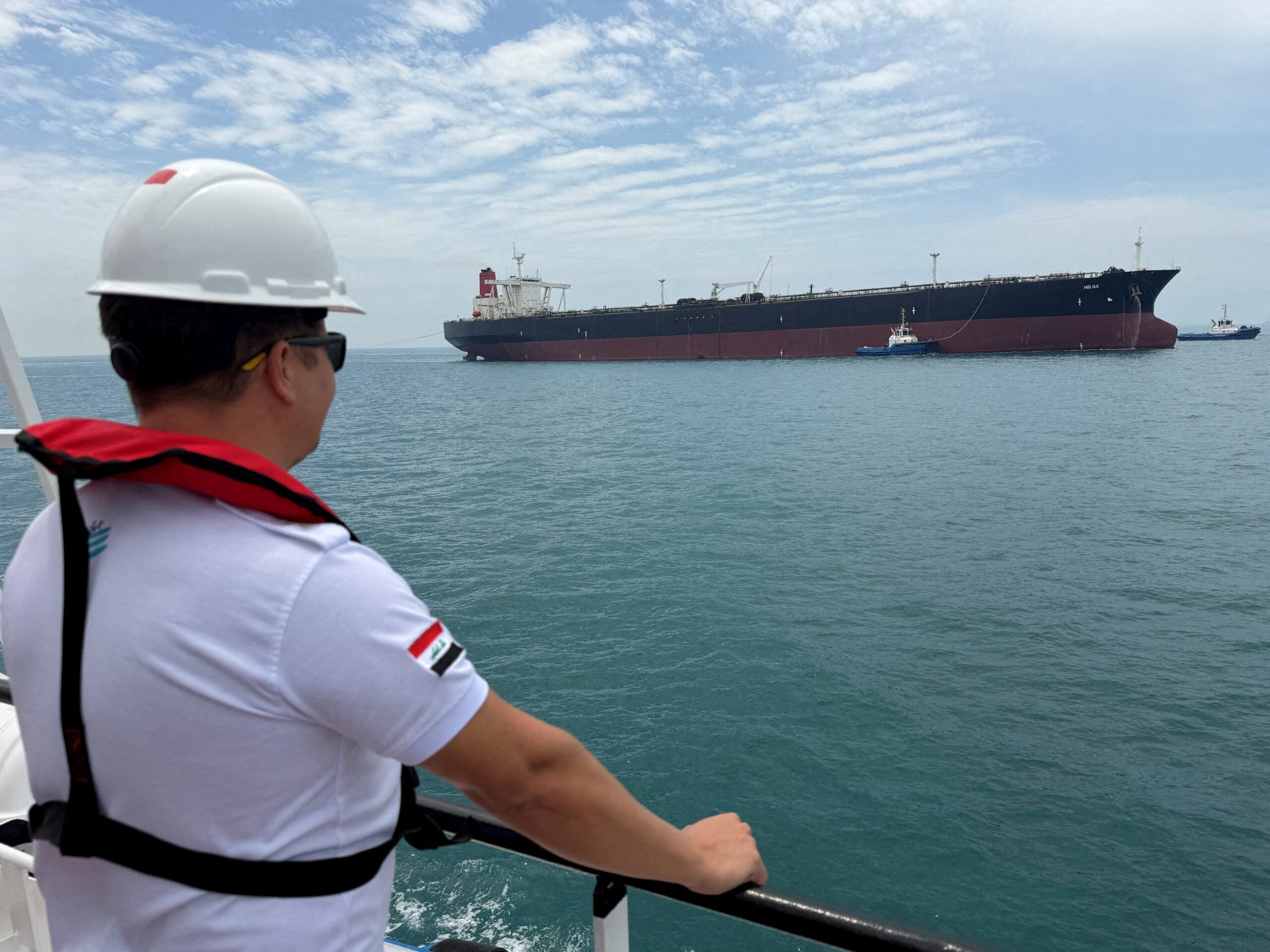
When the US and Israel attacked Iran on Feb. 28, Loveday’s role was to oversee that process for the Baltic’s most important tanker index: TD3C, which represents the cost of hiring a very large crude carrier, or VLCC, on the route from Ras Tanura in Saudi Arabia to Ningbo in China.
Every day, he would review the numbers submitted by the nine broker “panelists” responsible for assessing the TD3C rate, question any that seemed out of whack to him, and also insert his own estimate of the rate into the Baltic’s spreadsheet — to serve as a sense-checking reference point for comparing the brokers’ numbers. The TD3C index is published just after 4 p.m. every day, using an average of the panelists’ assessments.
The crucial question for the Baltic staff in the first days of the war was whether TD3C should be suspended. Over three weeks of hearings, Mercuria’s legal team has argued that the Baltic got the answer wrong.
At 9:15 a.m. on the morning of March 2, the first working day after the war began, the Baltic’s small team held a call, according to Loveday’s witness statement. Several of their key routes, including TD3C, involved transiting the Strait of Hormuz — something ships had abruptly stopped doing over the weekend. At that point it was unclear how long the war would last, or whether it would have a lasting impact on the flow of oil.
Over the following week, the Baltic had numerous interactions with brokers, traders and shipowners. Tanker traffic through the Strait had all but ceased, and several traders argued that the TD3C rates should be suspended (though Mercuria was not among them — it advocated instead for basing TD3C on alternative routes that were still operating normally).
Draft Notice
Mark Jackson, a shipping industry veteran who had been CEO of the Baltic since 2017, even commissioned a draft notice announcing the suspension of all rates on routes involving the Strait of Hormuz, he said in his witness statement.
Still, there were hopes that the war may end quickly, and when the Baltic held a call for its panelist brokers on March 4, the conclusion was that they were willing to keep submitting assessments. TD3C would continue.
Yet Loveday, the Baltic employee most directly responsible for the TD3C process, stopped inputting his own estimates into the Baltic’s spreadsheet.
In fact, it was only after the Baltic received a complaint and its head of compliance started looking into TD3C, that Loveday’s boss noticed the missing numbers and told him to restart, according to witness statements from the Baltic executives.
Loveday, who worked as a shipbroker for about 28 years before joining the Baltic in 2019, registered his protest in the notes of the spreadsheet. “I don’t see how we can possibly report here,” he wrote on March 20. (He later explained in his witness statement that this had been written while he was waiting for a flight at Houston airport and was “feeling a little ‘non-compliant’.”) He continued to insert snide comments until early April, when a colleague took over as the assessor of TD3C.
In his witness statement, Loveday said that his comments were specifically about the futility of his own attempts to estimate the rate, rather than about the benchmark itself. Still, he also said in court that he had thought since the start of the war that TD3C should have been suspended.
And Loveday was not the only person involved in the production of TD3C to express concerns. One Baltic staffer said in early April that the rate was “starting to lose credibility”; another told colleagues that if he was not at the Baltic he would have “zero confidence” in the rate, according to transcripts of internal calls cited by Mercuria’s lawyers.
When the Baltic convened the panelists on March 16, several argued in favor of a suspension. “It’s purely hypothetical…I think it’s just complete nonsense, the whole thing,” one said. One panelist refused to submit assessments for several weeks, while two other panelists submitted the same value every day for weeks at a time.
Still, the Baltic continued to publish the index. It has argued that it was led by the panelists – the brokers with the most information about what tanker deals were being discussed – and that at no point did a majority of them say they couldn’t assess the rate.
‘Extraordinary Circumstances’
Besides continuing to publish TD3C itself, one of the more controversial decisions to emerge from the court proceedings was a piece of guidance issued by the Baltic Exchange, to help the broker panelists to arrive at their assessments of the market.
In “extraordinary circumstances,” the Baltic wrote in early March, panelists could base their judgment of the tanker market by looking at price levels in the shipping derivatives contracts – known as forward freight agreements – that were themselves underpinned by TD3C.
The inclusion of the reference to the FFA market received an immediate backlash. TD3C was supposed to be based on actual deals being done and discussed in the real world. If TD3C could be set based on movements in the derivatives market, the whole system risked losing touch with reality.
“You are literally leaving your index open for direct abuse,” one trader wrote to the Baltic of the decision. “It’s like having a criminal write his own sentence.”
When one panelist wrote in the Baltic’s spreadsheet of assessments that they had used the FFA market as a guide, Baltic CEO Jackson told a colleague they should be careful that information “doesn’t get out.” (Jackson said in court that he had simply wanted to avoid further discussions on the subject, though he agreed with Mercuria’s barrister that the comment didn’t reflect the Baltic’s motto “Our Word Our Bond.”)
The Baltic has defended its instructions to panelists that they can use the FFA market as a reference point – and indeed the guidance still stands, one of the Baltic’s senior assessors confirmed to the court.
In court filings, expert witnesses from the two sides said that physical and FFA markets may inform one another, but noted that FFA information “should not be used as the sole determinant of a physical TD3C assessment.”
Freight Surge | Daily earnings for supertankers jumped because of Iran war
The significance of the huge derivatives market underpinned by TD3C — worth 17.4 billion euros ($19.4 billion) in the first six months of this year — was highlighted in court for both the Baltic and Mercuria.
Mercuria was the largest user of TD3C derivatives, accounting for between 25% and 50% of total open interest, according to its freight derivatives trader David Schickler. It was generally short TD3C derivatives as a hedge for the earnings of its fleet of oil tankers around the world.
When the TD3C rates soared at the start of the war, Mercuria’s derivatives positions faced hefty losses. But the company’s tankers didn’t experience a similar surge in earnings, and its traders testified that they weren’t able to sail through Hormuz to take advantage of the high rates supposedly on offer. Mercuria has said its losses as a result of the mismatch were likely to be in the hundreds of millions of dollars, although it has removed that claim from its most recent legal filings.
When the Baltic’s lawyer asked Renaud Hauspy, a freight trader at Mercuria, if the effect of Mercuria’s index-linked position had been a “disaster,” Hauspy replied: “It has not been positive.”
Mercuria’s lawyers, meanwhile, argued that the size of the FFA market was part of the reason that it kept publishing the benchmark.
In a mid-April call, Matthew Cox, the Baltic’s head of benchmark production, asked: “Would we have suspended TD3 had it not been for the open interest, had it not been for the FFAs? And I think had it, you know, had TD3 been a, any other index, we would, we would have, um, suspended.” (Cox told the court that he was incorrect to suggest that every other criterion for suspension had been met.)
As the weeks dragged on, frustrations continued to grow inside the Baltic. In one internal call that was read out in court by a lawyer for Mercuria, one of the Baltic’s assessors described the company as “so rotten at the moment.”
Since the Baltic’s head of compliance started her job in April 2022, she has received four formal complaints: all of them since the Iran war began, and all of them about TD3C, she said in her witness statement. The most recent of them, on August 12, was from Mercuria itself.
Mercuria initially sought in its lawsuit to have TD3C retroactively suspended, but has adjusted its claim multiple times, most recently seeking only that the court rule the Baltic should have suspended the route from March until July.
Traffic through the Strait of Hormuz has picked up sharply during the second half of the year despite the ongoing conflict, with exports from countries other than Iran recently nearing prewar levels.
But the trade has remained shrouded in secrecy. And it has increasingly become dominated by one company: Sinokor, which accounted for more than 50% of all transits since early July along the “southern” route by the Omani coast, according to a report produced for the case by maritime security company Ambrey.
It’s far from clear that the difficulties assessing tanker rates have gone away.
© 2026 Bloomberg L.P.

 Join The Club