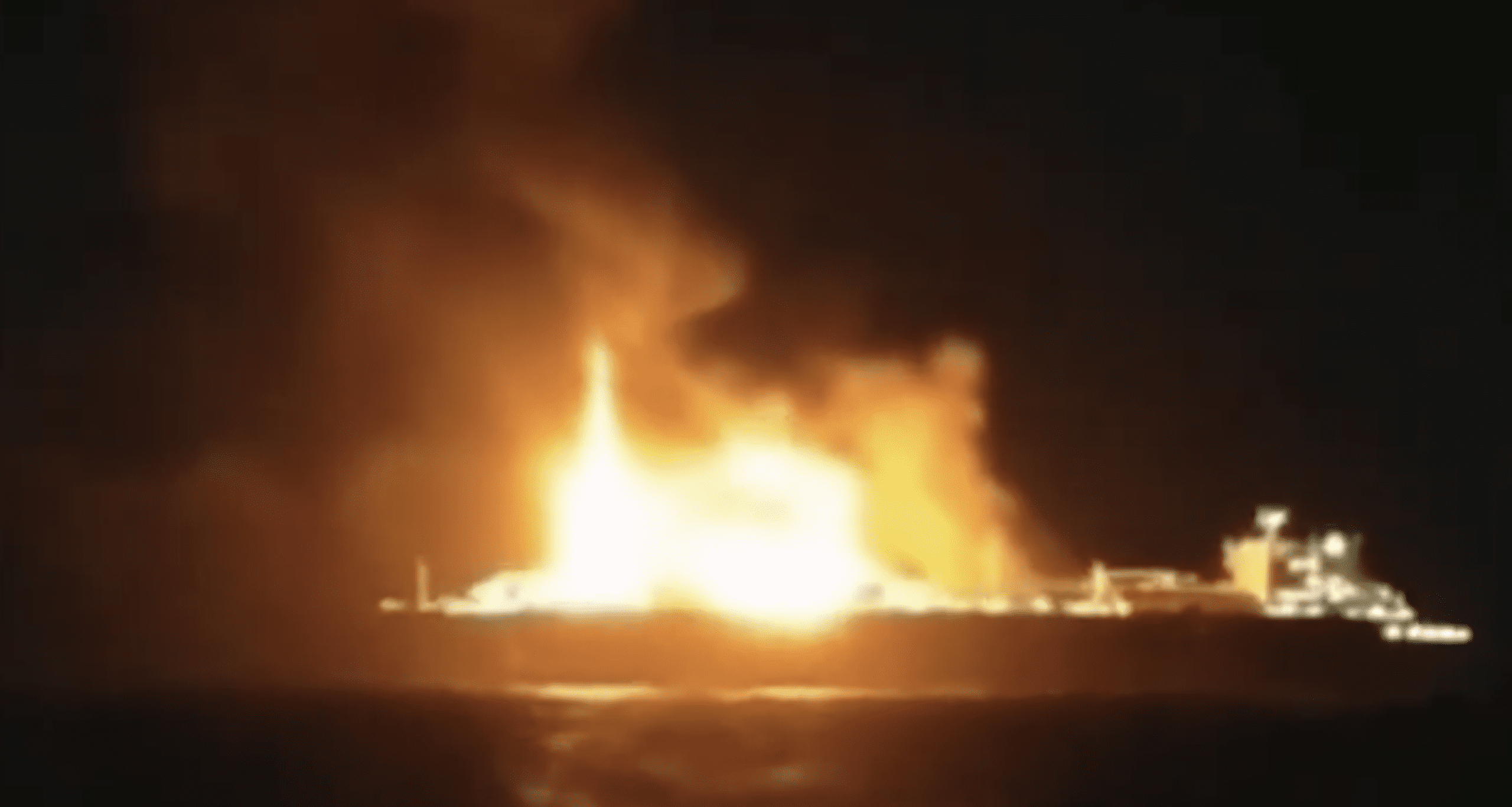
Russia’s sanctioned Arctic LNG 2 export network is showing early signs of disruption after an explosion sank one of its shadow fleet carriers in the Mediterranean this week, forcing other tankers to halt or reroute and raising new questions about the security of a key shipping corridor.
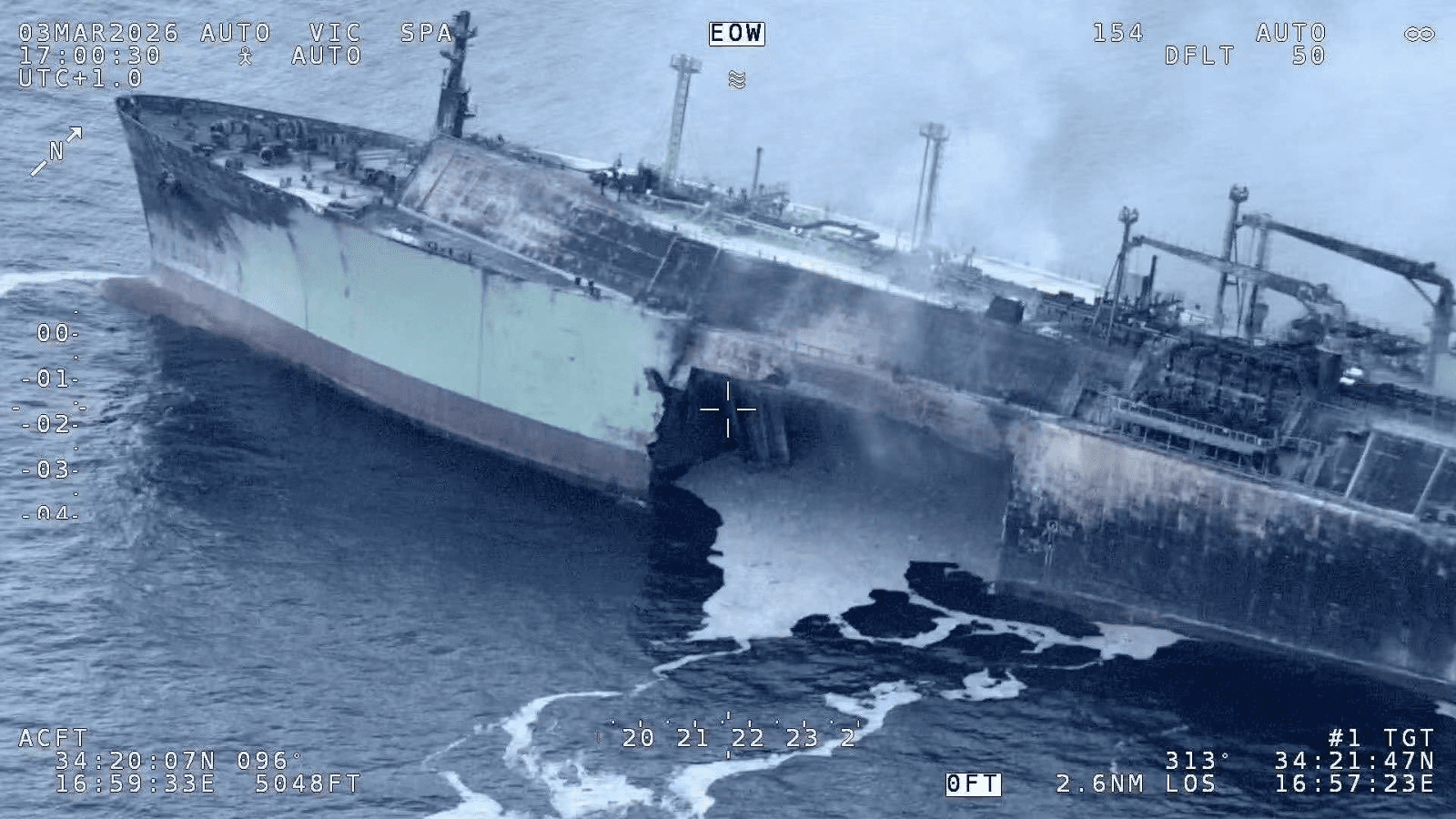
The LNG carrier Arctic Metagaz, linked to Russia’s sanctioned Arctic LNG 2 project, sank off Libya after a powerful explosion early March 3 roughly 150 nautical miles southeast of Malta. Moscow has blamed Ukrainian drone boats for the attack, though Kyiv has not publicly commented.
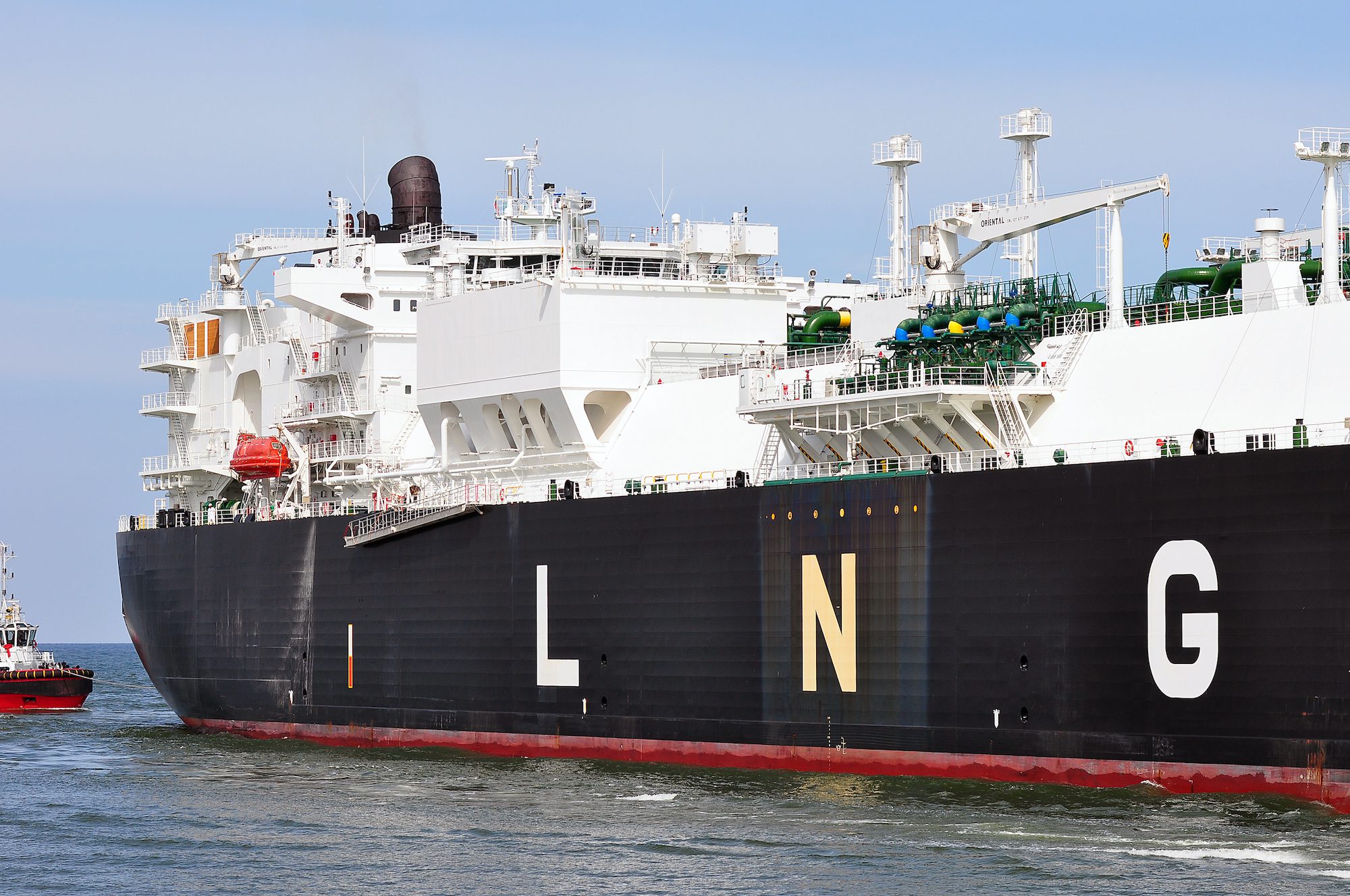
The loss of the vessel could have outsized consequences for Russia’s efforts to sustain exports from Arctic LNG 2, which relies on a small group of aging LNG carriers operating outside Western sanctions.
Russia has roughly a dozen such ships available for the project, already too few to carry its full production capacity.
The immediate impact is now becoming visible in vessel tracking data.
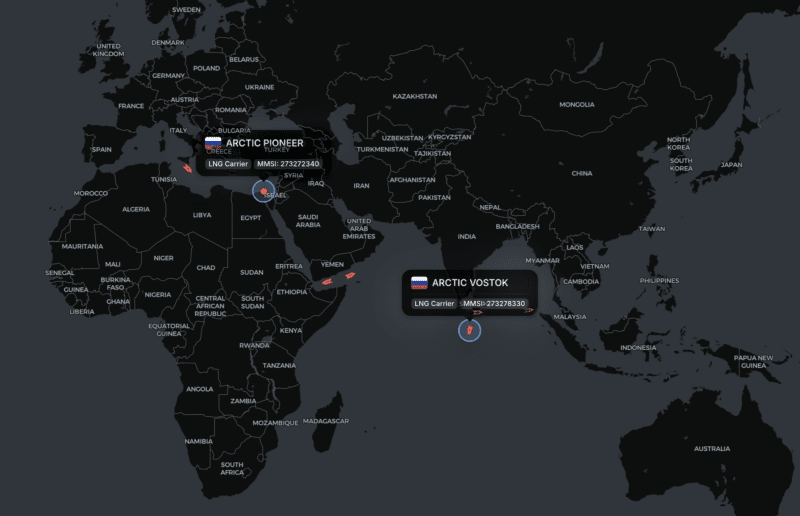
The LNG carrier Arctic Pioneer, which had been traveling northbound through the Suez Canal at the time of the explosion, halted its voyage shortly afterward and has been holding offshore near Port Said for roughly 48 hours, according to shipping data.
The vessel had previously delivered Arctic LNG 2 cargo to China’s Beihai terminal and was likely returning toward Russia’s Arctic transfer hubs to reload.
Even more significantly, another shadow fleet vessel appears to have altered its route entirely.
The LNG carrier Arctic Vostok, which was sailing westbound across the eastern Indian Ocean when the blast occurred, initially slowed and began circling south of Sri Lanka shortly after news of the incident emerged.
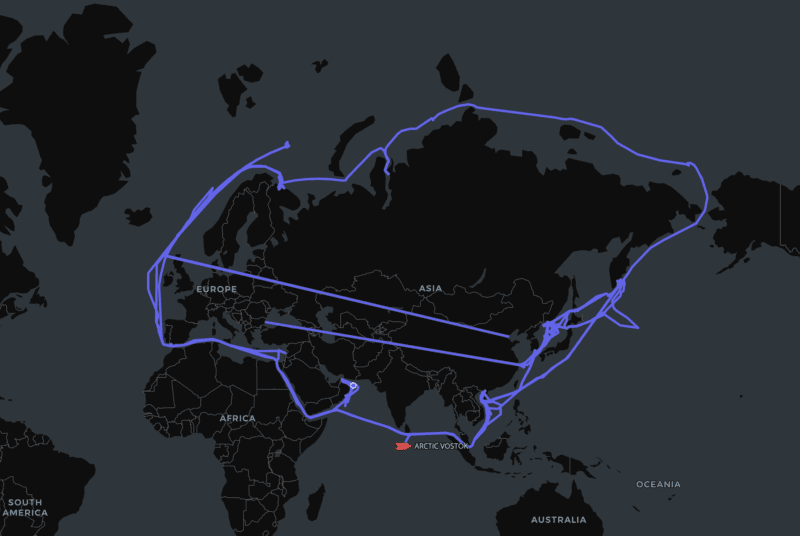
In the past 24 hours, however, the vessel has begun steadily heading south-southwest – a course that suggests it is preparing to bypass the Suez Canal and instead sail around the Cape of Good Hope at the southern tip of Africa.
AIS data showing Russia’s Arctic LNG 2 fleet with Arctic Vostok detouring to the south and Arctic Pioneer holding at Port Said. (Source: MagicPort Maritime Intelligence)
Such a detour would keep the vessel far from the Mediterranean and well outside the potential range of Ukrainian maritime drones.
If confirmed, it would mark a rare shift for Russia’s Arctic LNG shadow fleet.
Even Arctic Vostok itself has not previously used the Cape route working for ALNG2, according to shipping records.
A diversion around southern Africa would add thousands of nautical miles to a typical voyage, significantly increasing travel time and operational costs.
For the project’s operator, Russia’s largest independent gas producer Novatek, that could further strain an export system already constrained by sanctions.
Arctic LNG 2 is estimated to be running at roughly 30% of its potential output, largely because Novatek lacks enough available LNG carriers to transport cargoes efficiently.
Each additional week spent at sea reduces the number of voyages each vessel can complete in a year.
“If these ships start routinely avoiding the Mediterranean, the tonne-mile impact would be significant,” said one shipping analyst tracking the project.
It remains unclear whether Arctic Vostok’s diversion represents a temporary precaution or the beginning of a broader shift in routing strategy.
Several other shadow fleet LNG carriers are currently eastbound toward China carrying cargo destined for the Beihai terminal.
More clarity may emerge in the coming days as additional vessels begin their westbound return voyages.
The key question now facing Moscow’s Arctic LNG logistics planners is whether those ships will risk transiting the Suez Canal and Mediterranean – or follow Arctic Vostok around Africa instead.
For a fleet already stretched thin, even a single lost vessel – and the longer routes that may follow – could further complicate Russia’s ability to keep gas flowing from the Arctic.
France has reached out to the governments of Italy and Greece to coordinate efforts in the Eastern Mediterranean as tensions over the war in Iran flare, a person close to French President Emmanuel Macron said.
The crew of the sanctioned Russian LNG carrier Arctic Metagaz have been located alive after abandoning ship following a reported fire in the central Mediterranean, Maltese authorities confirmed Tuesday. In a statement,...
India began rationing natural gas on Tuesday while countries around Asia looked to the spot market to replace supplies, activated emergency plans and prepared to step up production, as the conflict in the Middle East curtailed shipping and halted Qatari output.
March 3, 2026
Total Views: 3591
Get The Industry’s Go-To News
Subscribe to gCaptain Daily and stay informed with the latest global maritime and offshore news
— just like 107,340 professionals
Secure Your Spot
on the gCaptain Crew
Stay informed with the latest maritime and offshore news, delivered daily straight to your inbox
— trusted by our 107,340 members
Your Gateway to the Maritime World!
Essential news coupled with the finest maritime content sourced from across the globe.

 Join The Club