Don’t Miss Your Daily Briefing for the Maritime Industry
Join the leading maritime news network
— trusted by our 106,406 members
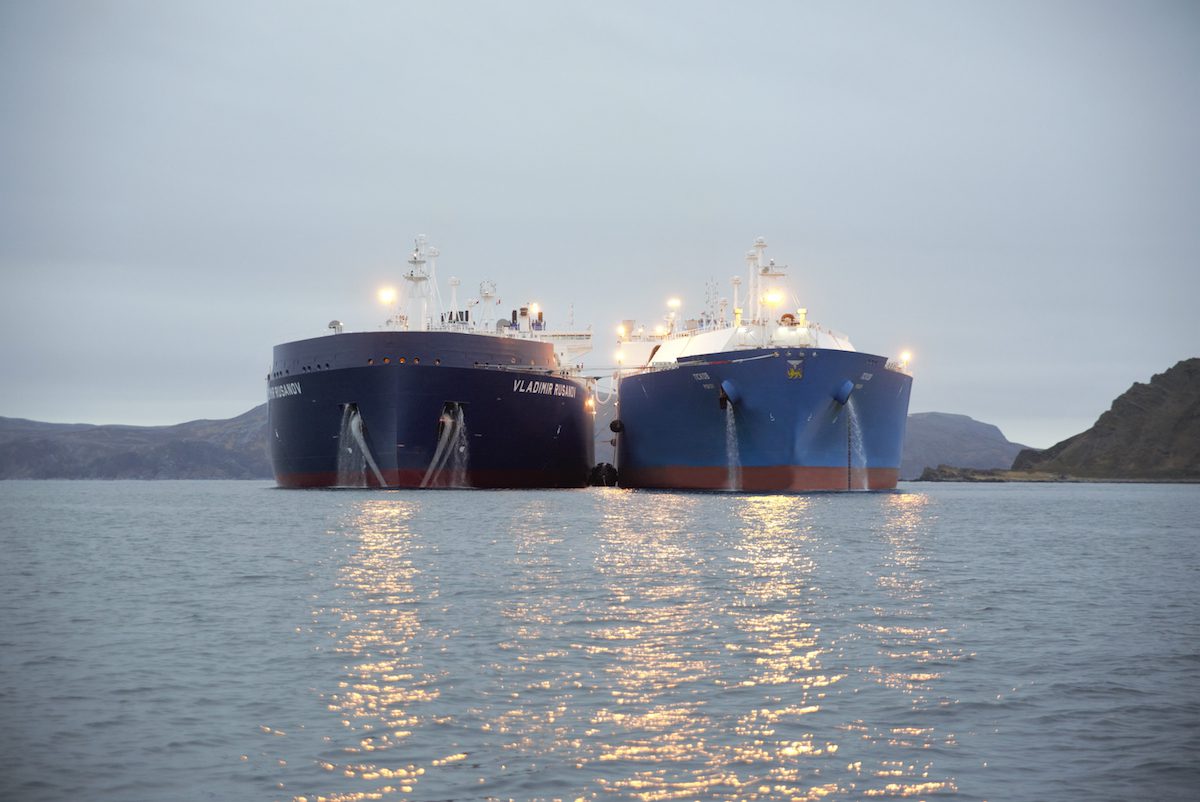
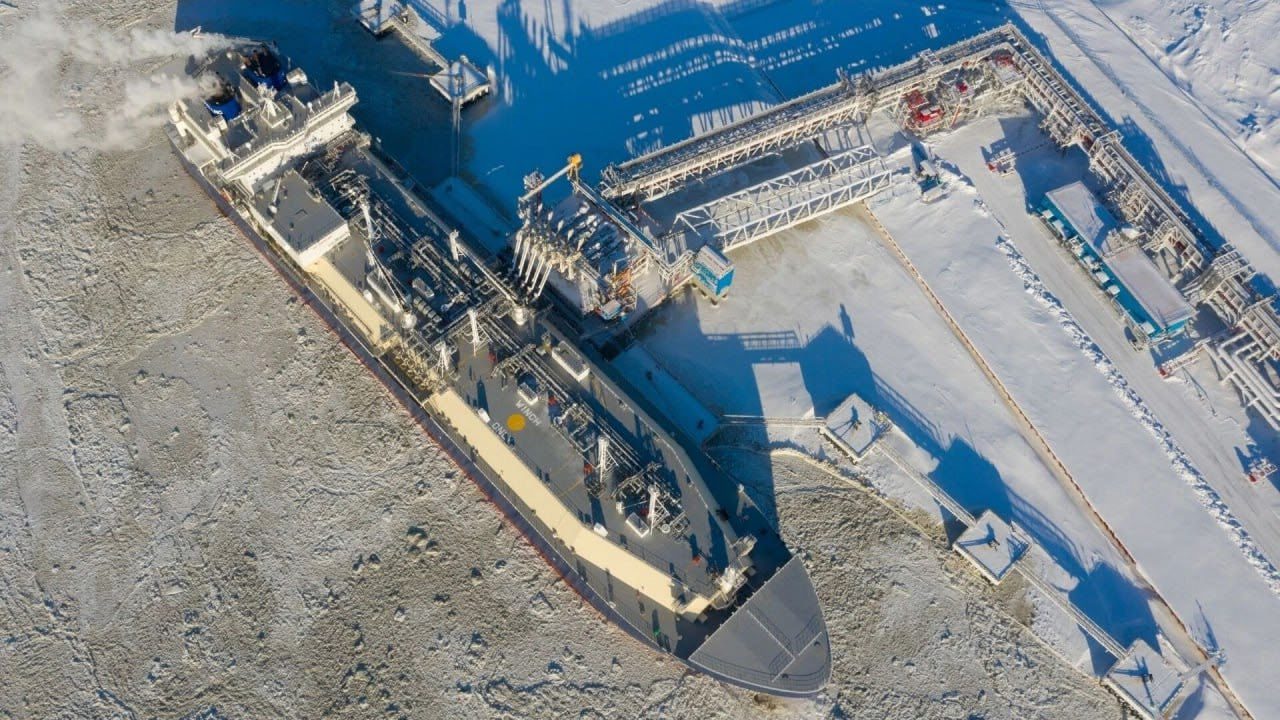
The icebreaking LNG carrier Vladimir Rusanov conducts the first ship-to-ship transfer of liquified natural gas produced at the Yamal LNG project at the port of Honningsvåg, Norway, in November 2018. Photo: SCF Group
Russia Executes First-Ever Triple Arctic LNG Ship-to-Ship Transfer Amid Sanctions
Russia has for the first time conducted three simultaneous LNG ship-to-ship (STS) transfers in Arctic waters, a move highlighting Moscow’s increasingly sophisticated logistics network for exporting gas despite Western sanctions.
Russia has carried out its first known triple LNG ship-to-ship transfer operation in the Murmansk region, underscoring how Moscow is refining complex maritime logistics to keep Arctic gas flowing even as Western sanctions target its energy exports.
Two of the transfers occurred at the Saam floating storage unit (FSU), where LNG from the sanctioned Arctic LNG 2 project was offloaded and reloaded for onward shipment simultaneously, while a third transfer took place near Kildin Island involving cargo from the unsanctioned Yamal LNG project.
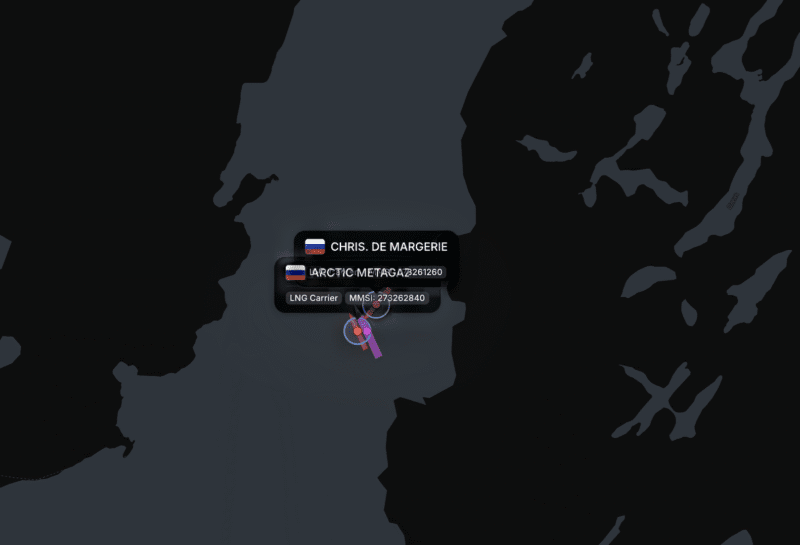
At the Saam FSU, Arc7 ice-class carrier Christophe de Margerie delivered a cargo originating from Arctic LNG 2, with the conventional tanker Arctic Metagaz loading the LNG for onward transport, likely to China’s Beihai LNG terminal, which has so far been the only confirmed destination for cargoes from the sanctioned project.
Christophe de Margerie and Arctic Metagaz at Saam FSU on February 19. (Source: MagicPort Maritime Intelligence)
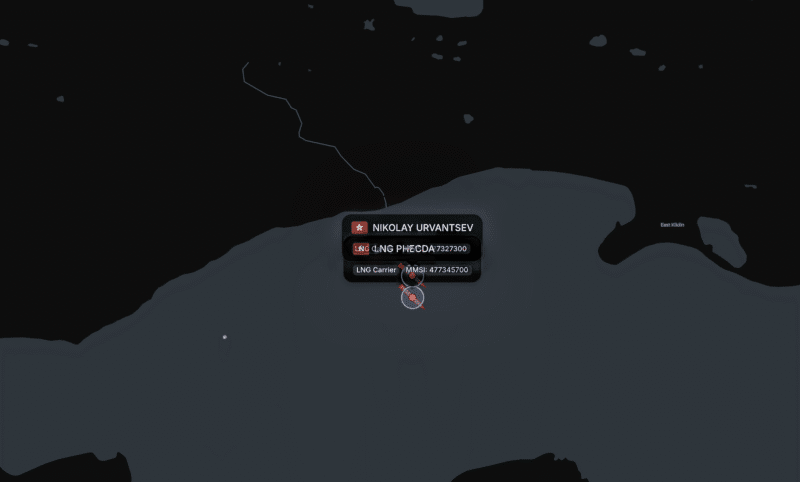
Separately, an Arc7 carrier, Nikolay Urvantsev, transporting LNG from Yamal LNG conducted an STS transfer at the Kildin anchorage east of Murmansk, with the cargo likely bound either for Europe or Asia aboard the conventional tanker LNG Phecda.
All three operations took place within the Murmansk region, a key hub for Russia’s Arctic LNG exports and a focal point for STS operations designed to bridge ice-class shipping with global tanker fleets.
Nikolay Urvantsev and LNG Phecda on February 19. (Source: MagicPort Maritime Intelligence)
Russia’s Arctic LNG projects have become a crucial source of export earnings, alongside oil. Yamal LNG, led by Novatek and partners, has shipped tens of millions of tonnes of LNG since its 2017 start-up, while Arctic LNG 2 is designed to further expand capacity. The projects tap vast gas reserves on the Yamal and Gydan peninsulas, feeding liquefaction plants that supply Europe and Asia.
Despite sanctions imposed by the United States, the European Union and others following Russia’s invasion of Ukraine, LNG exports have proven harder to curtail than pipeline gas, thanks in part to complex maritime logistics and a fleet of ice-class carriers.
Europe purchased about 93% of Yamal LNG output in January 2026, according to trade data, a record level that traders say reflects efforts by buyers to secure supply before an EU import ban on Russian LNG is due to take effect in January 2027. As a result EU imports from Yamal are up 8% year over year for 2026.
Sanctions have complicated Arctic LNG 2 shipments in particular, forcing reliance on storage units, STS transfers and a shadow fleet of tankers. In 2024, vessels linked to the project often sailed with AIS tracking turned off or spoofed. More recently, however, transfers have taken place openly, suggesting confidence in established routes and limited new enforcement actions.
No new U.S. measures have targeted key nodes such as the Beihai terminal, which has only been sanctioned by the United Kingdom. Observers say the lack of new actions from the United States in recent months has allowed Moscow to develop its Arctic LNG 2 export routes.
The triple STS operation signals a new level of coordination for Russian Arctic LNG logistics, showing how the country continues to find ways to move gas to global markets despite mounting restrictions.
A carrier loaded with Qatari liquefied natural gas is sailing north through the Red Sea, potentially speeding up delivery to European customers with a rare transit through waters vulnerable to renewed attacks from Houthi rebels.
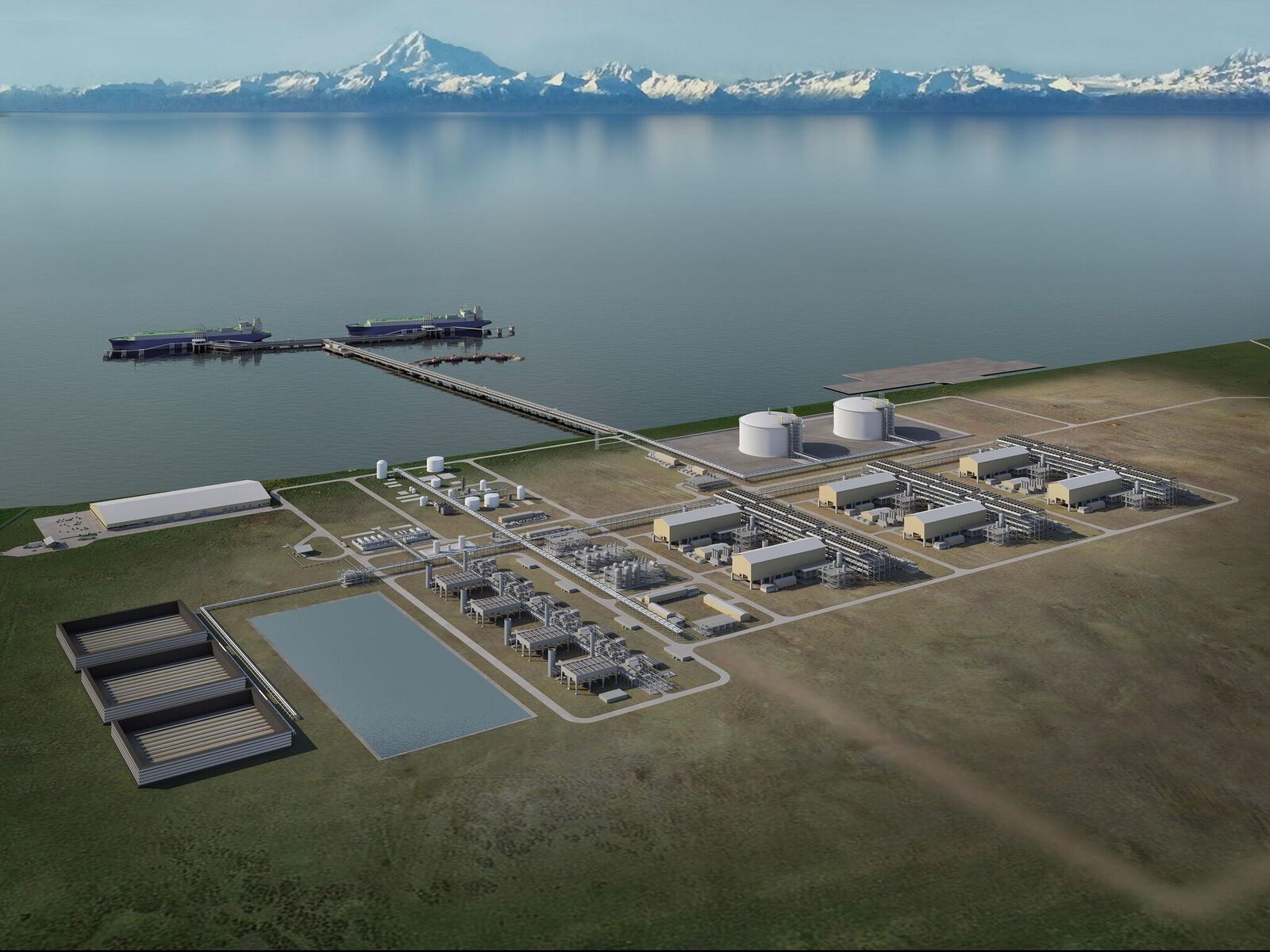
President Donald Trump said Taiwan had agreed to buy 30% of the liquefied natural gas from a planned project in Alaska for 20 years, even as Taipei indicated that no binding commitments have been finalized.

 Join The Club