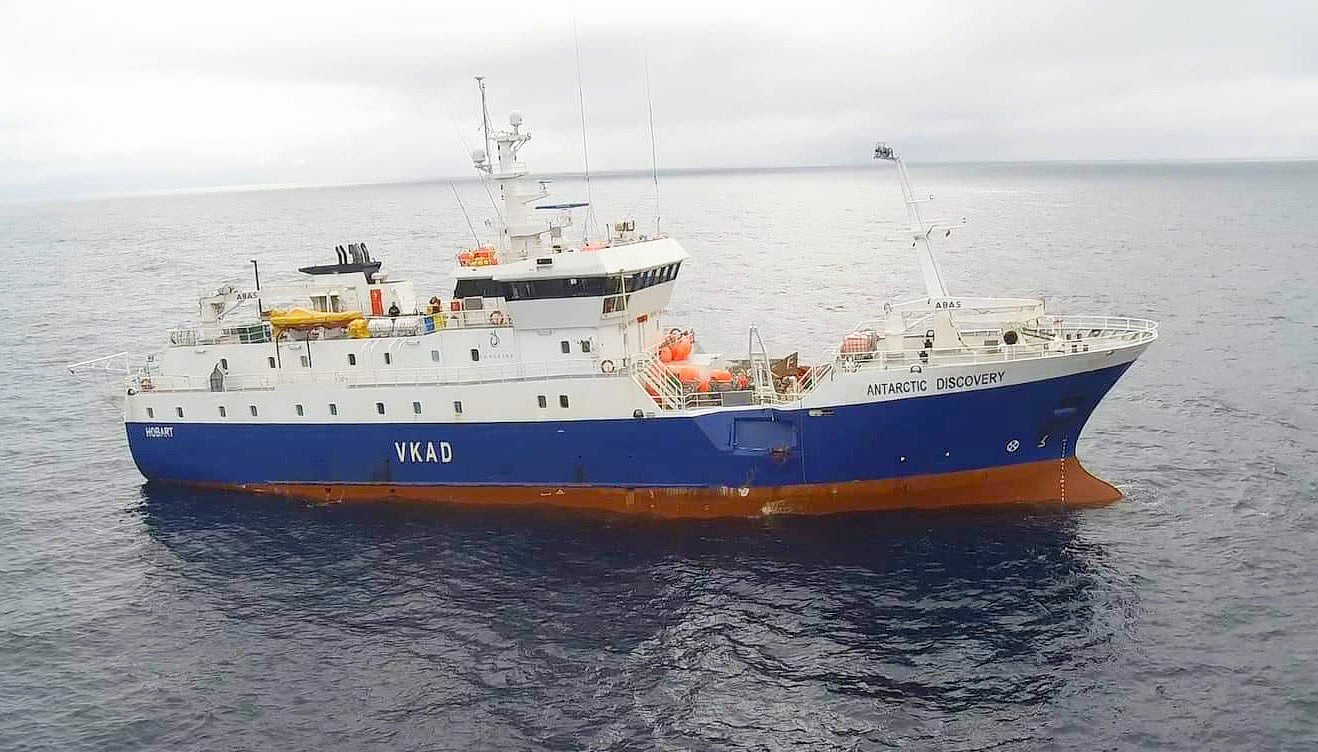
A routine maintenance job aboard the fishing vessel Antarctic Discovery turned into a dangerous toxic gas incident after decomposing fish waste was accidentally pumped into a machinery space, sending four workers to the hospital, according to a new investigation by New Zealand’s Transport Accident Investigation Commission (TAIC).
The accident occurred on February 21, 2025, while the vessel was in dry dock at Lyttelton for maintenance. TAIC’s report found that two apprentice fitters had entered the vessel’s bow thruster machinery space to work on piping located behind a holding tank containing a mixture of decaying fish offal and seawater.
Investigators concluded it was “about as likely as not” that one of the workers unintentionally activated an unmarked start button for the offal pump. The pump discharged the tank’s contents through an open hose positioned above the ladder leading into the compartment, showering the workers with waste and rapidly releasing hydrogen sulphide, a highly toxic gas produced by decomposing organic material.
The apprentices managed to escape by climbing through the falling liquid and into the open air. However, the vessel’s superintendent entered the space to investigate and was briefly overcome by the gas. The chief engineer and second engineer then entered the compartment, collapsed, and had to be rescued by crew members wearing breathing apparatus. All four workers were hospitalized and later recovered.
TAIC Acting Chief Investigator Tahlia Fisher said the accidental activation of the pump triggered the incident, but the investigation identified broader safety failures that extend beyond the maritime industry.
The commission found that nearby equipment capable of creating hazards had not been isolated before maintenance began, despite workers focusing on different machinery. It also concluded that the bow thruster machinery space should have been treated as a confined space because of its enclosed nature and potential for hazardous atmospheres, even though it was not formally classified as one.
The investigation also highlighted shortcomings in coordination between multiple organizations working aboard the vessel during the dry dock period, noting that overlapping responsibilities require active communication and shared safety management. In addition, investigators found that safety-critical modifications to the vessel lacked adequate oversight, documentation and formal approval processes.
TAIC acknowledged that vessel owner Australian Longline Pty. Ltd. has already implemented extensive corrective actions since the incident. The commission nevertheless issued safety recommendations to both Australian Longline and Lyttelton Port Company aimed at strengthening the management of safety-critical systems and improving dry dock safety procedures.
Hydrogen sulphide is one of the most dangerous atmospheric hazards encountered in maritime operations, particularly aboard fishing vessels where decomposing fish waste can accumulate in tanks, holds and piping systems. At elevated concentrations, the gas can rapidly incapacitate workers by paralyzing the sense of smell and affecting the respiratory and nervous systems, making confined-space procedures and atmospheric testing critical before entry.
TAIC emphasized that the purpose of its investigation is to improve transport safety rather than assign blame, with the goal of preventing similar accidents in the future.

 Join The Club