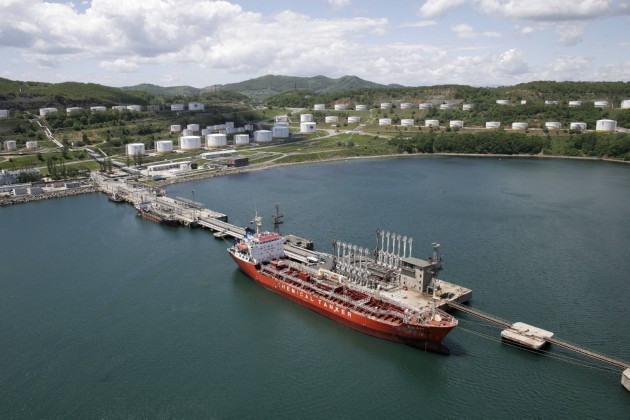
Nakhodka Terminal, Primorsky Territory (Russia’s Far East), Image: RosneftOct. 22 (Bloomberg) — OAO Rosneft outlined a deal to supply China Petrochemical Corp., or Sinopec, 100 million metric tons of crude during 10 years as Russia’s largest oil producer builds ties with buyers in the Asian market.
Russian Prime Minister Dmitry Medvedev valued the potential supplies at $85 billion, speaking to reporters after a signing ceremony today in China. The supplies may begin in 2014, with prepayments and based on prices Rosneft receives in tenders, according to a statement from the Moscow-based company.
Asia’s largest economy is set to become Russia’s largest market for oil after Rosneft and China National Petroleum Corp. signed a 25-year supply accord in June in St. Petersburg. That deal, for about 360 million tons of crude, has a value of $270 billion, according to the state-run Russian oil producer.
“The agreement will help Rosneft arrange additional funding for exploration and production projects and construction of the necessary infrastructure,” Rosneft Chief Executive Officer Igor Sechin said in the statement.
Advance payments from CNPC and Sinopec will help Rosneft, which spent $55 billion buying TNK-BP to become the world’s largest traded oil producer by output, repay debts and fund development. Rosneft, which estimated prepayment from CNPC at $70 billion, didn’t disclose the expected advance payments from Sinopec.
Under the agreement with Sinopec, Russia may partially replace crude oil supplies with oil products, according to the statement.
Rosneft and Sinopec are partners at the Udmurtneft crude producer in Russia.
Commodity trading giant Trafigura is launching a new tanker company with plans to raise about $500 million and list the business in Oslo, opening its growing VLCC fleet to outside...
Oil prices rose by over $3 on Tuesday after shipping industry sources said oil loadings at Saudi Arabia's Red Sea port of Yanbu had been suspended, and Libya halted operations at three oil fields, heightening concerns that disruptions to key oil supply routes could persist for weeks.
The cost of hiring an oil tanker on the industry’s benchmark trade route topped $1 million a day for the first time, as the Iran war leaves too few ships willing to cross the Strait of Hormuz to collect cargoes.
September 14, 2026
Total Views: 1403
Get The Industry’s Go-To News
Subscribe to gCaptain Daily and stay informed with the latest global maritime and offshore news
— just like 107,009 professionals
Secure Your Spot
on the gCaptain Crew
Stay informed with the latest maritime and offshore news, delivered daily straight to your inbox
— trusted by our 107,009 members
Your Gateway to the Maritime World!
Essential news coupled with the finest maritime content sourced from across the globe.

 Join The Club