Newly surfaced photos taken by a rescued crew member from the Thai-flagged bulk carrier Mayuree Naree offer a stark reminder of the growing dangers facing commercial mariners in the Strait of Hormuz as the conflict involving Iran escalates.
One image in particular, shared by the Thai Enquirer, shows a seafarer wearing a life jacket aboard a small rescue craft while the bulk carrier smolders in the background, dark smoke rising from its stern. Lifeboats float nearby as the vessel drifts in the Gulf waters—an unsettling snapshot of a merchant ship suddenly turned battlefield.
The photo of the rescued sailor drifting in a lifeboat with his damaged ship behind him captures that danger in a single frame: a merchant mariner on the front lines of a conflict, caught between global trade and geopolitics.
The Mayuree Naree, a 30,000-dwt bulk carrier owned by Thailand’s Precious Shipping, was struck by two projectiles while transiting the Strait of Hormuz on March 11 shortly after departing the United Arab Emirates. The impact triggered a fire in the vessel’s engine room, forcing the crew to abandon ship. Twenty seafarers were evacuated and later brought ashore in Oman, while three crew members remain missing and are believed to have been trapped in the engine compartment at the time of the explosion.
The attack was part of a broader wave of incidents on March 10-11 targeting commercial shipping in the region. Maritime security reports say at least three vessels—including the Japanese container ship ONE Majesty and the Marshall Islands-flagged bulk carrier Star Gwyneth—were struck by projectiles the same day.
Another photo posted on X by Marhelm shows a bulk carrier berthed at Oman’s Salalah port following drone strikes by Iran.
The wave of attacks come one day after U.S. President Donald Trump told commercial vessels to continue sailing through the Strait. “These ships should go through the Strait of Hormuz and show some guts,” Trump said in an interview with Fox News. “There’s nothing to be afraid of… they have no Navy, we sunk all their ships.”
The incidents are occurring amid a rapidly escalating maritime security crisis that began on February 28 following U.S. and Israeli strikes on Iran. Since then, attacks involving projectiles, drones, and explosive boats have targeted numerous merchant vessels operating in or near the Strait of Hormuz.
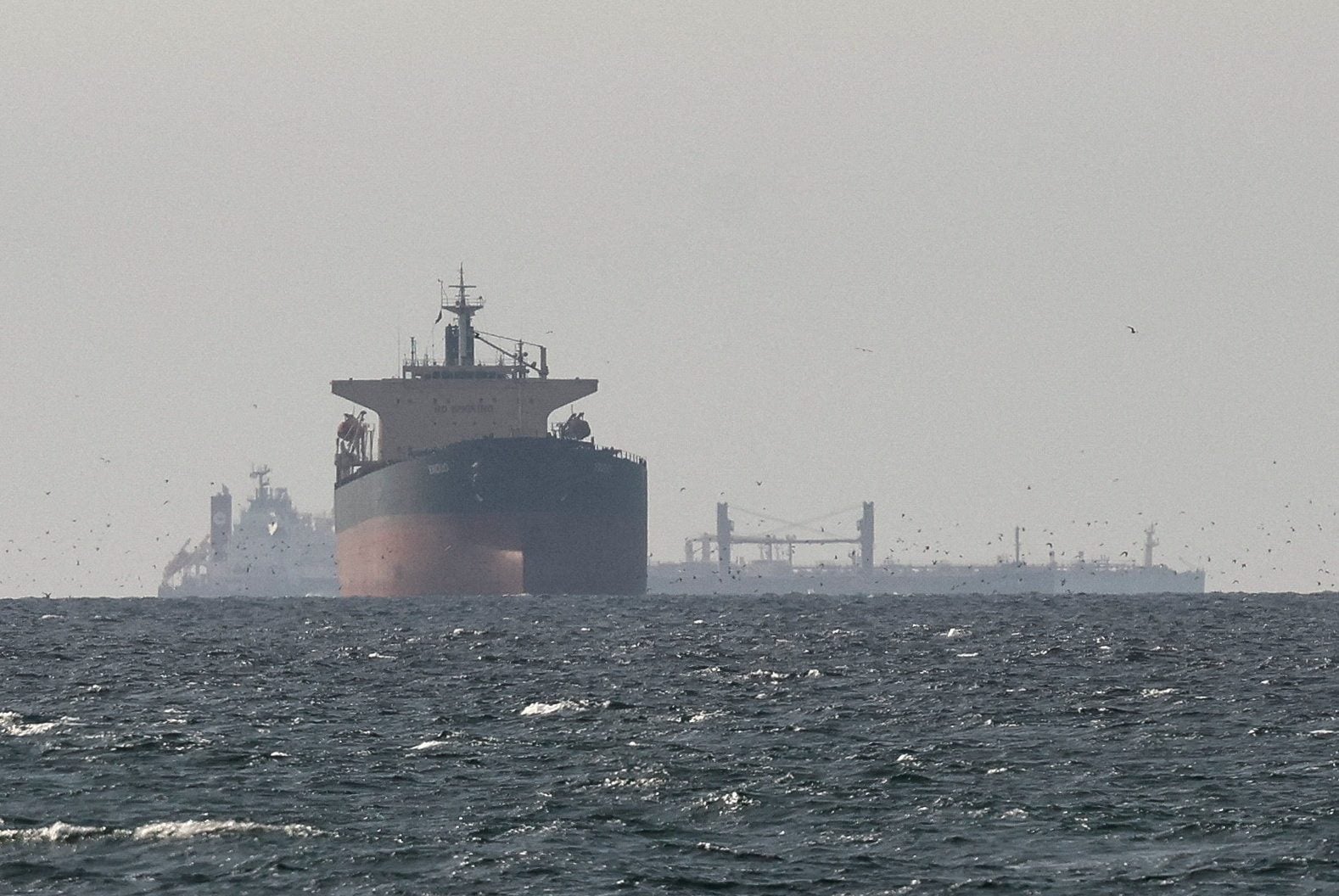
The narrow waterway is one of the most critical chokepoints in global trade, carrying roughly one-fifth of the world’s oil and gas shipments. The growing threat environment has already driven many commercial vessels to halt or reroute transits, disrupting energy flows and pushing global shipping markets into turmoil.
The deteriorating security situation prompted the International Bargaining Forum (IBF)—a global labor framework between maritime unions and shipowners—has officially classified the Strait of Hormuz, the Gulf of Oman, and the Persian Gulf as a Warlike Operations Area (WOA). The designation triggers additional safeguards for seafarers on vessels operating under IBF contracts, including hazard pay, enhanced compensation in cases of injury or death, and the right for crews to refuse deployment into the designated war zone.
13 Maritime Attacks in 12 Days
The latest attacks bring the total number of confirmed vessel strikes in the region to 13, according to incident reporting compiled by the UK Maritime Trade Operations (UKMTO). UKMTO said it has received 17 incident reports affecting vessels since February 28, including 13 confirmed attacks and four reports of suspicious activity. Meanwhile, the number seafarer fatalities has reached 7, according to the UN International Maritime Organization.
The IMO estimates that around 20,000 seafarers remain aboard vessels stranded across the Persian Gulf.
“Seafarers are not part of this conflict, yet they are increasingly caught in its path. These are men and women who are simply doing their jobs at sea,” said World Shipping Council President & CEO Joe Kramek. “We share the IMO Secretary-General’s call for urgent action to ensure the protection of seafarers and respect for freedom of navigation – seafarers must not be targets.”
For the thousands of seafarers still operating in the region, the images emerging from the Mayuree Naree rescue underscore the reality of working in an active conflict zone. While geopolitical tensions dominate headlines, it is the crews aboard merchant vessels—often far from home and operating under civilian flags—who find themselves directly exposed to the escalating violence at sea.
Editorial Standards · Corrections · About gCaptain

 Join The Club