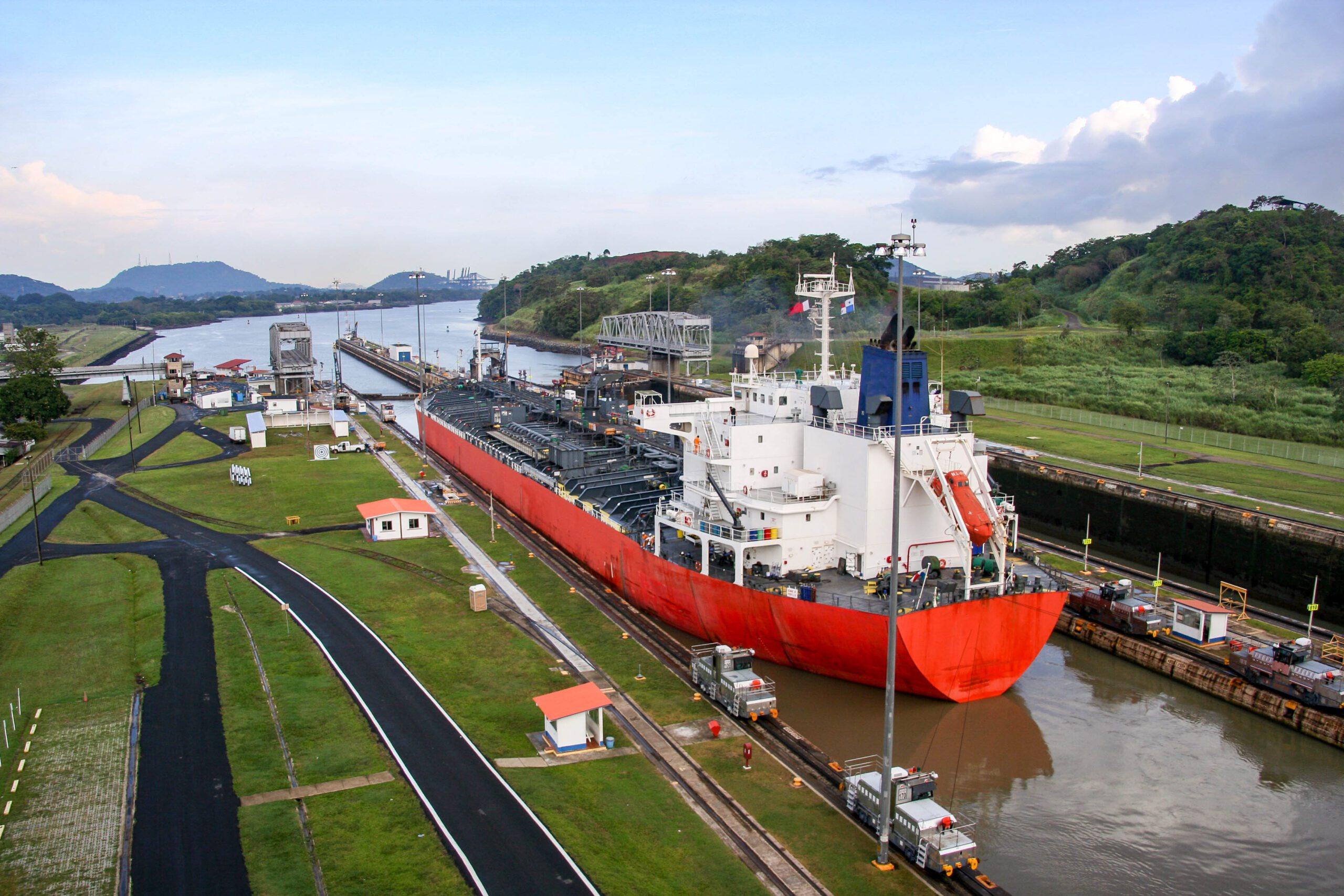
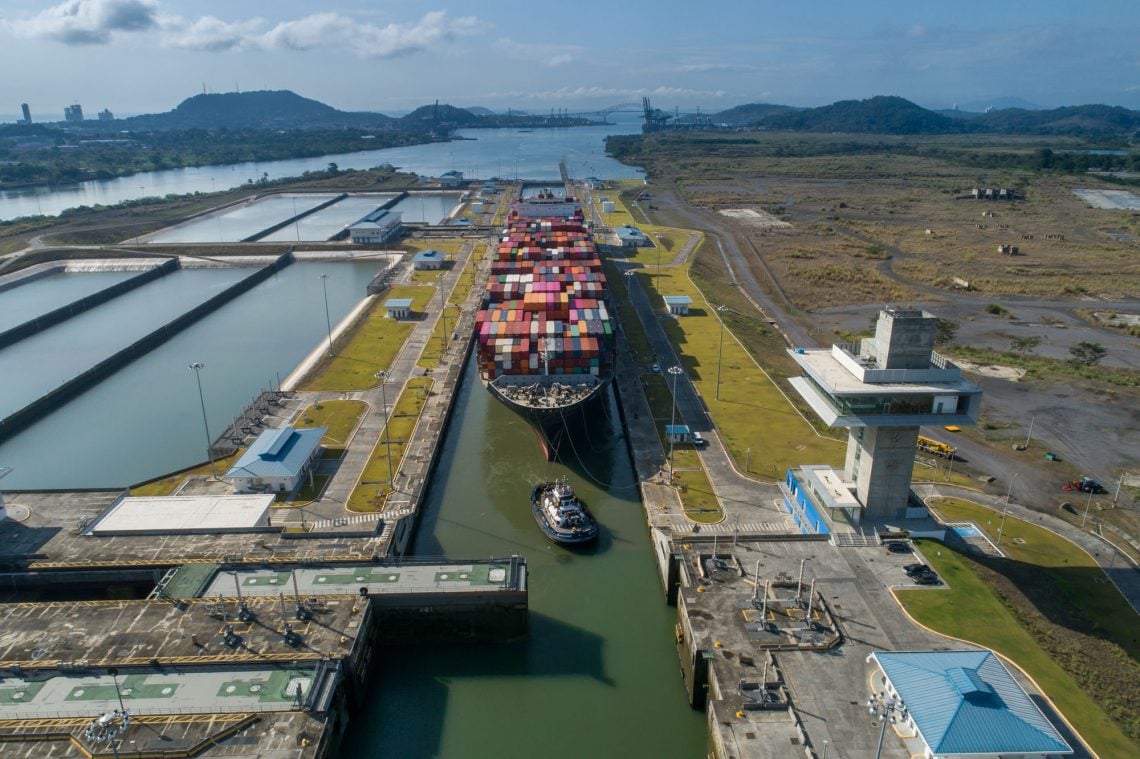
The Panama Canal is expanding its long-term transit reservation program to the Panamax locks for the first time, giving more shipping customers the ability to secure passage months in advance during the 2027 dry season.
The Panama Canal Authority said Monday that the next phase of its Long-term Slot Allocation, or LoTSA, program will cover transits from January 3 through April 3, 2027.
The program will continue at the Neopanamax locks while a new pilot program introduces long-term slot allocations for vessels using the Panamax locks.
LoTSA is designed to give shipping companies greater certainty over Canal transits by allowing them to secure slots well ahead of their planned voyages, reducing exposure to availability constraints and last-minute auction prices.
The Neopanamax program will offer 36 packages covering 270 transit slots, including 165 northbound and 105 southbound passages. That works out to three reserved transits per day across the program period.
The new Panamax pilot will offer 51 packages covering 288 slots, including 147 northbound and 141 southbound transits, also equivalent to three slots per day.
Both programs will allocate capacity through sealed-bid competitions. The Neopanamax bidding round is scheduled for November 17, while the Panamax pilot competition will take place November 24.
The Canal said the Panamax program will use the same allocation process, selection criteria and tie-breaking rules already established for Neopanamax vessels.
Transit capacity not assigned through LoTSA will continue to be offered through the Canal’s regular reservation system and auction process.
The expansion comes as the Panama Canal continues adjusting its operating model following the severe drought that sharply restricted daily transits in 2023 and 2024 and exposed the vulnerability of the freshwater-dependent waterway to changing rainfall conditions.
Although water levels and transit capacity have since improved, the Canal has increasingly focused on providing customers with more predictable booking options while pursuing longer-term measures aimed at securing its water supply.
For carriers and vessel operators, the attraction of LoTSA is straightforward: guaranteed access to scarce transit capacity can make voyage planning more reliable, particularly during the dry season when water availability has historically placed the greatest pressure on Canal operations.
By extending the program to the Panamax locks, the Canal is making that option available to a broader portion of the commercial fleet for the first time.

 Join The Club