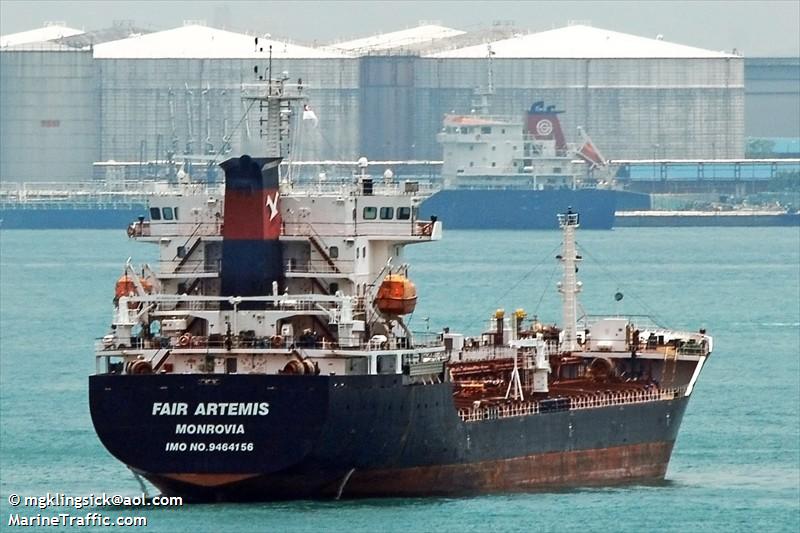
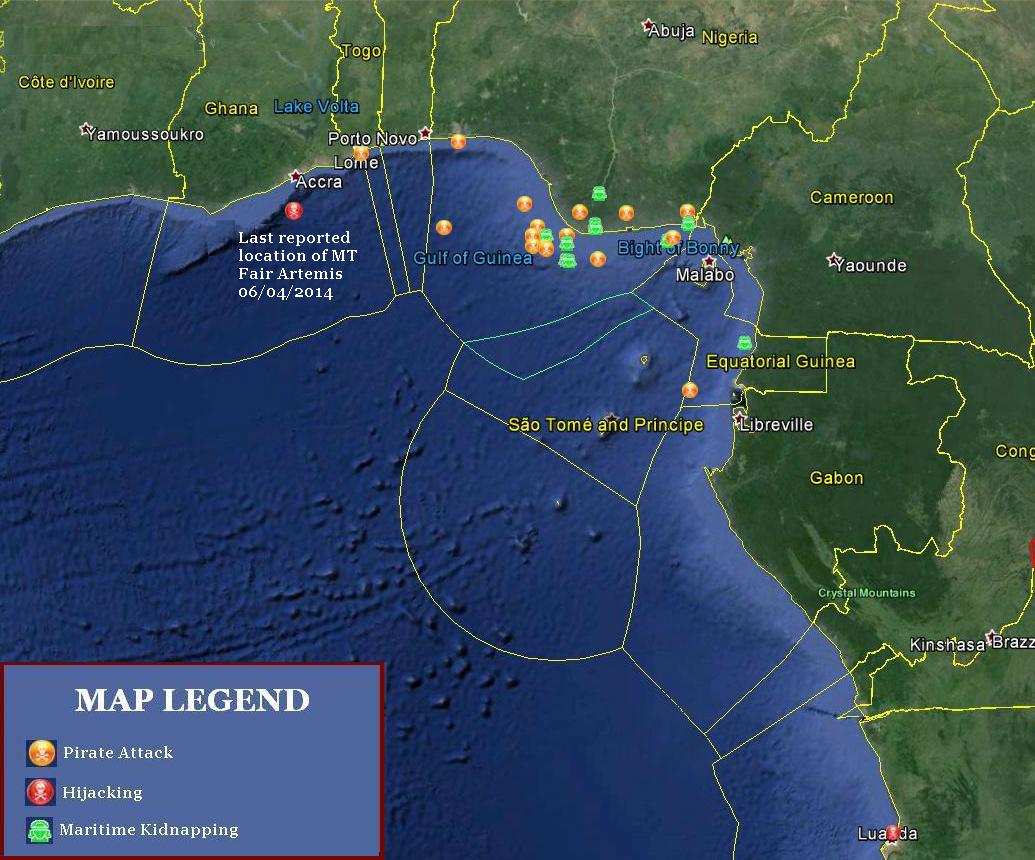
A Greek-owned oil tanker that lost contact with its owner after the evening of June 4 is still missing and presumed hijacked in the pirate-prone Gulf of Guinea. The MT Fair Artemis was last reported operating some 40 nautical miles SSE off Accra, Ghana and is laden with a cargo of gasoil. The International Maritime Bureau (IMB) is treating the vessel’s disappearance as a possible hijacking, while local naval forces have mobilized in a search.
A senior port official in Tema, Ghana claims that the vessel’s master sent a distress call on June 6, saying that the ship had been hijacked and was being looted as it was forced to sail east through the waters of neighboring Togo. Naval forces from Ghana, Togo, and Nigeria have all engaged in a search for the Fair Artemis, with Ghanaian military officials noting, “We are looking within the whole sub-region.”
The Fair Artemis’s cargo and sudden disappearance fit the profile of the well-organized tanker hijackings that have plagued the Gulf of Guinea in recent years. If the vessel is under pirate control, its attackers have likely disabled the ship’s communication equipment and painted over its identifying markers. The pirates’ objective would be to sail the Fair Artemis to a safe location, most commonly off the western coast of Nigeria, and transfer the vessel’s valuable cargo to secondary vessels for onward sale on the regional black market.
Disturbing the Pond
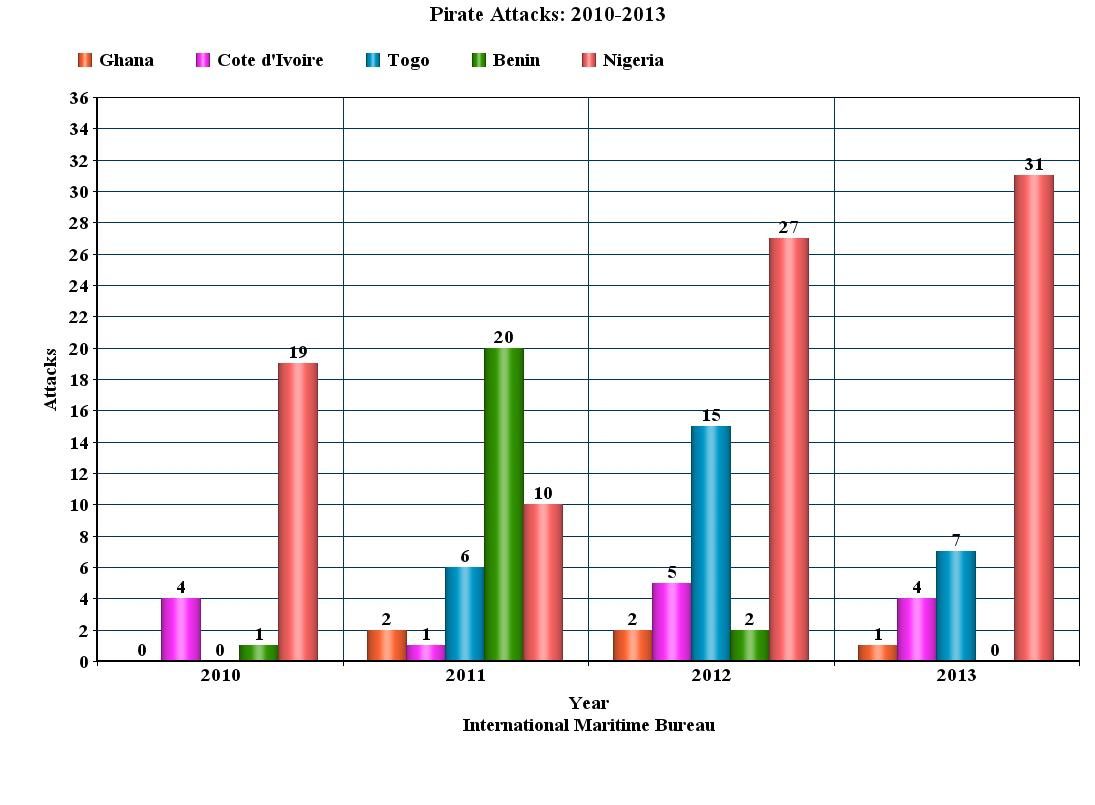
A tanker hijacking off Ghana would be particularly notable because the country’s waters have been a relative sea of calm compared with those of its neighbors. The anchorages of Lagos, Nigeria, Cotonou, Benin, Lome, Togo, and Abidjan, Cote d’Ivoire have all witnessed multiple tanker hijackings since 2010, while Ghana has seen only a handful of minor robberies at sea. Striking off Accra thus conforms to the pattern of the hijack gangs who have sought to shift their attacks to anchorages where they are not expected and where defenses are lowered. Previous outlier hijackings have occurred as far west as Abidjan, Cote d’Ivoire and as southward as Luanda, Angola.
The specter of Nigeria-based piracy expanding to its waters has weighed heavily on Ghanaian officials as the country continues to develop its offshore oil production capabilities. Accra has acquired new patrol boats and surveillance aircraft in recent years and is in the process of launching a naval special forces unit. Ghana has also sought to improve its maritime situational awareness by implementing a Vessel Traffic Management and Information System to remotely monitor vessels and coordinate efforts among government and commercial stakeholders. A pirate hijacking off a Ghanaian port will damage the country’s reputation for maritime security and “reflect on the attitudes of the international shipping community towards our port,” notes Paul Asare Ansah, head of public relations at the Ghana Ports and Harbors Authority.
A Tough Neighborhood
Despite the progress the country has made towards securing its maritime domain, Ghana remains beholden to a neighborhood characterized by “sea blindness and mutual distrust.” Pirates, for example, have hijacked several tankers along the maritime border of Ghana and Togo and then fled across the sovereign boundary to avoid hot pursuit from national naval forces. The Fair Artemis’ prolonged disappearance and likely multi-national hijack route mirrors the January 2014 case of the MT Kerala, which pirates hijacked off the coast of Luanda, Angola and then sailed some 1,200 miles north to sell its stolen cargo in Nigerian waters.
Gulf of Guinea Piracy 2014 (Data and analysis from Oceanus and Delex)
Over 60 percent of pirate attacks go officially unreported in the Gulf of Guinea, as vessel masters weigh the costs of delays and inspections against the unlikely chance of a regional naval response.
The Maritime Trade Information & Security Centre (MTISC) in Accra was established with international support in 2013 as a means to improve regional information sharing and response coordination. However, interagency information sharing and exchange of maritime domain awareness information was reportedly lacking during a recent international naval capacity building exercise, Operation Obangame Express.
Regional maritime security cooperation is incrementally improving, and tanker hijackings have in fact declined from a 2011 high. The presumed pirating of the Fair Artemis, however, demonstrates that the hijack gangs remain regionally active and will continue to stalk assumedly safe anchorages.
James M. Bridger is a Maritime Security Consultant with Delex Systems Inc. in Herndon, VA. His current areas of focus and expertise address piracy, terrorism, and other irregular threats to global maritime transportation. He can be reached at [email protected]
Christiania Gas confirmed today that nine crew members were abducted from its LPG tanker CGAS SATURN following a pirate attack in the Gulf of Guinea, West Africa. The incident occurred...
By Christian Akorlie ACCRA, March 29 (Reuters) – Three Chinese nationals are missing from Ghanaian waters and believed to have been kidnapped after a “suspected pirate attack” on Thursday on their Ghanaian-registered...
The International Maritime Bureau (IMB) reports a decrease in piracy and armed robbery incidents against ships in the first half of 2024. However, Bureau is calling for sustained vigilance to...
July 11, 2024
Total Views: 648
Get The Industry’s Go-To News
Subscribe to gCaptain Daily and stay informed with the latest global maritime and offshore news
— just like 107,412 professionals
Secure Your Spot
on the gCaptain Crew
Stay informed with the latest maritime and offshore news, delivered daily straight to your inbox
— trusted by our 107,412 members
Your Gateway to the Maritime World!
Essential news coupled with the finest maritime content sourced from across the globe.

 Join The Club