Global shipping giant A.P. Moller – Maersk says the escalating conflict in the Middle East is beginning to disrupt global marine fuel supply chains, prompting the carrier to introduce a temporary Emergency Bunker Surcharge (EBS) as it scrambles to secure bunker supplies for its global fleet.
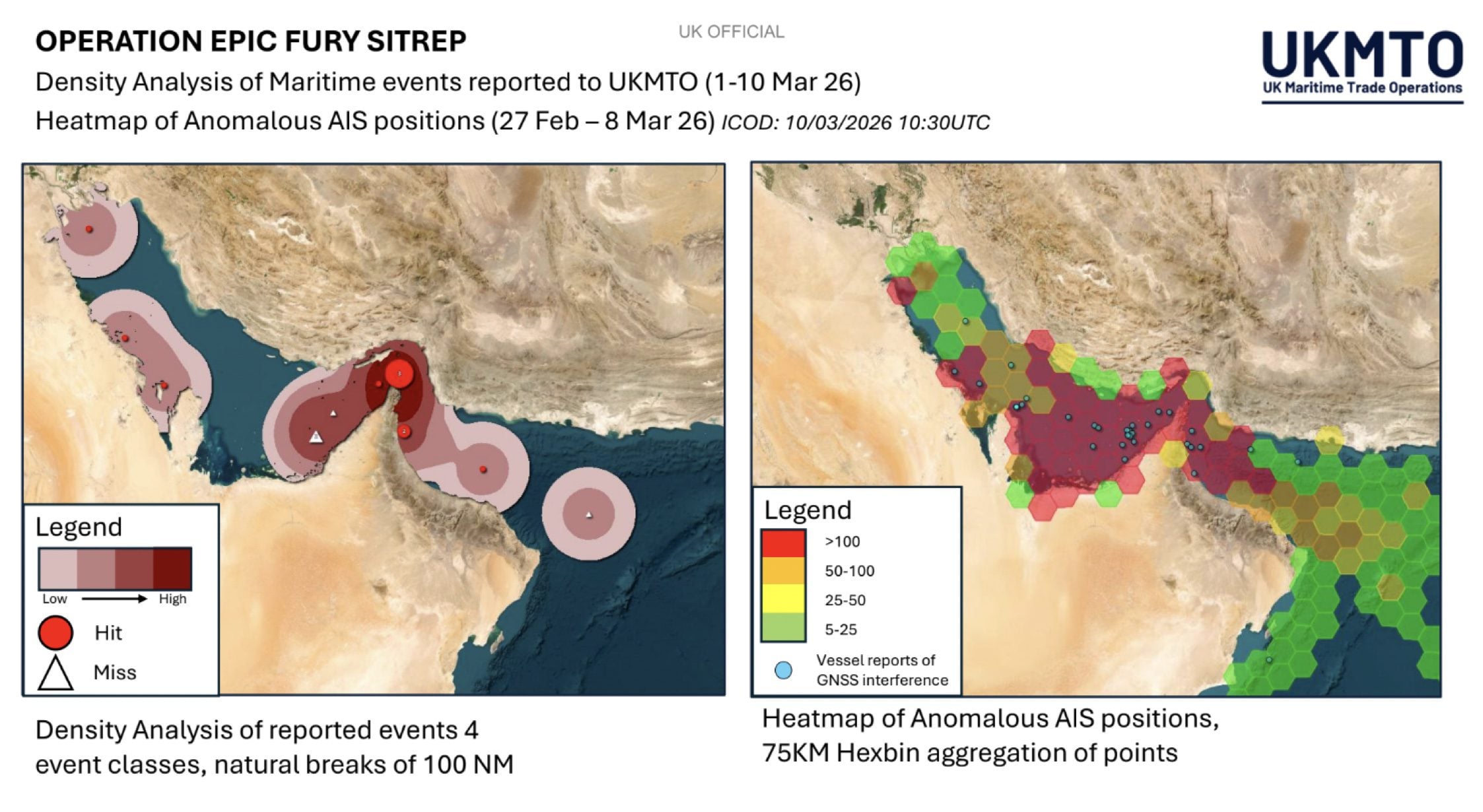
In an operational update issued March 10, the Danish shipping company said the evolving security situation surrounding the Strait of Hormuz is significantly impacting fuel availability and forcing the company to take “additional proactive operational measures” to stabilize its network.
The strait is one of the world’s most critical energy corridors, handling roughly 20% of global fuel movements, and Maersk warned that the ongoing conflict is now affecting access to refined fuel supplies used by the maritime industry.
“The ongoing conflict has had a considerable impact on the international fuel market,” the company said. “Many refineries within the region are either offline or operating at reduced capacity and export ability is very limited.”
According to Maersk, those disruptions have begun to ripple across the global bunkering system as the company works to secure sufficient fuel supplies for vessels operating across its liner network. The company said it has already been forced to redistribute fuel globally and source alternative bunker supplies from different regions and suppliers to offset shortages in the Middle East.
To help cover the rising costs and logistical challenges associated with securing fuel, Maersk said it will implement the temporary Emergency Bunker Surcharge starting March 25, 2026, subject to regulatory approvals.
The surcharge will apply globally and is intended to address fuel availability issues and price volatility that fall outside the scope of the company’s existing Fossil Fuel Fee. The surcharge will range from $200 per 20-foot container and $400 per 40-foot container on long-haul headhaul trades, with lower rates applied to backhaul and intra-regional shipments. Refrigerated cargo will face higher charges, with fees reaching $600 per 40-foot reefer container.
Maersk said the surcharge will be reviewed every 14 days and could be adjusted upward or downward depending on fuel availability and market conditions.
The company framed the measure as necessary to maintain global service reliability at a time when fuel supply chains are becoming increasingly unstable.
“To preserve network stability, we have undertaken significant redistribution of fuels to offset shortages in the Middle East and are securing alternative sources from different locations and suppliers,” the company said.
The warning from one of the world’s largest container shipping companies underscores how the conflict around the Strait of Hormuz is beginning to spill into energy and logistics markets far beyond the region. With refineries operating at reduced capacity and export channels disrupted, shipping companies are facing tightening bunker supply at the same time maritime traffic through the strait remains heavily curtailed.
Maersk said the new surcharge will help ensure it retains access to the fuel required to keep vessels operating and cargo moving despite the growing volatility in global energy markets triggered by the crisis.
As of March 11, 2026, Maersk reportedly has about 10 container ships trapped in the Persian Gulf, essentially sheltering in place in Gulf ports or anchorages while awaiting for conditions to improve, according to The Wall Street Journal.
Editorial Standards · Corrections · About gCaptain

 Join The Club