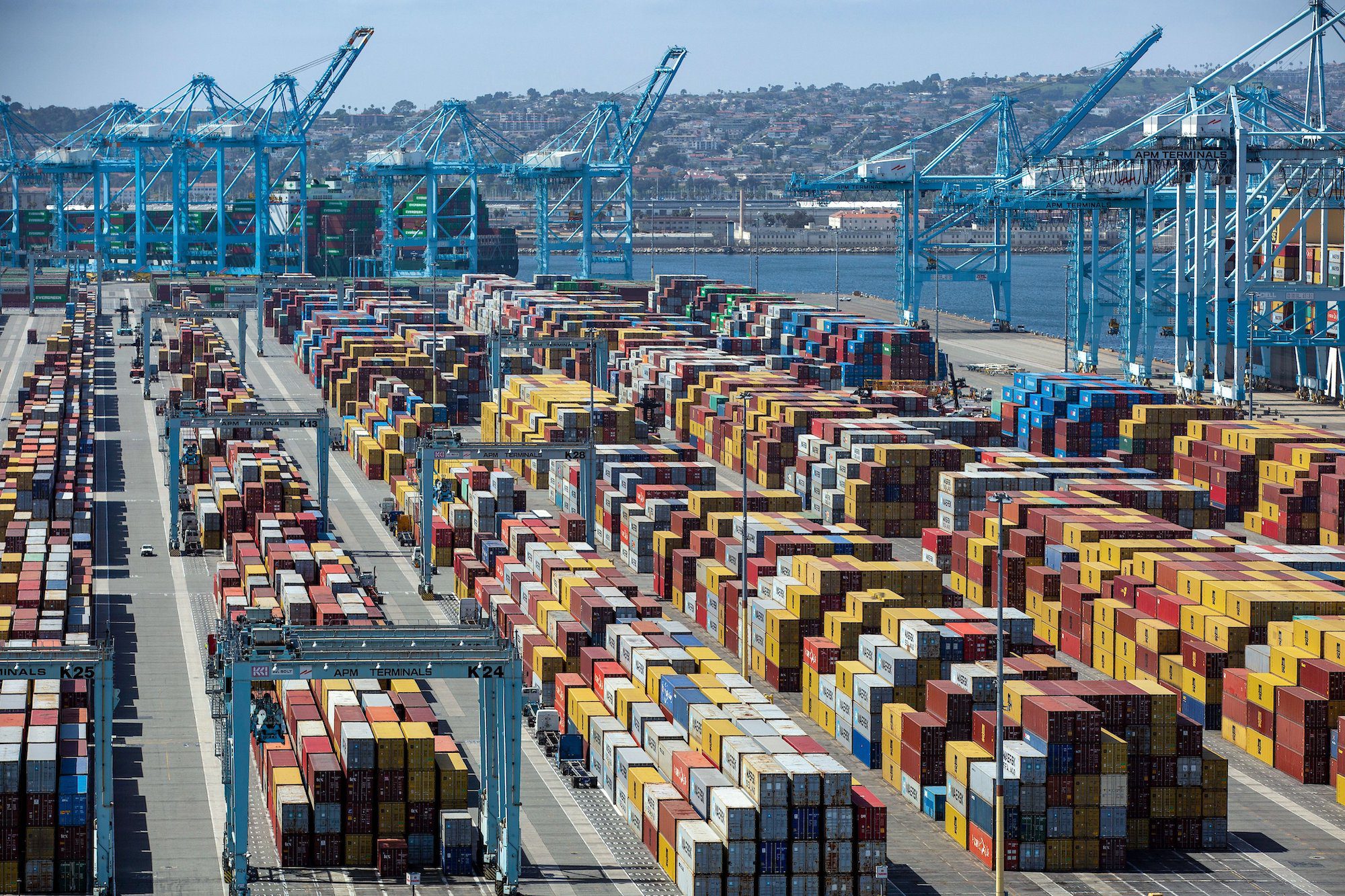
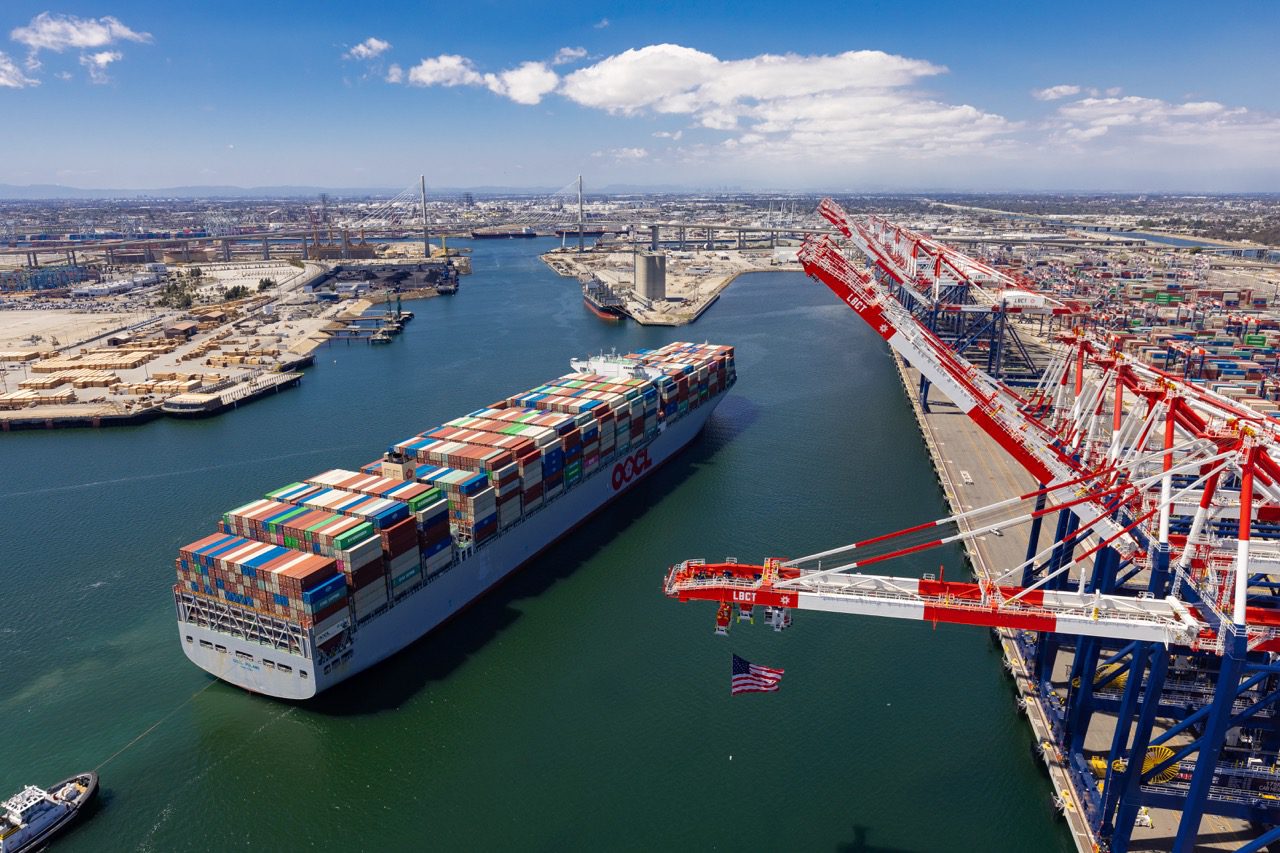
The nation’s two busiest container gateways continued to benefit from an early peak shipping season in June as importers rushed cargo into the United States ahead of potential new tariffs, with the Port of Los Angeles posting its busiest June on record and the Port of Long Beach recording double-digit growth.
The Port of Los Angeles handled 1,002,734 twenty-foot equivalent units (TEUs) in June, making it the busiest June in the port’s 118-year history and only the third time it has surpassed the 1 million TEU mark in a single month. According to the port, no other port in the Western Hemisphere has ever processed more than 1 million containers in a month.
June volumes were up 12% from a year earlier, driven largely by imports, which climbed 13% to 530,558 TEUs — the port’s third-highest import month on record. Exports were essentially flat at 126,365 TEUs, while empty containers returning to Asia rose 17% to 345,811 TEUs as shipping lines repositioned equipment to meet continued demand.
“Crossing the 1 million container mark for the third time and closing our fiscal year with more than 10.4 million TEUs are remarkable accomplishments,” Executive Director Gene Seroka said.
Seroka said importers are continuing to abandon traditional seasonal shipping patterns, choosing instead to move cargo whenever trade conditions allow.
“Many retailers are making strategic decisions and have stepped away from traditional seasonal shipping patterns, advancing cargo whenever they see an opening rather than waiting for perfect conditions,” he said during the port’s monthly cargo briefing.
Just down the coast, the Port of Long Beach also reported strong growth, handling 779,331 TEUs in June, up 10.6% from the same month last year and marking its third-busiest June on record.
Imports increased 11% to 387,025 TEUs, while exports slipped 1.3% to 86,446 TEUs. Empty containers climbed 14.1% to 305,860 TEUs.
Year-to-date, Los Angeles has processed 5.12 million TEUs, up 3% from the first half of 2025, while Long Beach has handled 4.83 million TEUs, a 1.7% increase that keeps the port on pace with last year’s record-setting performance.
Port of Long Beach CEO Noel Hacegaba said the surge reflects continued efforts by retailers to bring in merchandise before trade policy changes expected later this summer.
“Businesses are preparing for volatility, not certainty,” Hacegaba said. “Retailers are intent on restocking shelves while keeping prices as low as possible, helping to drive the frontloading we’re seeing right now.”
The latest results reinforce forecasts from the National Retail Federation and Hackett Associates, which expect U.S. container imports to reach a record 2.47 million TEUs in July as retailers accelerate shipments ahead of potential tariff increases expected in August.
The industry group said the traditional fall peak shipping season has shifted earlier in recent years as importers increasingly adjust purchasing schedules around labor disruptions, geopolitical risks and evolving U.S. trade policy rather than the historical retail calendar.
Jonathan Gold, the NRF’s vice president for supply chain and customs policy, said retailers are also contending with continued uncertainty stemming from the conflict involving Iran alongside the prospect of new tariffs.
“This year’s early peak season is expected to continue through July as retailers and other importers prepare for potentially higher tariffs beginning in August and other trade uncertainties,” Gold said.
Temporary 10% Section 122 tariffs are scheduled to expire on July 24, while the Trump administration is expected to introduce a new round of tariffs related to forced labor as early as August.
Hackett Associates founder Ben Hackett said import volumes are likely to remain elevated through July before falling back later in the year.
“Much of this increase reflects frontloading ahead of expected tariff increases,” Hackett said.
While cargo volumes have surged, both Southern California ports said operations have remained fluid, with no significant vessel backlogs or cargo delays despite the sharp increase in imports.

 Join The Club