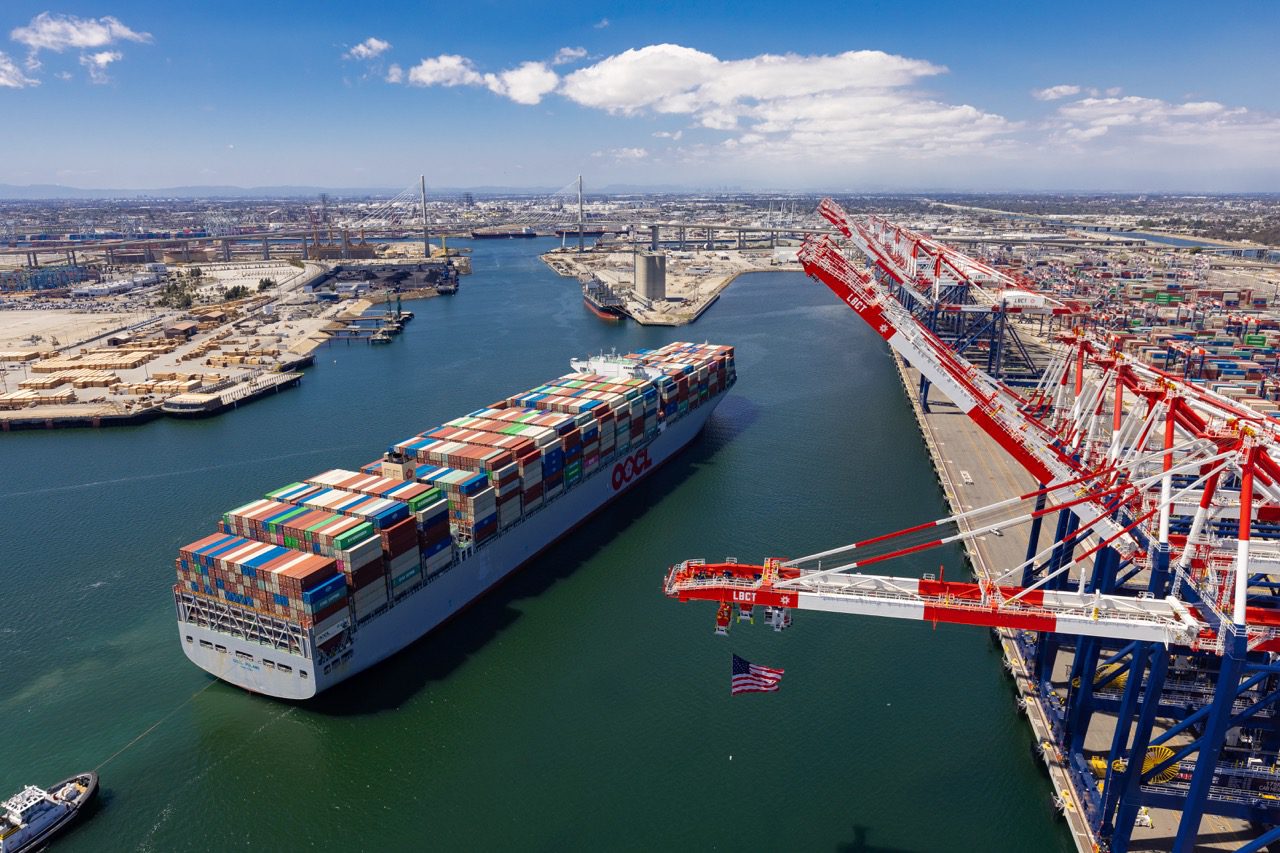
The Port of Long Beach posted another year-over-year decline in cargo volumes in April as global market volatility, rising fuel costs and supply chain uncertainty continue to pressure international trade flows.
Longshore workers and terminal operators moved 817,992 twenty-foot equivalent units (TEUs) during the month, down 5.7% from April 2025, which marked the busiest April on record for the port.
Despite the decline, volumes remained historically strong as one of the nation’s leading trade gateways continues to navigate a volatile trade environment shaped by geopolitical tensions, shifting trade patterns and higher transportation costs.
“In our industry, the only certainty is uncertainty,” Port of Long Beach CEO Dr. Noel Hacegaba said in a statement released Thursday. “With recent supply chain disruptions adding volatility and instability to global trade, it’s even more important for our port to remain a safe harbor in the sea of trade and geopolitical uncertainty to keep cargo moving.”
The comments reflect growing concern across the shipping industry that global disruptions are beginning to reshape cargo flows beyond short-term shocks.
The April figures follow a softer March, when the port handled 774,935 TEUs, also below last year’s record pace. Through the first quarter of 2026, Long Beach still ranked as the busiest container port in the United States, though volumes were running below 2025’s historic levels.
Port officials have increasingly pointed to rising fuel prices, tariff uncertainty and geopolitical instability as key headwinds facing supply chains.
The deteriorating security environment around the Strait of Hormuz remains a major concern for shipping markets, contributing to higher bunker costs, elevated war-risk premiums and longer voyage routes across global trade lanes.
“What happens in the supply chain doesn’t stay in the supply chain,” Hacegaba warned during last month’s media briefing. “It shows up in the prices people pay every day.”
Pricing across the container market suggests supply chains remain under pressure. Spot rates on major transpacific routes remain sharply above pre-conflict levels, according to Xeneta and Drewry, driven by higher fuel costs, operational disruptions and continued uncertainty surrounding shipping through the Middle East.
“Volatility in global ocean container supply chains means it is not often both shippers and carriers are ‘happy’ with the price they are buying and selling freight, but that is seemingly the case on Transpacific trades as average spot rates plateau at elevated levels amid ongoing conflict in the Middle East,” said Peter Sand, Xeneta Chief Analyst.
“Average spot rates from Far East to US West Coast remain up more than 50% compared to pre-conflict at the end of February, but have remained effectively flat over the past month,” Sand added. “One factor behind the short term market plateau on the Transpacific is US shippers delaying signing new long term contracts due to the uncertainty caused by the Middle East crisis and the risk of locking in rates for the next 12 months at a higher level than necessary.”

 Join The Club