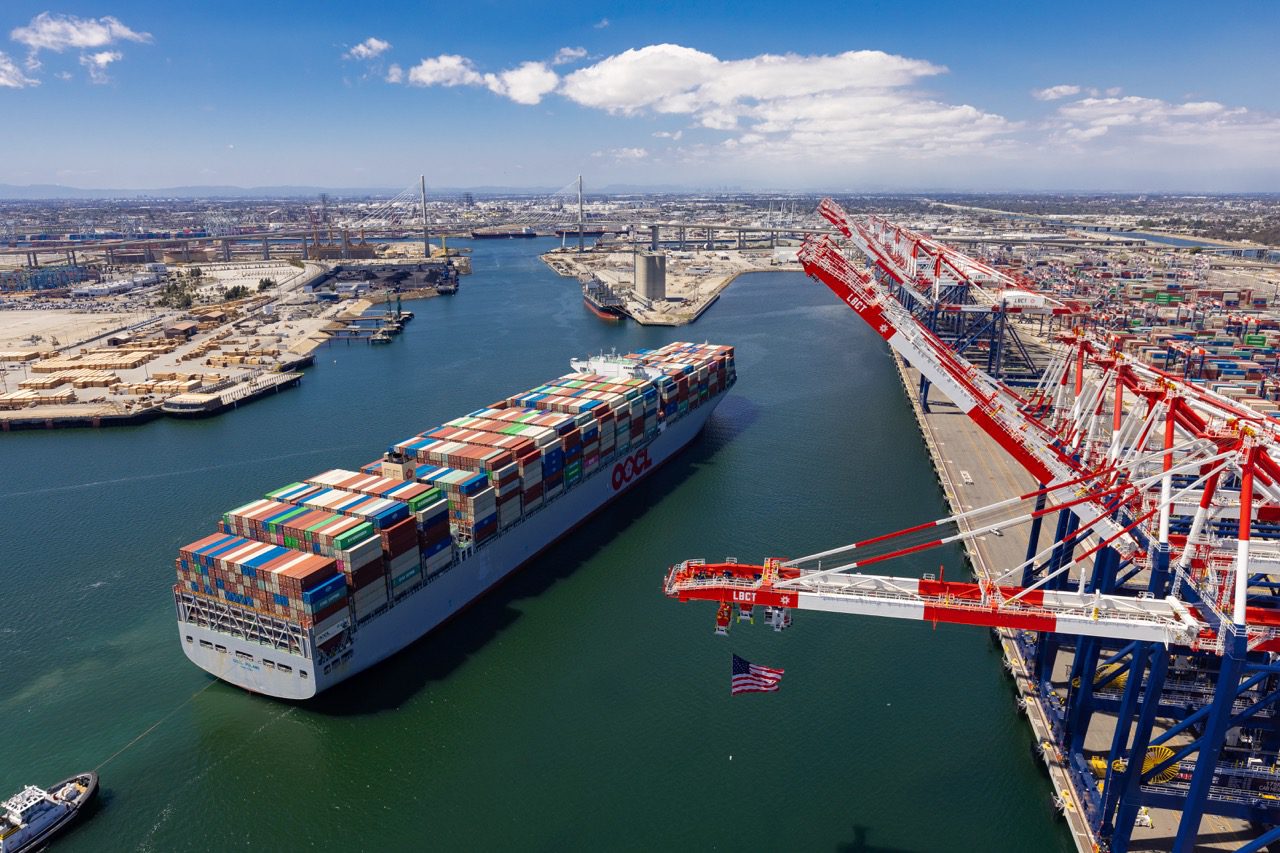
The Port of Long Beach emerged as the busiest seaport in the United States through the first quarter of 2026, even as cargo volumes eased from last year’s record pace and global supply chain risks continue to build.
Dockworkers and terminal operators at Long Beach handled 774,935 TEUs in March, down 5.2% compared to the same month in 2025. The decline comes against a strong baseline, with last year marking a record period for cargo movement at the port.
Imports slipped 1.6% to 374,412 TEUs, while exports edged up 0.5% to 104,554 TEUs. Empty containers saw the sharpest drop, falling 11.1% to 295,970 TEUs.
Through March, the port processed 2,390,225 TEUs, a 5.7% decrease from the first quarter of 2025—but still enough to lead all U.S. ports.
“While not our strongest month on record, we handled nearly 775,000 TEUs, making us the busiest gateway in North America,” said Port of Long Beach CEO Noel Hacegaba during the port’s monthly media briefing.
Volumes Hold—For Now
Despite escalating tensions in the Middle East and severe disruption to shipping through the Strait of Hormuz, Long Beach has yet to see a direct impact on container volumes.
“Despite these global pressures, the conflict has not yet reduced cargo volumes at the Port of Long Beach,” Hacegaba said.
Instead, he pointed to tariffs, shifting shipment timing, and comparisons to last year’s surge as the primary drivers behind the modest decline.
But the port is watching developments closely. “When ships are being rerouted to avoid conflict zones, it sets off a chain reaction,” Hacegaba said. “Cargo has to move differently. Routes get longer. Costs go up. And ultimately, consumers pay more.”
Port of Los Angeles
Across the channel, the Port of Los Angeles is tracking a similar pattern. The port handled 752,520 TEUs in March, down 3% year-over-year, bringing first-quarter volumes to 2,388,843 TEUs—essentially in line with its five-year average.
“Even with the seasonal slowdown tied to Lunar New Year, cargo flow in March was solid,” said Executive Director Gene Seroka, who pointed to tariff uncertainty, inflation, and rising fuel costs linked to the Middle East conflict as key headwinds shaping cargo flows.
Costs Rising Across the Supply Chain
Those pressures are already beginning to show. Higher fuel costs tied to the conflict are feeding into new surcharges and operational changes across the supply chain. Retailers, according to port officials, are adjusting in quieter ways, such as reducing discounts, raising free-shipping thresholds, and stretching delivery timelines.
“What happens in the supply chain doesn’t stay in the supply chain,” Hacegaba said. “It shows up in the prices people pay every day.”
The uncertainty comes even as a tentative ceasefire has been announced in the region while the U.S. enforces a maritime blockade of ships traveling to and from Iran.
Energy Shift Gains Momentum
Long Beach is also positioning itself for longer-term changes in energy and infrastructure. The port marked the four-year anniversary of its Clean Truck Fund Rate, which has generated more than $62 million since 2022 to support the transition to zero-emissions drayage trucks and related infrastructure.
Officials say the program is part of a broader push that includes investments in zero-emissions cargo-handling equipment, clean shipping corridors, and offshore wind development.
“This is how we turn policy into progress,” Hacegaba said.
The port is also advancing plans for its proposed Pier Wind terminal, aimed at supporting the growing offshore wind sector along the U.S. West Coast.

 Join The Club