Updated: October 9, 2024 (Originally published April 18, 2018)
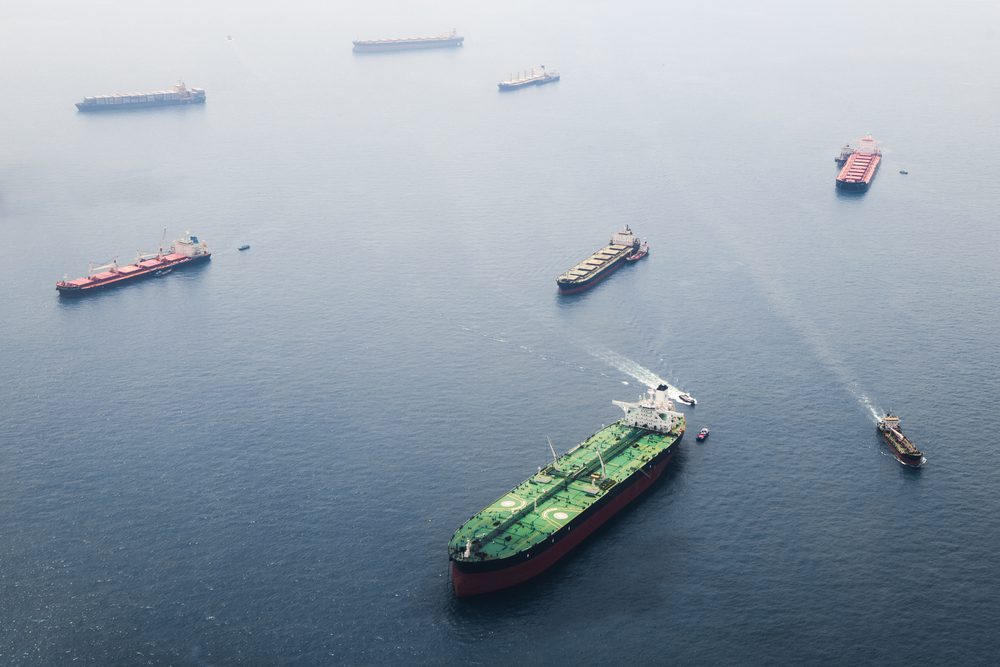
Photo: Shutterstock / By Zheltikov Dmitry
By Philip K. Verleger (Bloomberg View) — In “Poor Richard’s Almanack,” Ben Franklin imparts a centuries-old proverb about a kingdom lost by a series of events that starts with a shortage of horseshoe nails. A similar catastrophic cascade could be in the works today for the world oil market. It began in 2008 with the International Maritime Organization’s decision to limit the sulfur content of marine bunker fuel to 0.5 percent. It accelerated in 2016 when the IMO proposed an effective date of January 1, 2020. This past November, the organization affirmed that deadline.
The missing nail in this case will be the low-sulfur fuel that ships plying international waters will soon require. And the consequence could be a spike in oil prices large enough to threaten global recession.
How could a little known bureaucratic organization cause such a catastrophe? By doing the right thing too fast.
Most oceangoing vessels burn residual fuel oil with a high sulfur content. Emissions from ships, which include sulfur oxides and nitrous oxides, present “major risks to both the environment and human health,” in the IMO’s words. The agency lowered the allowable sulfur content in marine fuel to 3.5 percent in 2012, aiming to get it down to 0.5 percent between 2020 and 2025. But when a 2016 study found that not lowering the limit by 2020 would contribute to more than 570,000 additional premature deaths by 2025, the IMO tightened the deadline.
The problem is that oil refiners may not be able to supply enough of the low-sulfur fuel by 2020. There are too few sophisticated plants that can make the required marine gasoil without also churning out noncompliant fuel oil as a byproduct.
The shipping industry uses some 6-8 million barrels of fuel oil a day. To lower all its sulfur content to 0.5 percent, from today’s average of 2.2 percent, the refining industry would need to build 25 more cokers — processing units that upgrade residual products from oil distillation. These take years to design and billions of dollars to build. If ordered today, they might be ready in 2022.
If the 0.5 percent limit is not postponed and goes into effect 21 months from now, the price of shipping fuel could increase by as much as 30 percent.
That could lift crude oil prices to $150 per barrel, from about $60 today. Something similar happened a decade ago, when a European Union mandate for low-sulfur diesel fuel coincided with an unexpected decrease in the supply of crude needed to produce it: In 18 months, diesel prices rose to $4.60 a gallon, from $2.50, and crude prices went up to nearly $145 per barrel, from $55.
The oil market has also shifted in the two years since the IMO decided to move ahead with the 0.5-percent limit — in ways that exacerbate the problem. OPEC members and Russia have agreed to restrain output. And both Venezuelan and Canadian heavy-crude producers are having trouble getting their barrels to market. The U.S. is producing more oil from fracking, but this contains little of the medium-, heavy- and extra heavy-grade crudes that yield the kind of residual fuel oil that can be converted to low-sulfur distillates.
A doubling of crude oil prices caused by the IMO’s capricious action could subtract 2 to 4 percent from global gross domestic product. Ocean transport of goods would decrease sharply, raising consumer prices. Commodity producers, especially farmers, would see their incomes drop. U.S. consumers could see the price of gasoline rise to $6 per gallon.
No doubt, the IMO policy makers hope that none of this will come to pass. But as Ben Franklin also said, “He that lives upon hope will die fasting.”
Philip K. Verleger is an economist and consultant focusing on the energy markets.
This column does not necessarily reflect the opinion of the editorial board or Bloomberg LP and its owners.
The latest session of the IMO’s Pollution Prevention and Response Sub-Committee didn’t deliver sweeping new rules, but beneath the technical drafting work, PPR 13 signaled a clear shift toward performance-based environmental oversight. From biofouling and Arctic black carbon to scrubber discharges and low-load engine certification, the focus is moving beyond installed equipment to how ships are actually operated, maintained, and managed over their full lifecycle.
A coalition of environmental and clean-shipping groups is urging the International Maritime Organization to block any move that would allow ammonia-fueled ships to discharge toxic waste at sea, warning that shipping’s push toward zero-emission fuels must not come at the expense of ocean health.
The International Maritime Organization is moving to bring wind-assisted propulsion fully into the regulatory mainstream, approving a formal workplan that targets 2029 for interim safety guidelines covering wind propulsion and...
February 3, 2026
Total Views: 860
Get The Industry’s Go-To News
Subscribe to gCaptain Daily and stay informed with the latest global maritime and offshore news
— just like 107,252 professionals
Secure Your Spot
on the gCaptain Crew
Stay informed with the latest maritime and offshore news, delivered daily straight to your inbox
— trusted by our 107,252 members
Your Gateway to the Maritime World!
Essential news coupled with the finest maritime content sourced from across the globe.

 Join The Club