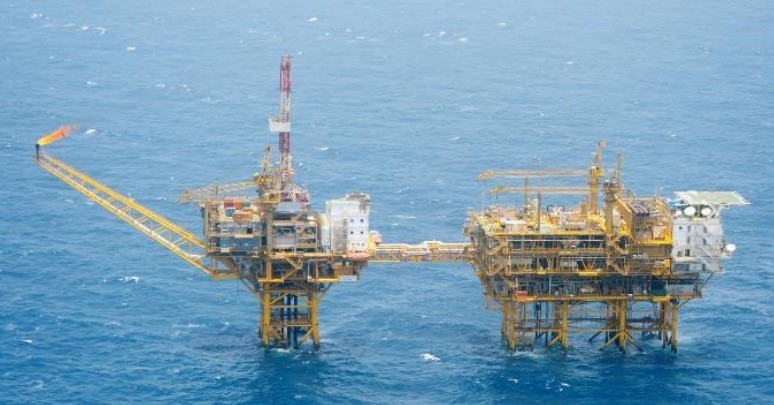
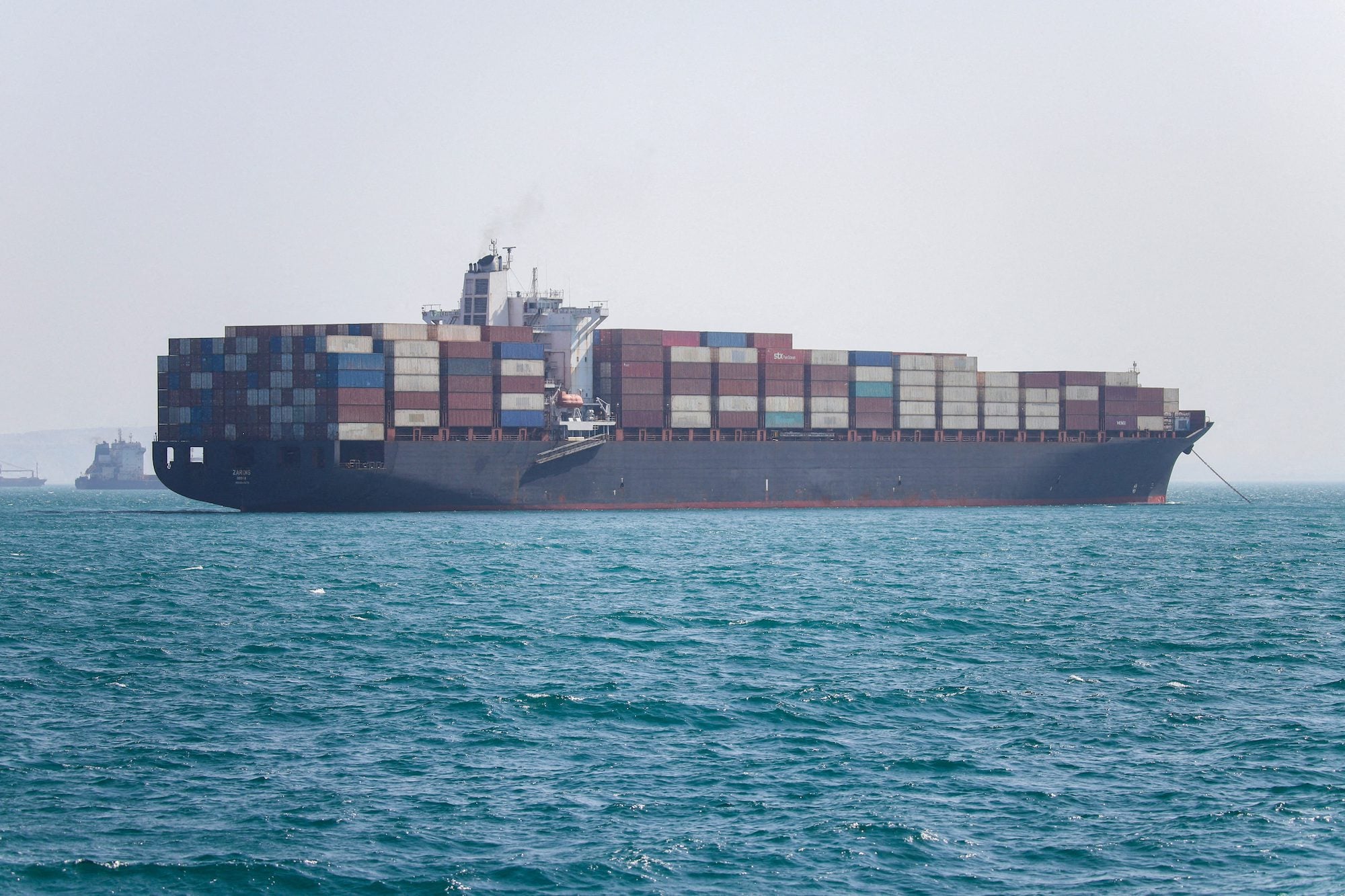
One of many photos released by Japan’s Foreign Ministry showing Chinese oil and gas p;latforms in the East China Sea. Photo: Japan Foreign Ministry
By Isabel Reynolds and Maiko Takahashi
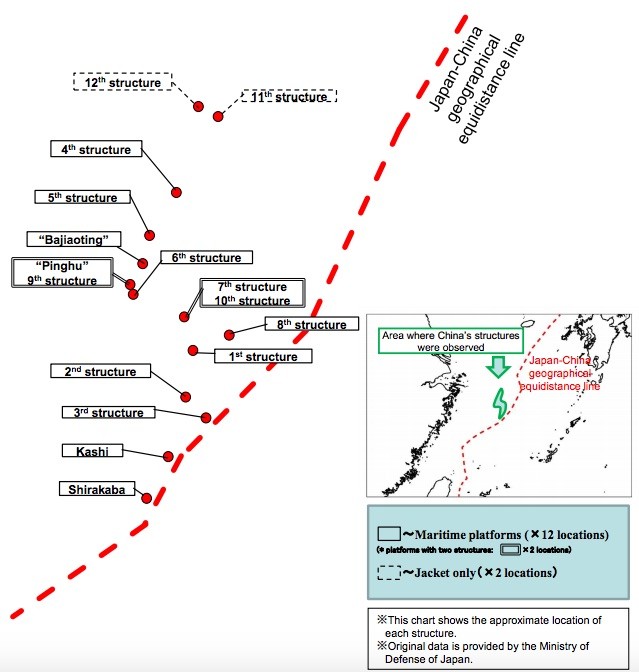
(Bloomberg) — Japan’s foreign ministry unveiled a map and photographs of what it said were 16 Chinese marine platforms close to Japan’s side of the disputed East China Sea.
The platforms are on the Chinese side of a geographical median line that Japan contends should mark the border between their exclusive economic zones. Japan has long expressed concern that such developments could siphon gas out of undersea structures that extend to its own side.
“It is extremely regrettable that China should conduct unilateral development of resources,” Chief Cabinet Secretary Yoshihide Suga told reporters in Tokyo on Wednesday. Suga said that 12 new structures had been confirmed in the area since June 2013 and that Japan decided to release the images because of increased interest, both domestically and overseas.
Map showing the locations of the structures. Map: Japan Foreign Ministry
The disclosure comes days after the passage of security bills to extend the role of Japan’s military to allow it to defend other countries — a move China said risked unsettling regional security. Relations between Asia’s two largest economies are thawing, even as they are locked in a dispute over ownership of a group of uninhabited islands.
Japan’s Ministry of Foreign Affairs urged China in a statement to return to talks about a 2008 agreement on joint development of resources in one area around the median line.
Details about the platforms and Japan’s complaints to China about them were included in a last-minute addendum to the Defense Ministry’s annual white paper, which was approved by Prime Minister Shinzo Abe’s cabinet Tuesday.
Chinese Foreign Ministry spokesman Lu Kang said in a statement Tuesday that the country’s oil-and-gas exploration in the East China Sea was “justified, reasonable and legitimate.”
“The new defense white paper of Japan once again ignores facts, makes irresponsible remarks on China’s normal military growth and maritime activities and deliberately plays up the ‘China threat’ and stirs up tensions,” Lu said. “China is strongly dissatisfied and opposed to this.”
Japan plans to support the construction of pipelines that bypass the Strait of Hormuz after the US-Iran war laid bare the country’s vulnerability to disruptions in Middle Eastern oil supplies.
NEW DELHI, May 26 (Reuters) – The foreign ministers of Australia, India, Japan and the U.S. agreed to jointly build a port in Fiji and signed pacts covering critical minerals and energy security,...
Senior U.S. and Chinese officials agree that no country can be allowed to exact shipping tolls in the Strait of Hormuz, the State Department told Reuters on Tuesday, in a sign that the two countries are trying to find common ground on efforts to pressure Iran to give up control of the vital waterway.
May 13, 2026
Total Views: 1053
Get The Industry’s Go-To News
Subscribe to gCaptain Daily and stay informed with the latest global maritime and offshore news
— just like 106,723 professionals
Secure Your Spot
on the gCaptain Crew
Stay informed with the latest maritime and offshore news, delivered daily straight to your inbox
— trusted by our 106,723 members
Your Gateway to the Maritime World!
Essential news coupled with the finest maritime content sourced from across the globe.

 Join The Club