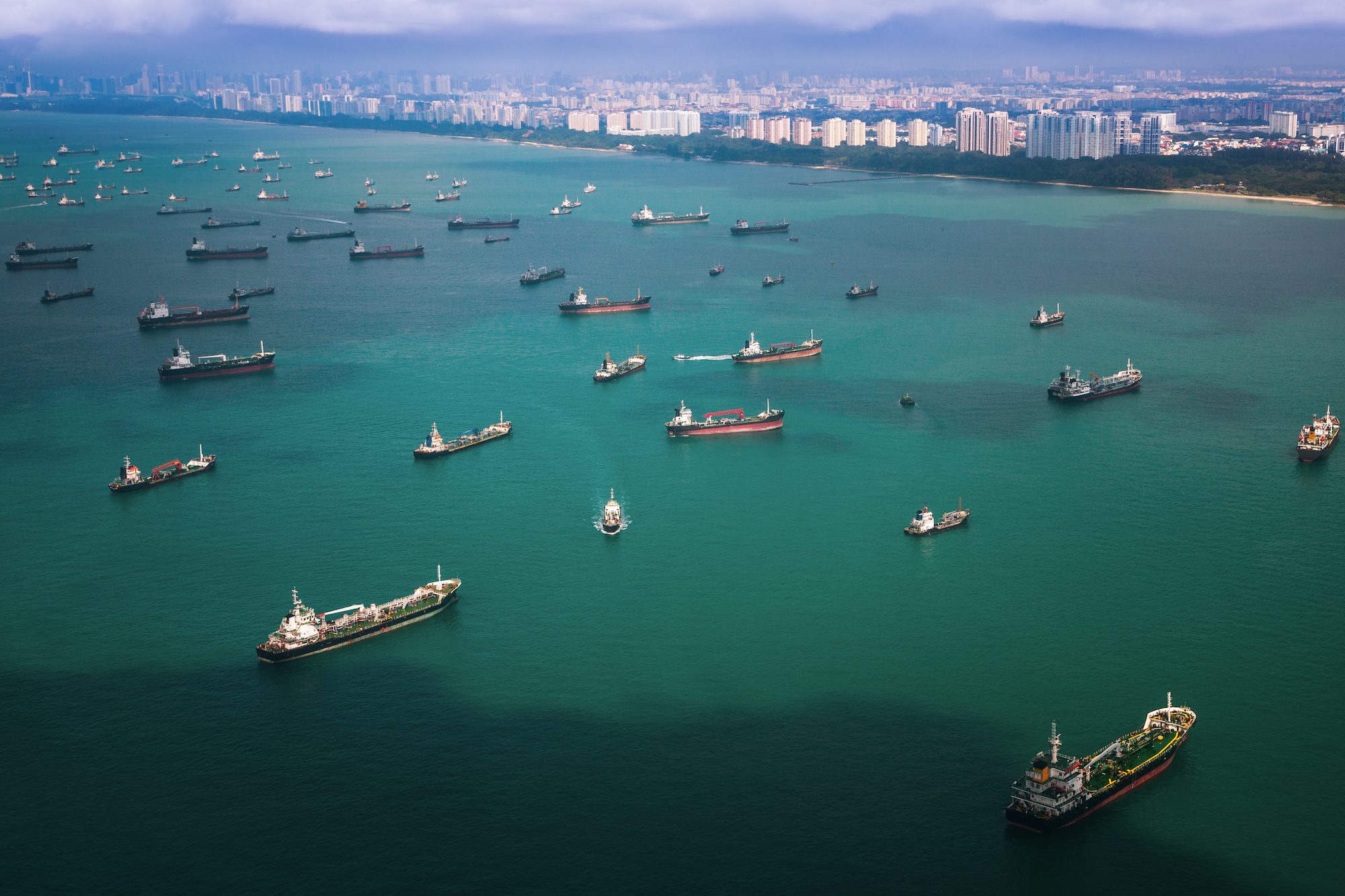
By Elizabeth Low (Bloomberg) Demand is soaring for oil storage tanks in Singapore, in a sign that a flood of Russian fuel is being blended and re-exported globally.
Tank space in the city-state is being snapped up due to a rise in interest and profits from mixing cheap fuel supplies from Russia with shipments from other sources, according to an executive from a tank operator and a consultant who advises traders on the matter. That process can help to obscure the cargoes’ origins, they said.
Singapore hasn’t banned the import of Russian oil or petroleum products, although financial institutions based in the island state are prohibited from financing or dealing with Russian goods and companies. Singapore government agencies referred to past statements on the ban and price cap policy, without additional comments.
Still, the handling and trading of Russian fuel remains a sensitive issue in the region, with some buyers not wanting to be seen purchasing the cargoes.
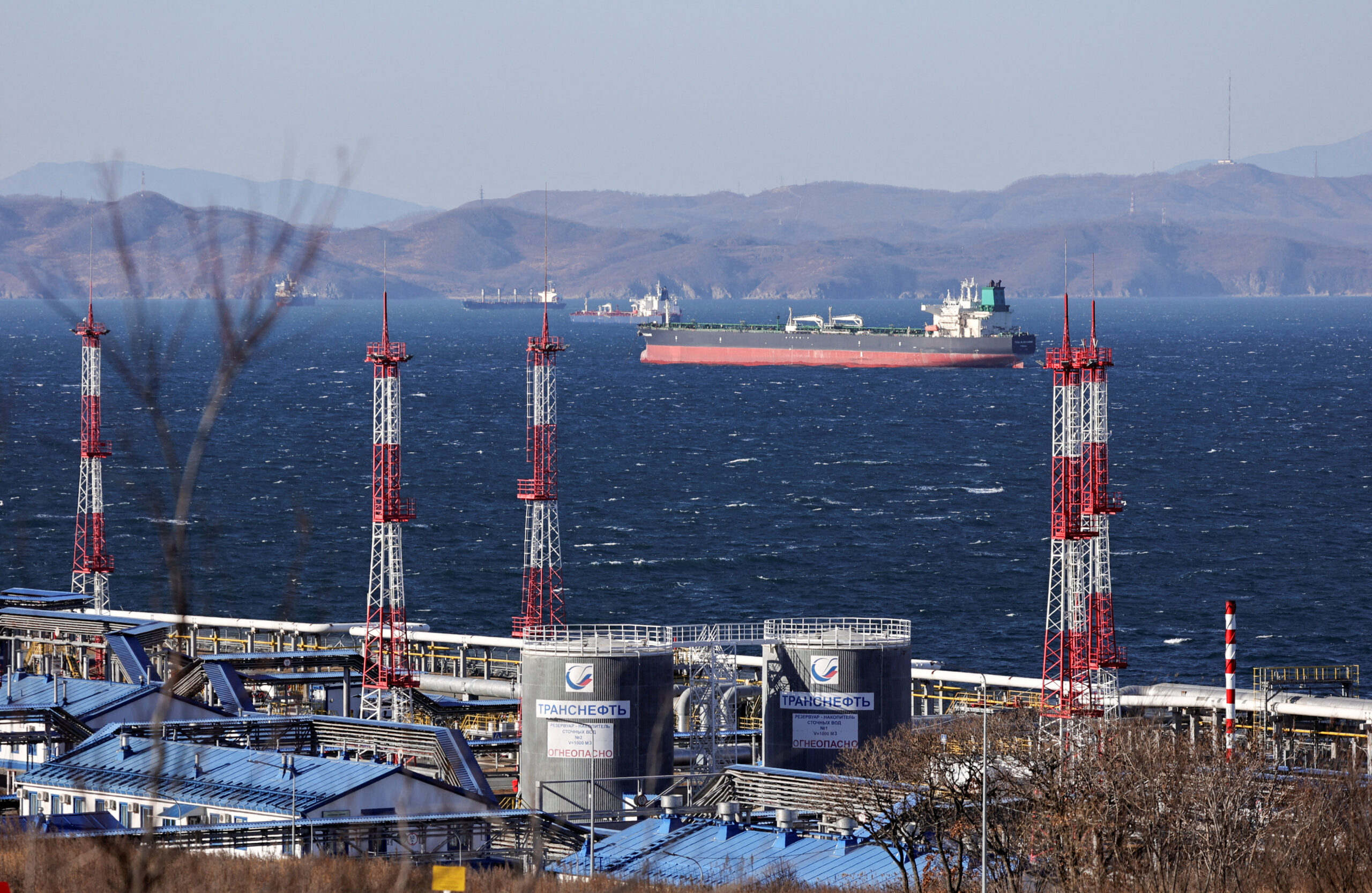
Russian crude oil and fuel flows to Asia and the Middle East have surged since Moscow’s war in Ukraine prompted western buyers to turn away in retaliation. Such shipments have increasingly made their way to blending and redistribution hubs like Singapore and Fujairah in the United Arab Emirates where they can be co-mingled, repackaged and re-exported globally.
This trend of more Russia-to-Asia shipments and the growing role of hubs in their re-distribution may further intensify in the coming weeks as Europe prepares to roll out new sanctions on Russian petroleum products on Feb. 5. Oil market participants are keenly watching to see where Russian fuels such as gasoil, naphtha and fuel oil will find homes as many Asian nations aren’t taking a hard stance on sanctions.
More Inquiries “We have observed an increase in the number of inquiries of short/spot term storage in the period leading up to December,” a spokesperson for oil storage firm Advario Asia Pacific Pte. said via email. The company verifies the source of products to ensure compliance with Russian sanctions before accepting them, the person added.
A spokesperson for Singapore-based Jurong Port Universal Terminal Pte. declined to comment on specific product movements but said the company complies with all applicable sanctions. Among other storage firms, Horizon Singapore Terminals Pte. did not respond to Bloomberg queries, while a spokesperson for Royal Vopak NV declined to comment.
Advario, Jurong Port, Horizon, and Royal Vopak operate commercial tanks in Singapore. A six-month lease for Singapore fuel oil or crude oil storage rose by as much as 17%-20% in costs over the course of last year, said executives from tank operator firms.
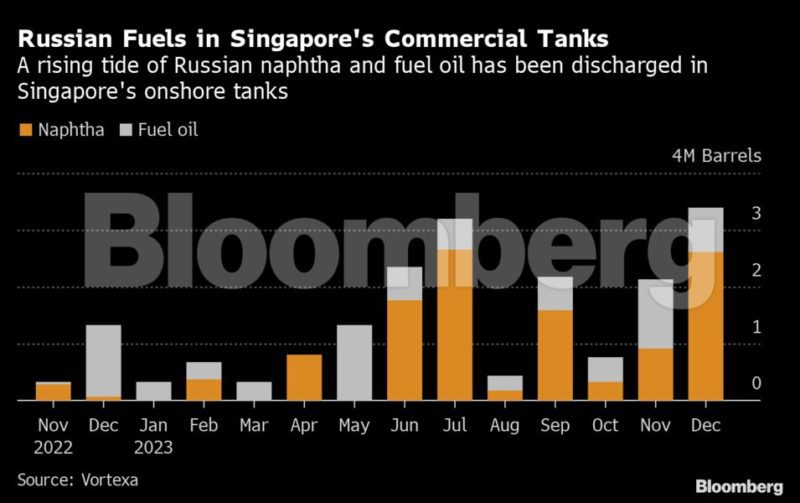
Shiptracking data by Vortexa showed that Singapore oil-receiving terminals took in more than double the volume of Russian naphtha and fuel oil in December 2022 as compared to a year ago. The city-state received 2.6 million barrels of naphtha, nearly 40 times the volume taken a year earlier.
The increased Russian naphtha arriving in Singapore’s tanks are likely to be re-exported to markets in Northeast Asia, said Armaan Ashraf, global head of natural gas liquids at industry consultant FGE, based in Singapore. It’s likely that hubs such as Singapore and Fujairah will continue to play a role in re-branding these barrels for distribution to their respective regions, he added.
Oil Profits Traders and fuel suppliers are all over oil storage and blending plays right now due to “very good” profit margins from such activities, said William Tan, senior vice president at Singapore-based marine fuel consultancy Miyabi Industries.
That’s due to the availability of very cheap supplies of Russian fuel oil and other products such as light cycle oil, he said. It greatly incentivizes the mixing of these highly-discounted varieties into blends that can be resold at a much higher price, thus encouraging traders and fuel suppliers to seek out onshore tanks or offshore floating storages for such plays.
According to Tan’s estimates, traders can enjoy a close to 20% profit margin from mixing Russian components with other grades to make a blended fuel oil product. This trend has been in place since October, and it’s more than the typical profit of between 10% and 12%, he added. Still, margins have room to increase if sellers get more desperate to offload their cargo due to more trade restrictions.
“Some of this blended fuel may go into the bunker fuel in Singapore, or be traded off to nearby countries such as Indonesia and Vietnam,” said Tan.
Crude loadings at Russia's Novorossiysk port are about two to three days behind schedule as damage caused by a November 14 Ukrainian attack has limited the capacity of a key jetty at the terminal, three sources familiar with the matter told Reuters.
MOSCOW/KYIV, Nov 2 (Reuters) – A Ukrainian drone attack struck one of Russia’s main Black Sea oil ports on Sunday, causing a fire and damaging at least one ship, as Kyiv tries to undermine Russia’s war effort...
By Bloomberg News Jul 6, 2025 (Bloomberg) –Russia reported an ammonia leak at the Ust-Luga seaport in the Leningrad region that authorities said occurred during loading operations on the LPG tanker...
July 6, 2025
Total Views: 1235
Get The Industry’s Go-To News
Subscribe to gCaptain Daily and stay informed with the latest global maritime and offshore news
— just like 107,412 professionals
Secure Your Spot
on the gCaptain Crew
Stay informed with the latest maritime and offshore news, delivered daily straight to your inbox
— trusted by our 107,412 members
Your Gateway to the Maritime World!
Essential news coupled with the finest maritime content sourced from across the globe.

 Join The Club