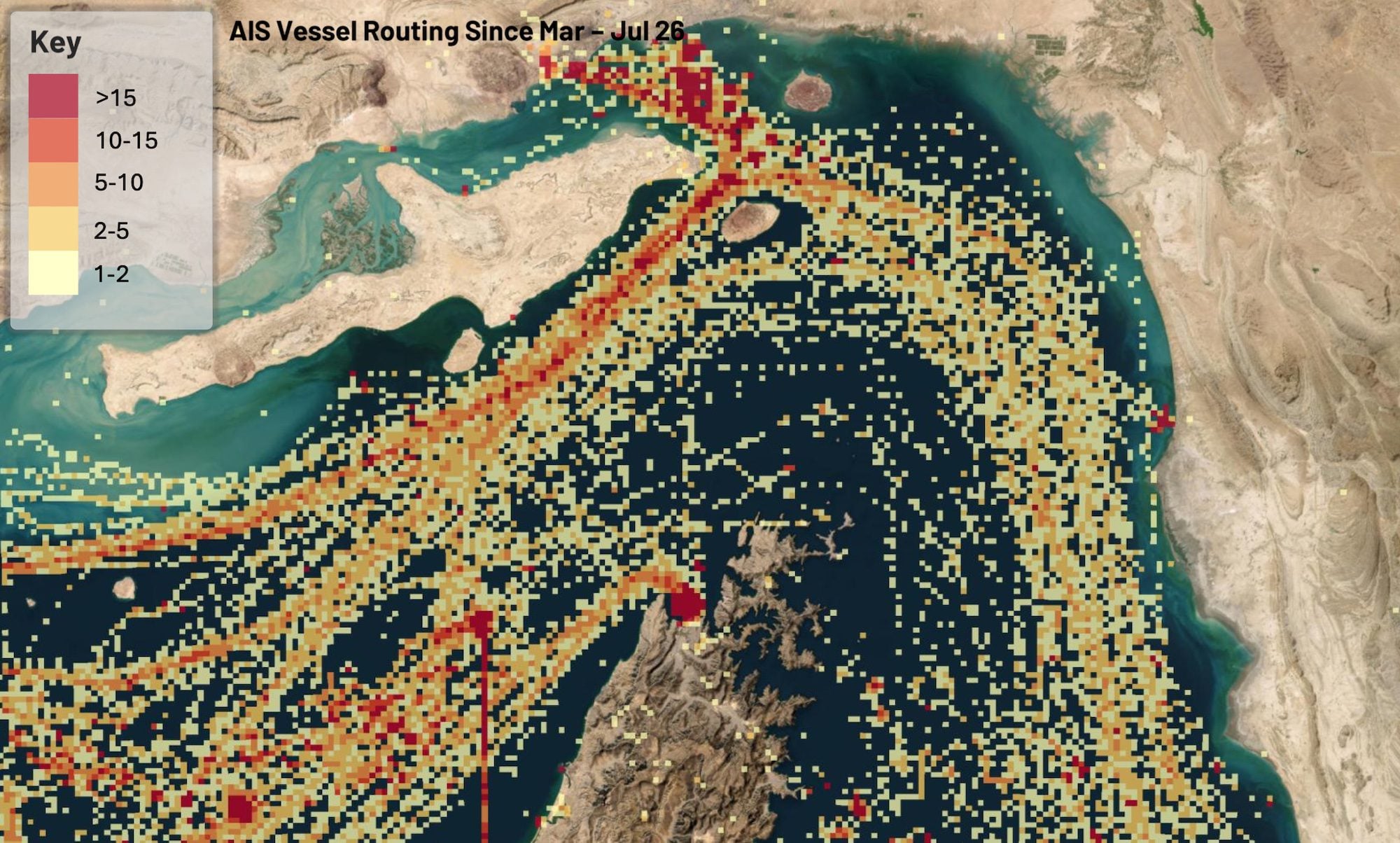
Iranian attacks on commercial shipping are pushing more vessels away from the U.S.-coordinated route through Omani waters and toward the northern, Tehran-controlled corridor through the Strait of Hormuz, according to the latest maritime security assessment.
The latest UK Maritime Trade Operations (UKMTO) Voluntary Reporting Area overview shows a striking concentration of attacks along the southern route, with 16 of 18 projectile strikes reported since July 6 occurring in the Omani corridor. UKMTO says the attacks are changing how ships navigate the world’s most important oil chokepoint.
“Despite a brief recovery in late June, vessel traffic through the Strait of Hormuz remains significantly reduced,” UKMTO said, adding that transit information shows operators increasingly favoring the northern route following projectile attacks, security concerns and heightened enforcement activity.
The shift is notable because the two routes are controlled very differently.
The northern route runs through Iranian waters and is overseen by Iran’s Persian Gulf Strait Authority, or PGSA. The southern corridor runs through Omani waters and has been coordinated with U.S. Naval Cooperation and Guidance for Shipping (NCAGS), providing an alternative for vessels seeking to avoid the Iranian-controlled passage.
Iran has sought to direct vessels toward the northern route. Previous JMIC guidance warned that ships transiting Hormuz with AIS switched on could expect directed radio calls instructing them to divert toward the Iranian-controlled corridor. The same assessment classified the threat in Hormuz as SEVERE, with deliberate hostile action considered highly likely.
The latest data suggest shipping companies are increasingly taking the hint.
UKMTO said multiple vessels have aborted planned transits or rerouted north following attacks, describing the change as evidence of “risk avoidance rather than route substitution alone.” Tankers continue to account for the largest share of the limited traffic moving through the Strait.
For the seven days ending August 14, UKMTO counted 75 outbound and 76 inbound full transits through Hormuz. The agency’s overall transit picture incorporates AIS and dark-derived information, capturing some vessels that transit without broadcasting normally.
Its more detailed route breakdown, which is based on AIS-visible vessels, shows the preference for the Iranian side.
UKMTO counted 19 outbound vessels using the northern route compared with eight on the southern Omani route and two using the traditional Traffic Separation Scheme. Inbound, 26 vessels used the northern route compared with five on the southern route, while none used the TSS.
The report does not provide a route breakdown for the dark-derived transits, meaning it is not possible from the UKMTO data alone to determine how those vessels were divided between the northern and southern corridors.
The routing shift follows weeks of attacks concentrated on the Omani side of the Strait.
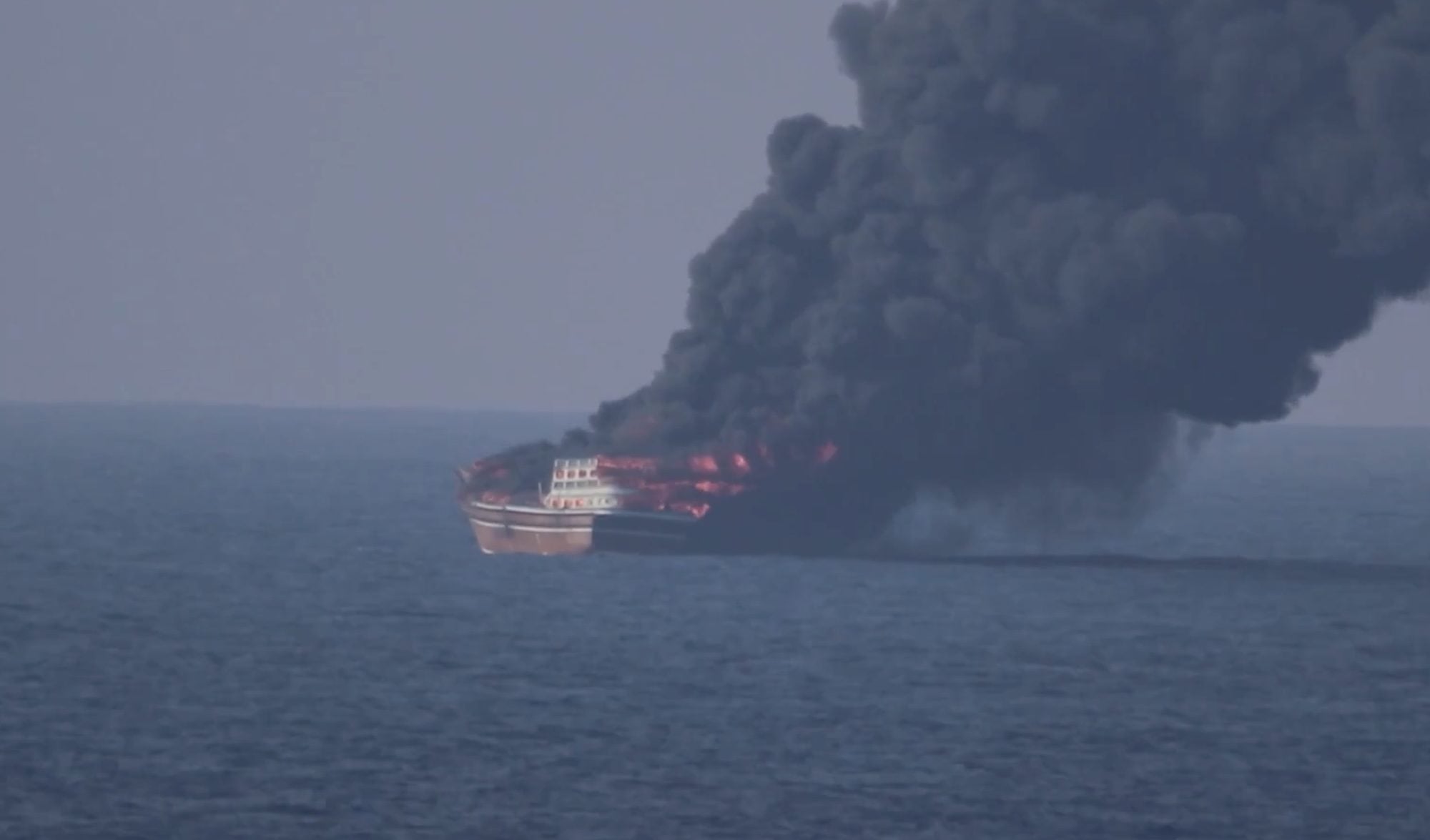
UKMTO has recorded 20 projectile-strike incidents in and around Hormuz since July 6. Engine rooms were the primary damage location in 12 incidents, raising the risk of ships losing propulsion while navigating the narrow waterway.
The latest incidents came Thursday when two tankers affiliated with Abu Dhabi National Oil Co. were struck by drones during outbound transits. Both vessels suffered minor damage and their crews were safe. The UAE blamed Iran for the attacks, while Iran had not responded publicly to the accusation.
The attacks came just a day after Bloomberg reported that ADNOC’s trading arm was expanding its Hormuz shuttle operation to transport Iraqi crude through the Strait, using tactics that have helped keep UAE oil exports moving despite the disruption.
Traffic overall remains severely depressed. UKMTO estimates AIS-detected transits are about 90% below pre-conflict levels, despite a brief recovery in late June. The traditional IMO Traffic Separation Scheme remains suspended, with no indication of an imminent return to normal routing.
Before the war, more than 130 vessels typically crossed Hormuz each day.
The latest assessment does not say Iran is attacking vessels on the southern route specifically to force them onto the northern corridor. But the pattern is increasingly clear.
For shipowners, the choice is increasingly stark. The southern corridor offers a route outside Iranian control but has borne the overwhelming majority of recent projectile attacks. The northern route requires vessels to operate through a corridor controlled by Iran, which has asserted authority over who can use the Strait.

 Join The Club