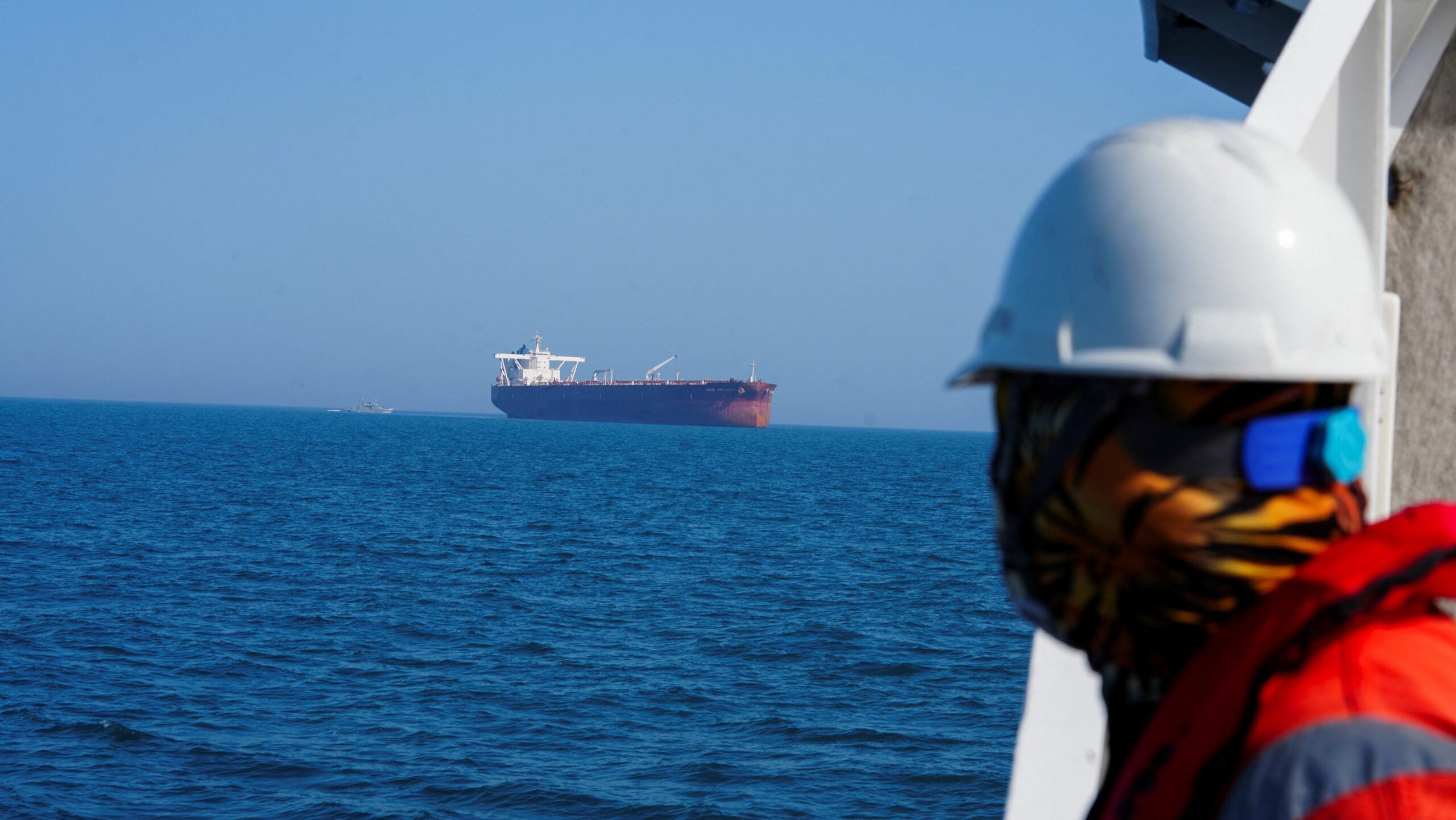
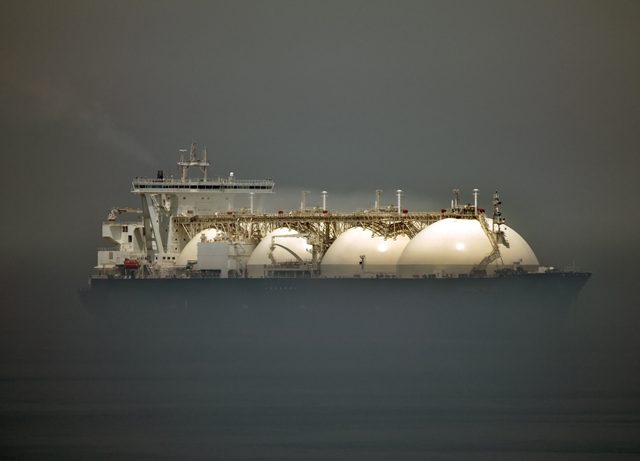
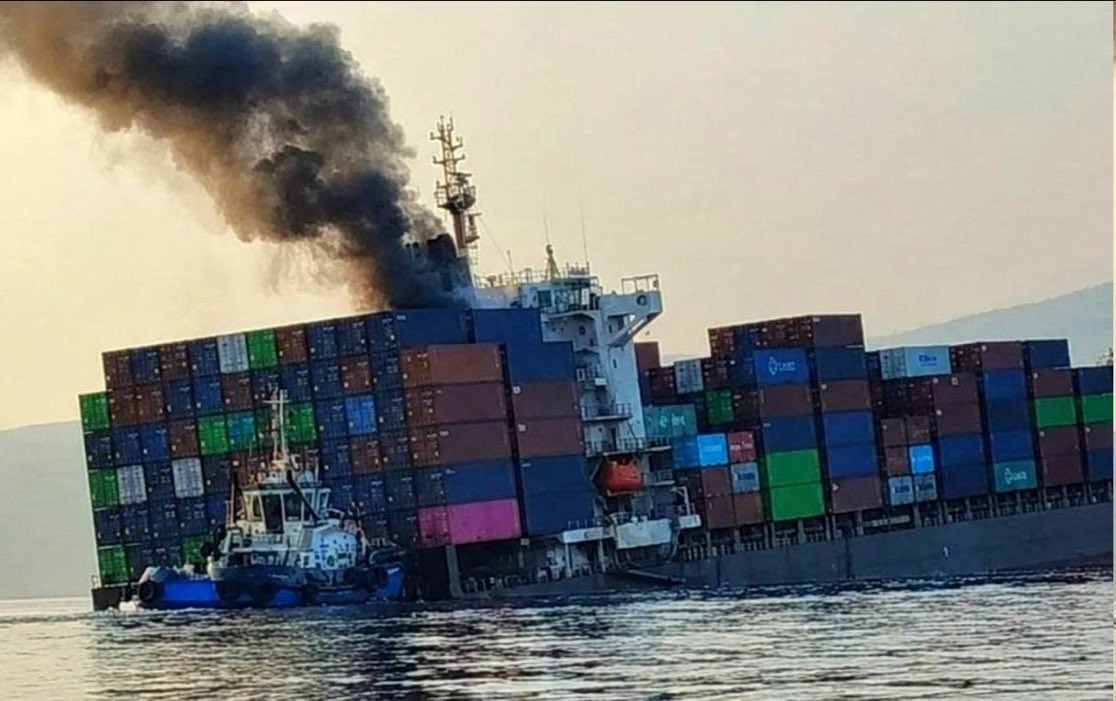
Two tankers affiliated with Abu Dhabi National Oil Co. were struck by drones while sailing outbound through the Strait of Hormuz, just a day after reports emerged that the UAE state oil company was expanding its increasingly important shuttle operation to move Iraqi crude through the contested waterway.
The United Kingdom Maritime Trade Operations (UKMTO) issued two separate attack warnings Friday after receiving reports from military authorities that tankers had been struck by unmanned aerial vehicles while conducting outbound transits of the Strait.
Both vessels suffered minor damage, while their crews were reported safe and accounted for. No environmental impact was reported.
ADNOC confirmed Thursday evening that two of its vessels were attacked and said the situations had been brought under control. The United Arab Emirates blamed Iran for the strikes, which marked the latest attacks on ADNOC-linked shipping in less than a week.
“The United Arab Emirates has strongly condemned and denounced the hostile Iranian attack that targeted two vessels affiliated with ADNOC as they transited the Strait of Hormuz,” the UAE Ministry of Foreign Affairs said.
The ministry described the targeting of commercial shipping and use of the Strait as a tool of economic coercion or blackmail as “acts of piracy” by Iran’s Revolutionary Guard Corps and called on Tehran to halt attacks and commit to the “complete and unconditional reopening” of the waterway.
The timing is notable. On Wednesday, Bloomberg reported that ADNOC’s trading arm was offering to shuttle Iraqi oil exports through Hormuz, extending a strategy that has helped the UAE move its own crude despite the severe disruption to normal shipping.
Under the system, vessels make short voyages through the Strait, sometimes with their AIS transponders switched off, before transferring cargo to other vessels outside the Gulf. ADNOC has been offering spot cargoes to Asian refiners using the same approach to move crude from other Middle Eastern producers, particularly Iraq.
Iraq’s state oil marketer SOMO has since confirmed that ADNOC is among the companies buying Iraqi crude and transporting shipments through the Strait.
There is no indication that the two vessels attacked Thursday were carrying Iraqi crude, or that the strikes were connected to ADNOC’s expanded shuttle operation. But the attacks underscore the risks facing a system that has become increasingly important to keeping Gulf oil moving while normal commercial traffic remains severely constrained.
UKMTO’s latest assessment from August 14 shows just how far shipping remains from normal. The agency recorded 75 outbound and 76 inbound full transits over the previous seven days, with both directions running at just 17% of the pre-conflict average.
Tankers accounted for the largest share of vessels making the passage. UKMTO said operators were increasingly favoring the northern route, which is controlled by Iran, following projectile attacks, persistent security concerns and heightened enforcement activity.
The southern U.S.-coordinated route through Omani waters has emerged as particularly dangerous. UKMTO said it accounted for 16 of 18 projectile-strike incidents reported since July 6, while multiple vessels have aborted planned transits or shifted north following attacks.
The latest attacks add further pressure to an already fragile flow of oil through the Strait.
Before the conflict, more than 130 ships typically passed through Hormuz each day.
The two strikes also represent another setback for ADNOC, which has emerged as one of the most active operators attempting to maintain Gulf exports despite the disruption. The company said last week that attacks on its vessels were having a significant impact on its operations, while maintaining that it remained committed to meeting customer demand.

 Join The Club