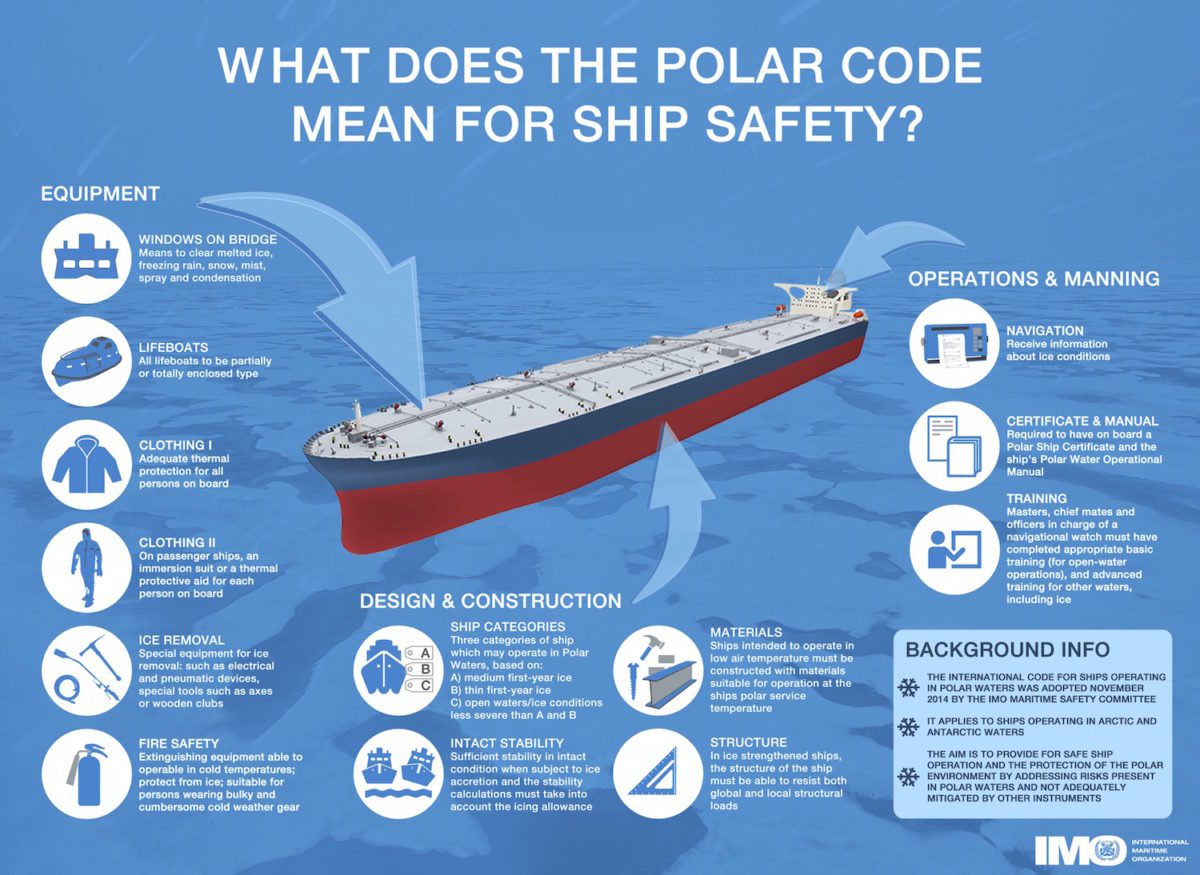
The International Maritime Organization (IMO) has adopted the International Code for Ships Operating in Polar Water, better known as the Polar Code, creating the first mandatory, across-the-board framework aimed at reducing the unique risks of operating in the Arctic and Antarctica.
Polar shipping is not just “normal navigation, but colder.” Ice can crush hulls and jam intakes. Icing can capsize stability margins. Charts are thinner, distances are longer, and rescue can be days away. Weather can flip from workable to lethal fast. The Polar Code is designed to force a higher standard of preparation—on the ship, on the bridge, and in the paperwork that too often becomes fiction in remote waters.
So what does the Polar Code actually require?
The Polar Code is mandatory through the existing safety and pollution-prevention treaties, and it reaches across the lifecycle of a voyage:
- Design and equipment tailored to polar conditions (cold, icing, ice loads, reliability in remote operations).
- Operations and voyage planning that explicitly account for ice and remoteness—meaning the “plan” must match the environment, not the schedule.
- Training and procedures aligned with polar hazards.
- Environmental protections that reflect how unforgiving polar cleanup is once something goes wrong.
A core practical change: ships operating in defined polar waters must obtain a Polar Ship Certificate (with categories based on the ice conditions the ship is designed to handle) and carry a Polar Water Operational Manual that spells out capabilities and limits, Arctic Marine Pollution regulations and what the ship can do, where, and under what conditions. Flag states like the USCG will issue their own guidance.
When does it take effect?
- New ships constructed on or after January 1, 2017 must comply.
- Existing ships built before that date must comply by the first intermediate or renewal survey after January 1, 2018 (whichever comes first).
Bottom line
The Polar Code turns “best practice” into a compliance baseline. It won’t eliminate risk—polar waters will always punish complacency—but it does make one thing clear: if you’re taking steel into ice, you’re expected to prove you’re ready.
 Click image for high-res
You can read more about the Polar Code HERE.
Related Article: IMO Film: The Polar Code Explained
Updated: February 17, 2026 (Originally published December 2, 2018)
Editorial Standards · Corrections · About gCaptain

 Join The Club