The Maritime Just Transition Task Force (MJTTF) released industry-first training frameworks today designed to prepare seafarers for working on vessels powered by ammonia, methanol, and hydrogen. This milestone comes at a critical moment when alternative fuels are transitioning from theoretical solutions to practical implementation across the global shipping fleet.
Released today at London International Shipping Week 2025, the frameworks provide essential guidance specifically crafted to support harmonized training standards for alternative fuels. They address the needs of both entry-level seafarers and senior officers, accompanied by comprehensive instructor handbooks.
“Publication of the training frameworks is not only a launch, but an invitation to use the frameworks, to build on them, to share them widely, and to ensure they become part of how our industry trains and prepares for the fuels of the future,” stated the MJTTF in their announcement.
The publicly available frameworks will serve multiple purposes within the maritime ecosystem. Regulators and maritime administrations will use them to set criteria for developing training programs and establishing certification schemes. Maritime education institutions can adapt curricula and upgrade delivery models, while shipping companies will receive support for personnel onboarding and safety management system updates.
Additionally, the MJTTF will release guidelines for general familiarization programs targeting seafarers and shore-based personnel not specifically covered by the International Convention on Standards of Training, Certification and Watchkeeping for Seafarers.
The training frameworks stem from ‘The Baseline Training Frameworks for Seafarers in Decarbonisation’ Project—a joint initiative between the MJTTF and the IMO Secretariat, in collaboration with Lloyd’s Register and the World Maritime University.
This project has operated in parallel with IMO’s comprehensive review of the 1978 STCW Convention and Code, with its outcomes serving as input to the review process. The development was made possible through contributions from numerous industry partners and experts.
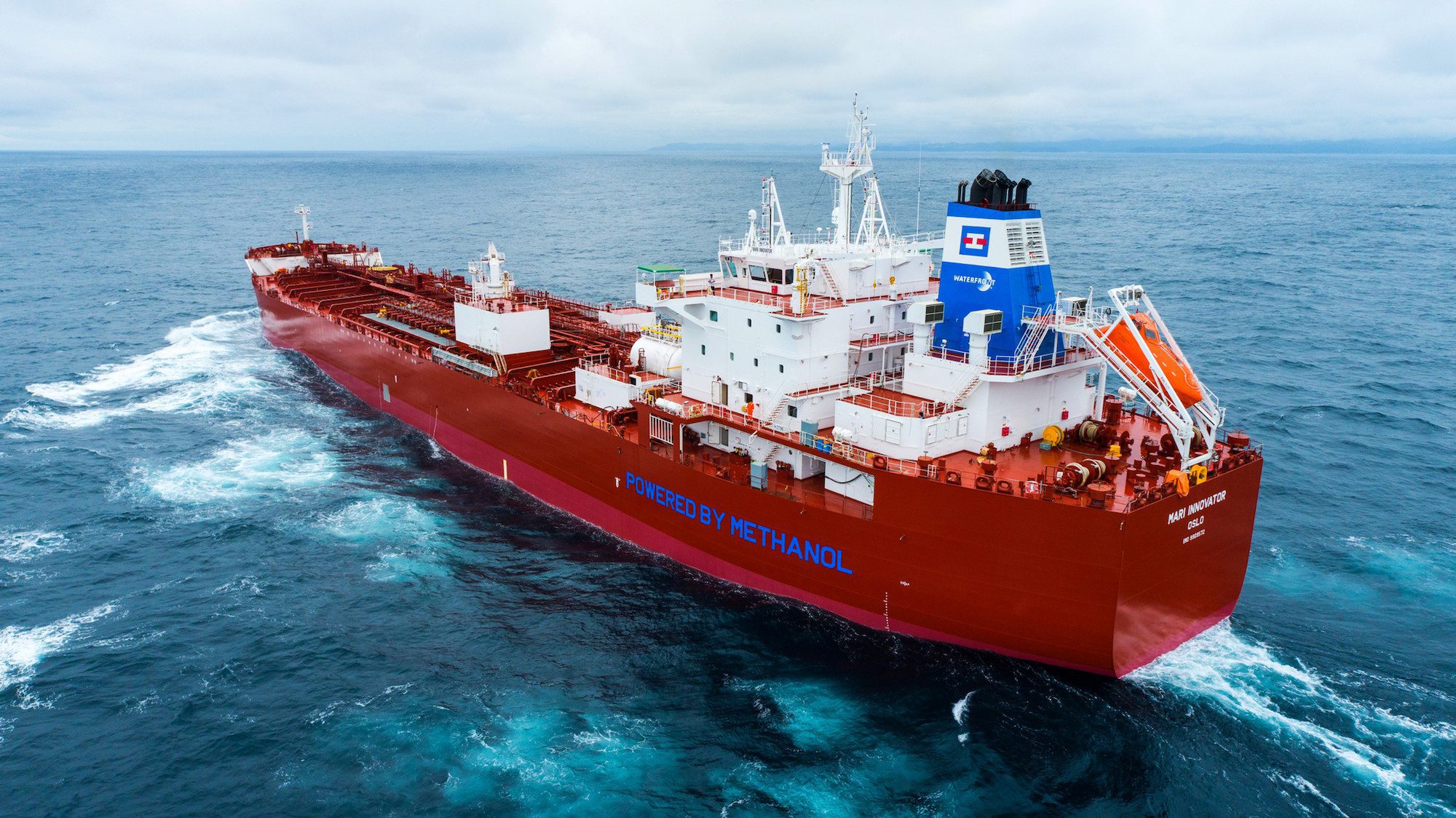
The timing of this release is significant, as it coincides with concrete advancements in alternative marine fuels. According to recent industry reports, both methanol and ammonia have progressed from theoretical solutions to practical implementation. More than 60 methanol-capable vessels are already in operation with 300 more on order, while ammonia is approaching proof of concept with successful vessel pilots and nearly completed engine testing.
Despite this progress, challenges remain. The availability of green methanol constitutes only a small portion of total supply and remains difficult for shipping companies to access. Similarly, ammonia faces hurdles related to its toxicity and high cost.
Industry experts recognize that technology readiness alone is insufficient. Jesse Fahnestock, director of decarbonization at the Global Maritime Forum, noted, “We have seen excellent progress in the development of zero-emission fuels and technologies over recent years, with methanol and ammonia having now shifted from potential solutions towards initial scale and proof of concept. However, we are only at the start of our journey and technology readiness is not enough by itself.”
The MJTTF, formed at COP26 by the International Chamber of Shipping, the International Transport Workers’ Federation, the United Nations Global Compact, the International Labour Organization, and the International Maritime Organization, aims to ensure seafarers remain at the heart of shipping’s climate response. The Task Force promotes coordinated collaboration between industry, workers, governments, and academia to support a safe, equitable, and human-centered transition to a decarbonized shipping sector.
Today’s launch is being celebrated as part of Lloyd’s Register’s Maritime Human Capital Management Forum during London International Shipping Week 2025.

 Join The Club