A new study from the Mærsk Mc-Kinney Møller Center for Zero Carbon Shipping finds that ethanol could become a practical alternative fuel for ships, particularly those already equipped with methanol-capable engines, while also identifying a possible pathway for its use in conventional diesel-powered vessels.
The report, Ethanol as a Marine Fuel: Exploring Its Usability, published Thursday, examines whether ethanol can be used in existing marine engines and what modifications would be needed to make it commercially viable.
The findings come as shipowners look beyond methanol and ammonia for lower-emission fuels that can be produced and supplied at scale. Ethanol already benefits from established production and distribution networks, particularly in the United States and Brazil, potentially giving it an advantage over fuels that require entirely new supply chains.
The study, conducted with partners including NORDEN, TotalEnergies and ABS, examines two potential applications: using ethanol in engines designed for methanol and blending ethanol with marine gas oil for use in conventional diesel engines.
Researchers found that ethanol is already showing strong technical compatibility with methanol-capable engines, with relatively limited changes needed to accommodate the fuel.
Because ethanol and methanol share similar chemical properties, engines designed for methanol can generally operate on ethanol after adjustments to fuel injection timing and engine controls. Ethanol also has a higher energy density, meaning ships would need less fuel storage capacity to achieve the same range compared with methanol.
The remaining challenges are largely related to engine optimization, validation and certification rather than major technical barriers, according to the report.
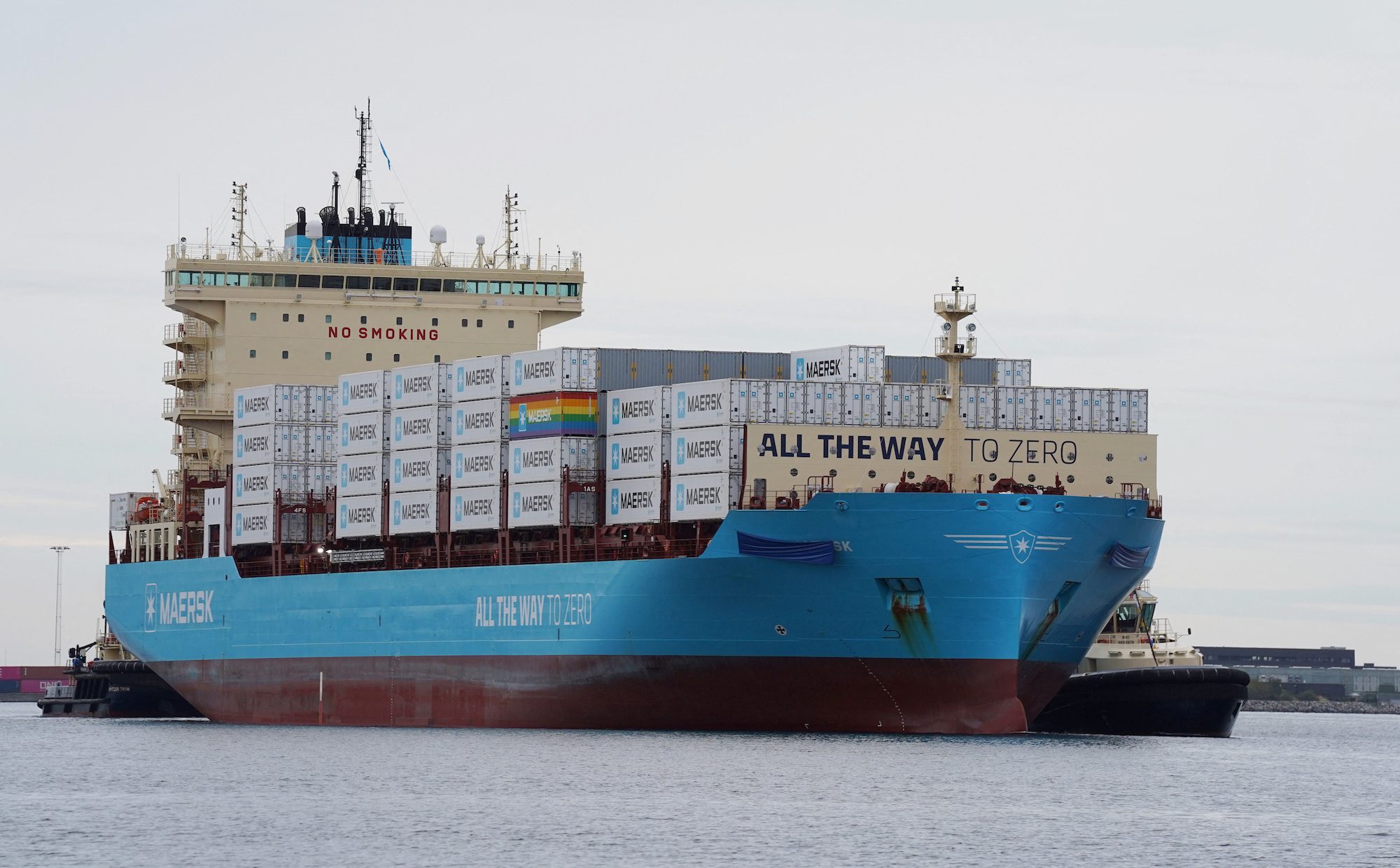
Maersk has been testing ethanol aboard its methanol-fueled container vessel Laura Maersk since 2025, initially using a 10% ethanol blend before moving to higher concentrations. In June 2026, the company reported successful trials using 100% ethanol.
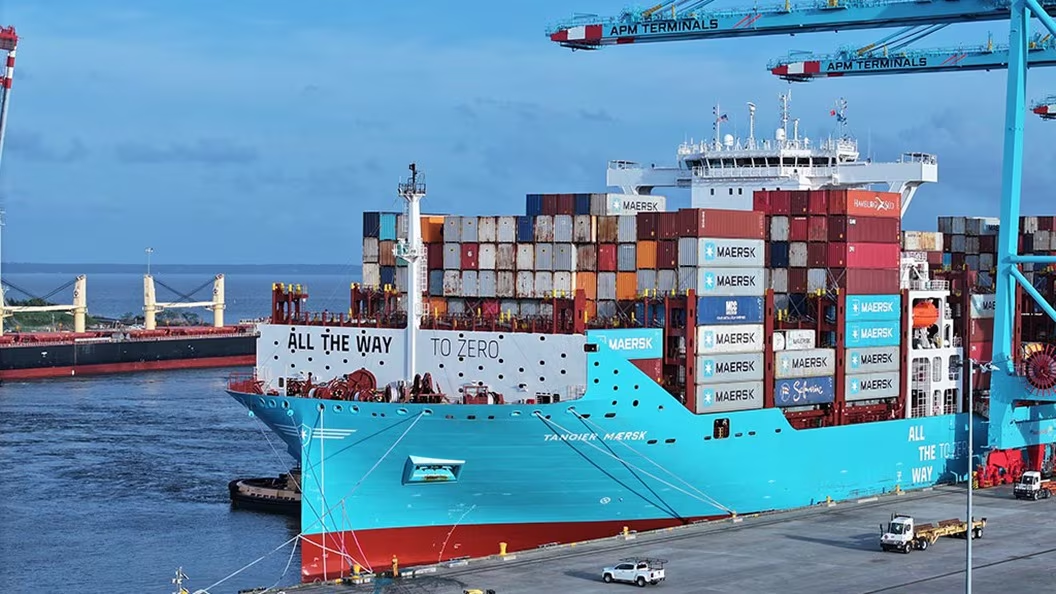
More recently, Maersk completed a commercial ethanol bunkering operation in Houston involving the 9,016-TEU Tangier Maersk, marking what the company described as the first ship-to-ship commercial ethanol bunkering of a deep-sea container vessel in the United States.
Engine manufacturers are also moving ahead. Everllence, WinGD, Wärtsilä and HD Hyundai have reported progress testing ethanol in marine engines, while Caterpillar announced conversion kits in July for certain MaK engines to operate on methanol or ethanol.
The more difficult question is whether ethanol could also be used by the much larger fleet of ships powered by conventional diesel engines.
To investigate that possibility, researchers tested blends of ethanol and marine gas oil, examining fuel stability, combustion properties and safety requirements.
The results highlighted two significant challenges.
First, even relatively small amounts of ethanol sharply reduced the flashpoint of the fuel mixture. A blend containing just 10% ethanol had a measured flashpoint of approximately 13.5°C, well below the 60°C minimum generally required under SOLAS for conventional marine fuels.
Attempts to improve the flashpoint using biodiesel and another additive were unsuccessful in the laboratory tests.
Second, ethanol-diesel blends showed a tendency to separate during storage, particularly at lower temperatures. All three blends tested separated after one week at 10°C, raising concerns about fuel handling and reliability aboard ships.
Researchers identified onboard blending systems as one potential solution, allowing ethanol and diesel to be mixed shortly before entering the engine rather than being stored together for extended periods.
However, the low flashpoint would still require appropriate safety equipment and modifications to onboard fuel systems.
Despite those limitations, the study found that converting some existing vessels to operate on ethanol blends could make economic sense.
Using a Kamsarmax bulk carrier as a case study, researchers estimated that modifying the vessel for ethanol-marine gas oil blends could cost approximately half as much as a full conversion to methanol dual-fuel capability.
The analysis assumed a 30% ethanol blend and compared operating costs against conventional marine fuels under emissions-pricing mechanisms based on the draft IMO Net-Zero Framework.
Under the study’s baseline assumptions, the conversion was not economically competitive with continued operation on very low-sulfur fuel oil.
However, the economics improved considerably for ships operating primarily in sulfur emission control areas, vessels with higher annual fuel consumption and those able to obtain ethanol with a particularly low lifecycle carbon intensity.
For example, researchers found that a large container ship consuming approximately 25,000 tonnes of fuel annually could economically operate on a 30% ethanol blend across a wider range of fuel carbon intensities.
Those findings depend in part on the future emissions-regulatory framework, fuel prices and the availability of ethanol produced with sufficiently low greenhouse gas emissions.
The report also stops short of determining how much ethanol could realistically contribute to shipping’s overall decarbonization.
Although ethanol is already produced in large quantities, its environmental performance varies considerably depending on feedstocks, agricultural practices, land-use changes and production methods. The Center said sustainability, lifecycle emissions and scalability will be addressed in separate reports.
That distinction is important because ethanol’s technical suitability does not necessarily make every source of ethanol a low-emission marine fuel.
For shipowners, the immediate opportunity may be greater fuel flexibility. Methanol-capable vessels could potentially use ethanol when supplies or prices make it attractive, reducing dependence on any single alternative-fuel pathway.
For conventional diesel-powered ships, the opportunity remains more complicated, requiring additional investment and solutions to fuel stability and safety concerns.
The Center’s findings nevertheless suggest that ethanol could play a broader role in maritime fuel supply than previously considered, particularly as shipping companies look for practical ways to reduce emissions without committing their fleets to a single fuel technology.

 Join The Club