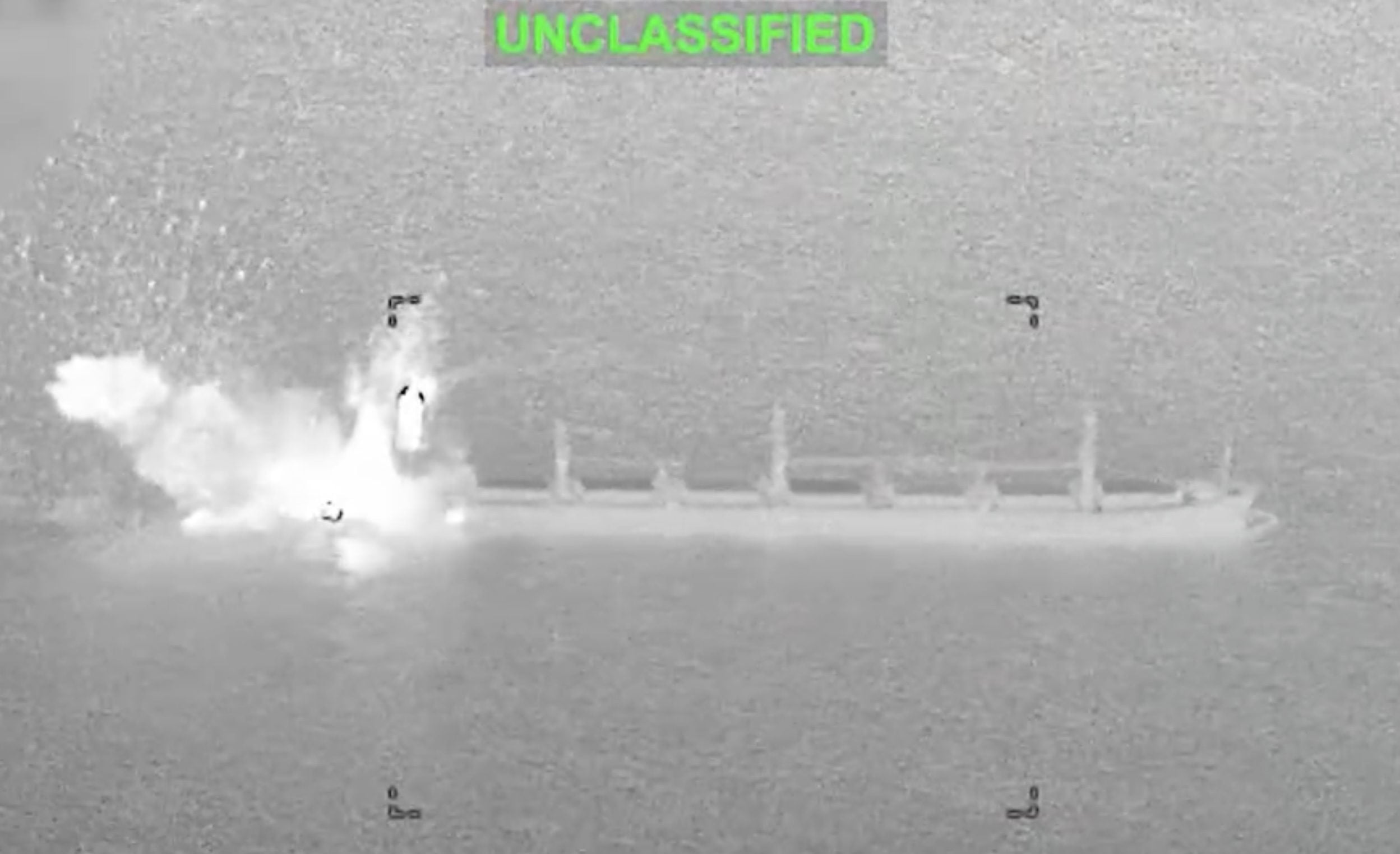
A Kuwaiti supertanker carrying more than 2 million barrels of crude was struck by a drone in waters off Dubai late Monday, triggering a fire that was later brought under control without injuries or pollution, according to authorities and maritime security reports.
Dubai officials said emergency teams responded to the incident at Anchorage “E,” confirming that all 24 crew members aboard the vessel were safe. Maritime firefighting units worked through the night to extinguish the blaze, which authorities later said had been fully contained with no oil leakage reported.
The UK Maritime Trade Operations (UKMTO) said it received a report of a tanker struck by an “unknown projectile” about 31 nautical miles northwest of Dubai, causing a fire onboard.
The vessel has been identified by ship-tracking analysts at TankerTrackers as the Kuwaiti-flagged VLCC Al Salmi, laden with approximately 1.2 million barrels of Saudi crude and 800,000 barrels of Kuwaiti crude. AIS data shows the ship’s next destination as Qingdao, China.
In a separate warning issued hours earlier, UKMTO said a container ship northeast of Ras Tanura, Saudi Arabia, reported two projectiles splashing nearby within a one-hour period.
No injuries or environmental damage were reported in either case.
The incidents mark the first confirmed incident in the region since March 22, according to UKMTO data, suggesting a renewed escalation after a brief lull in maritime attacks in the ongoing U.S.-Israel–Iran conflict.
The come after U.S. President Donald Trump posted to Truth Social that the United States is in “serious discussions” with what he described as a “new, and more reasonable, regime” in Iran, signaling potential negotiations to end ongoing U.S. military operations.
However, he warned that if a deal is not reached “shortly” and the Strait of Hormuz is not immediately reopened to commercial shipping, the U.S. could target Iran’s critical infrastructure—including electric power plants, oil fields, Kharg Island export facilities, and potentially desalination plants—assets he said Washington has “purposefully not yet touched.”
The comments mark one of the most explicit threats yet against Iran’s energy and civilian infrastructure and underscore the high-stakes linkage between any ceasefire and the restoration of maritime traffic through the Strait.
Since late February, UKMTO has logged 24 incidents across the Persian Gulf, Strait of Hormuz, and Gulf of Oman, including 16 confirmed attacks and 8 reports of suspicious activity.
The latest strike underscores the continued vulnerability of energy shipping in the Gulf—even outside the narrow confines of the Strait of Hormuz.
While operations at Dubai’s anchorage have resumed, the incident is likely to reinforce already elevated war-risk premiums and further complicate efforts to restore confidence in Gulf transits, where traffic remains a fraction of normal levels.

 Join The Club