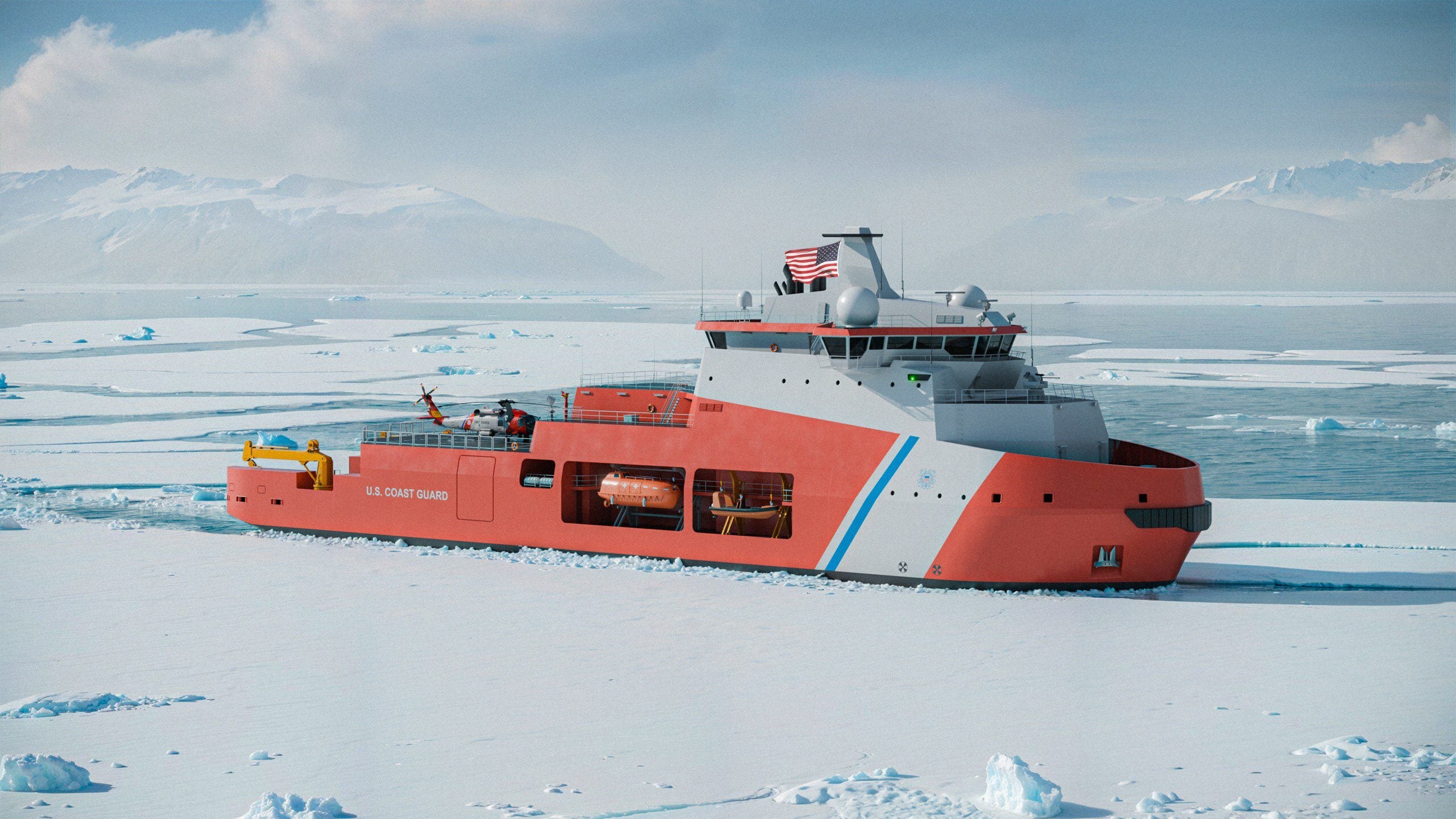
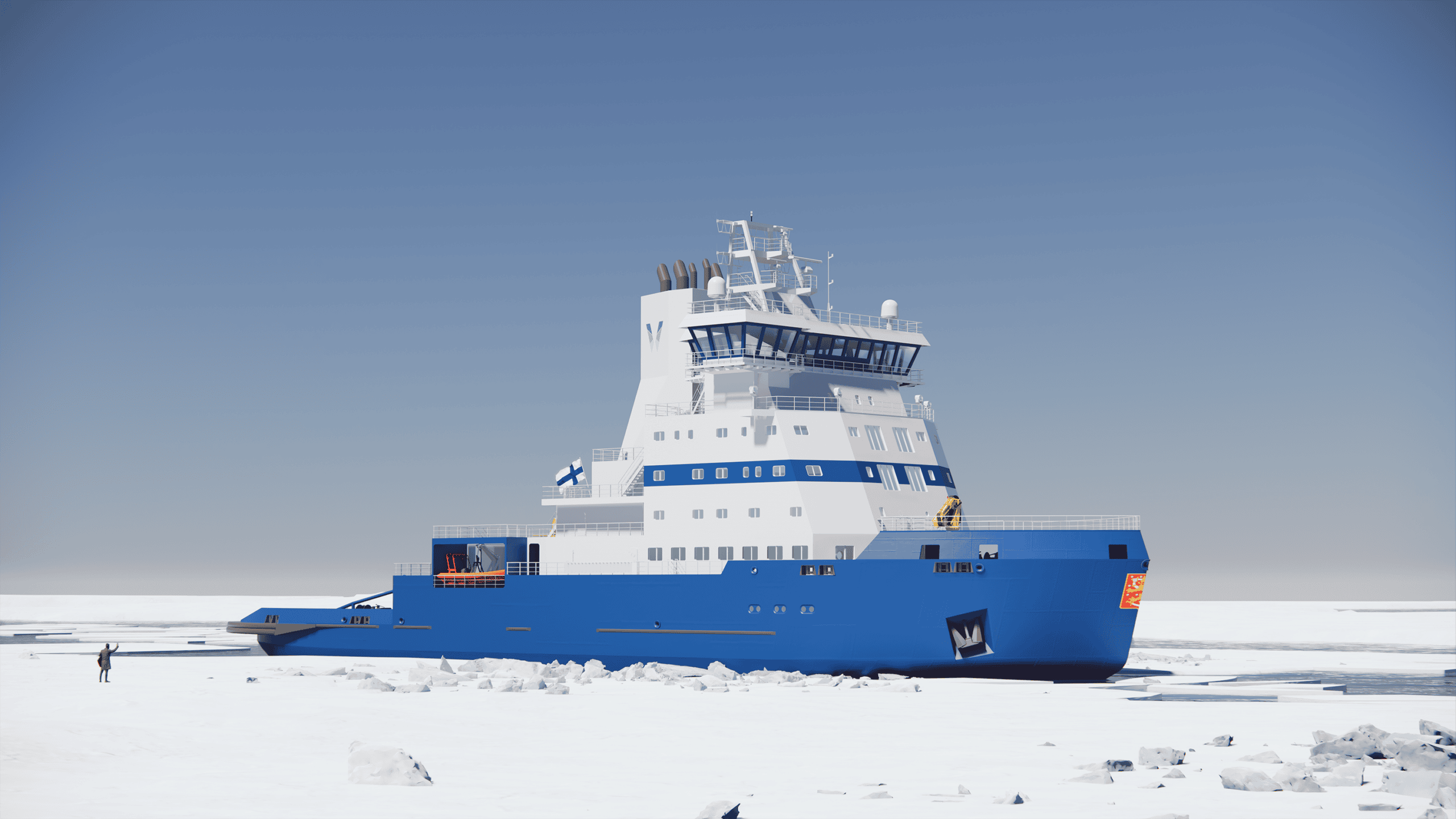
The U.S. Coast Guard’s ambitious Arctic fleet expansion took another major step forward Wednesday as Davie Defense announced it has finalized a $3.5 billion contract to build five new Arctic Security Cutters, with construction split between Finland and Texas.
Under the agreement, two of the vessels will be constructed at Helsinki Shipyard in Finland, while three will be built at Davie Defense’s Gulf Copper facilities in Galveston and Port Arthur, Texas. The first Arctic Security Cutters are expected to be built in Finland at Helsinki Shipyard before production shifts to Texas, with the first delivery expected in 2028.
The deal forms part of the Coast Guard’s broader 11-ship Arctic Security Cutter (ASC) program aimed at rapidly rebuilding America’s icebreaking fleet amid growing geopolitical competition in the Arctic.
“Today’s news marks a major milestone in the ASC program and reinforces Davie Defense’s role in delivering next-generation cutters to strengthen U.S. Arctic readiness and maritime security,” said Philip Burns-O’Brien, Chief Executive Officer of Davie Defense.
The contract runs through February 2035 and maintains the previously announced delivery schedule for all five vessels.
The Arctic Security Cutter program has become one of the centerpieces of the Trump administration’s push to rapidly expand U.S. polar capabilities as Russia and China increase their Arctic presence.
Davie Defense is the U.S. arm of Inocea, a UK-owned maritime group with operations spanning Finland, Canada and the United States. The company acquired Gulf Copper’s Texas shipbuilding assets in 2025 as part of a broader strategy to establish what executives have described as an “American Icebreaker Factory” on the Gulf Coast.
The company says the ASC program will help transfer Arctic shipbuilding expertise to the United States while supporting workforce development and industrial expansion in Texas. A groundbreaking ceremony tied to redevelopment of the Gulf Copper facilities is scheduled for June 1 and is expected to include up to $1 billion in additional investment into U.S. shipbuilding infrastructure.
The Coast Guard currently operates a severely limited icebreaking fleet consisting primarily of the aging heavy icebreaker Polar Star, medium icebreaker Healy, and recently commissioned Storis. Coast Guard assessments have previously stated the service requires at least nine Arctic Security Cutters to maintain year-round Arctic operations.
The ASC program emerged from the trilateral ICE Pact framework signed between the United States, Canada and Finland in 2024 to accelerate Western icebreaker production in response to expanding Russian and Chinese Arctic activities.
Davie’s vessels represent one of two primary designs being used across the 11-ship program. The company’s cutter design is based on a proven Helsinki Shipyard platform with seven previous variants already in service globally. Meanwhile, separate ASC contracts awarded to Bollinger Shipyards and Finland’s Rauma Marine Constructions are based on Canada’s Multi-Purpose Icebreaker design developed with Aker Arctic Technology.
The latest contract announcement further solidifies Texas as an emerging center for U.S. icebreaker construction, even as the Coast Guard continues struggling with delays and cost overruns tied to the separate Polar Security Cutter program being built by Bollinger.
The ASC fleet is expected to support missions ranging from Arctic sovereignty patrols and maritime security to search and rescue, scientific operations, and protection of critical shipping routes and natural resources in the rapidly changing polar region.

 Join The Club