The Damen Fuel Flexible Tugs range is prepared for the future –
whatever it may hold
The numerous new regulations facing the industry in recent years leave no room for doubt – the maritime energy transition is underway.
To offer just one example of many, in 2024, the EU Emissions Trading System (ETS) was further rolled out to incorporate maritime transportation. True, it’s currently only applicable to vessels over 5,000 gross tonnes. This is unlikely to remain the case for long, however. Already there are indications that the regulations could be expanded to cover all vessels over 400 gross tonnes in 2027 and below that in the near future.
Into the carbon market
With that, many towage companies will be expected to dramatically lower their emissions, and forced to enter the carbon market, purchasing credits to offset their carbon output – a potentially costly endeavour.
Another strong indication that the transition is progressing is the difficulty vessel owners frequently encounter when trying to attract funding. In many cases now, lending is only available to operators able to demonstrate the sustainability of their intended investment.
Fuel of the future?
Even without these issues to contend with, there remains the question of what to invest in, explains Erik van Schaik, Product Manager Tugs at Damen.
“A newbuild tug ordered today may still be in operation three decades from now. Who knows what the fuel picture will be five years from now, never mind 25 or 30 years?”
In reality, there will most probably be no one dominant maritime fuel type in the future. Various factors will affect which fuel will be used – availability, infrastructure, maturity of technology, required level of energy density.
The operational profile of the vessel will certainly play a role in determining the fuel type used, he continues.
“For example, with a predictable port-based towage operation, a fully electric, zero emissions approach makes sense. For less predictable operations farther from shore, the way forward is more likely to be a carbon neutral approach with a fuel such as HVO, or green methanol.”
Flexibility – the key to tomorrow
In short, there is a lack of clarity, at present. This doesn’t mean there are no routes open to vessel owners, however; the key to the future does not lie in having the solution right here, right now. Rather, says Erik, it lies in having the flexibility to be able to respond once the future arrives.
“That is the thinking behind Damen’s Fuel Flexible (FF) Tugs range. This is a series that provides diesel propulsion, competitive in today’s market, but prepared for what’s to come.
“If, in the future, it becomes commercially attractive – or indeed, mandatory – to sail with hybrid propulsion, HVO or methanol, you have the possibility to switch – at that moment.”
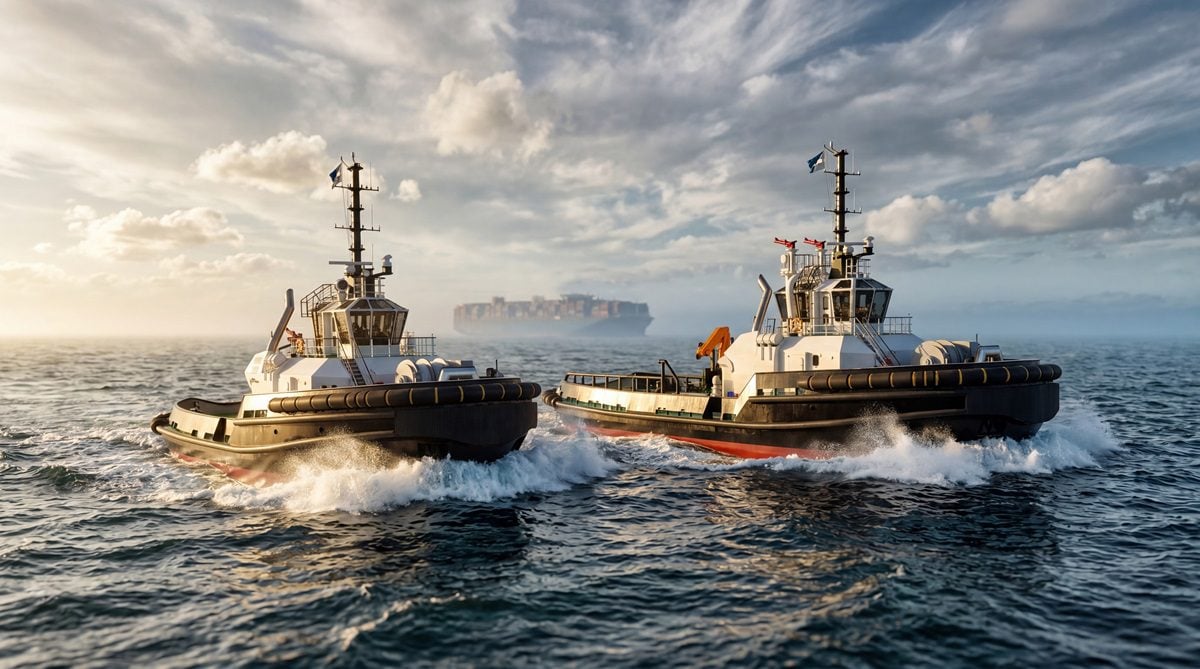
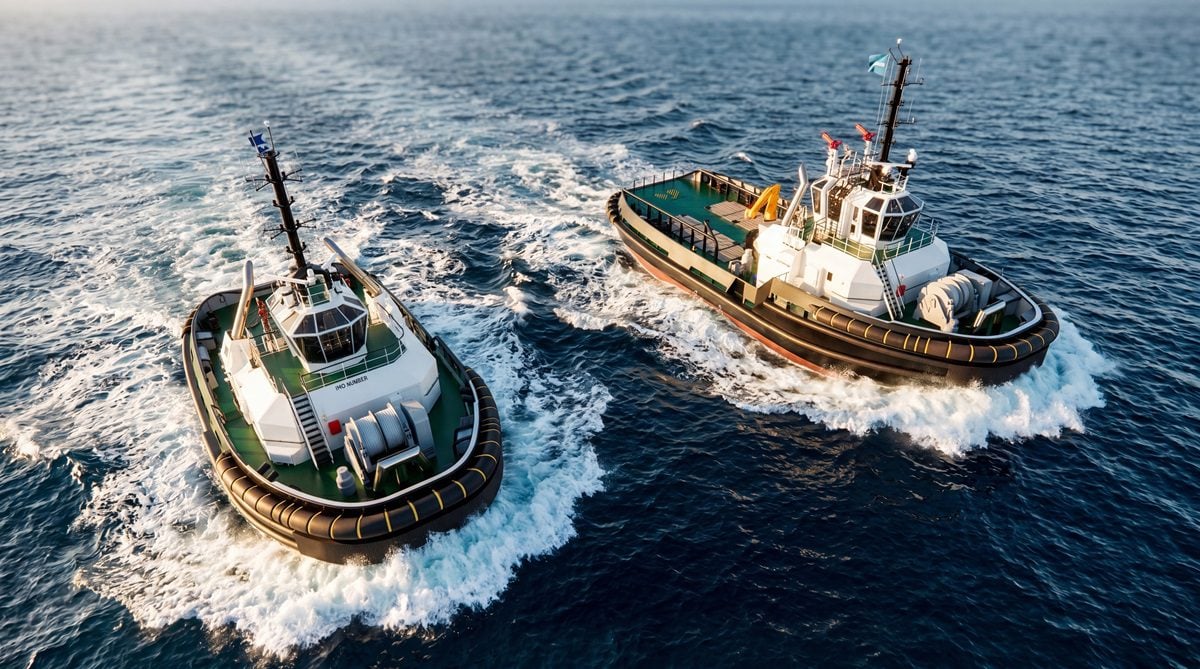
The FF series consists of three tug types – the ASD Tug 2512 FF, the ASD Tug 2713 FF, and the ASD Tug 3313 FF. The vessels are, respectively, 25 x 12, 27 x 13, and 33 x 13 metres, offering a range of capabilities for operations in ports, close to shore and offshore.
Modular energy concept
With these tugs, Damen applies a modular energy concept, Erik explains. In its design of the vessels, Damen has created additional spaces which, in the future, can be used for storage and handling of alternative energy sources. For now, this space sits empty, waiting to see what the future will bring.
When the moment comes, it is ready for rapid conversion to a number of different configurations, depending on what is required or desirable.
“The fuel flexible tugs are prepared for an easy retrofit from diesel or HVO to diesel or HVO plus methanol or diesel or HVO plus battery electric PTI/PTO hybrid.
“The existing Damen diesel tug family and the new Damen Fuel Flexible Tug family will have a comparable price per ton bollard pull. Tug owners can undertake a retrofit to a different energy source during the lifetime of the vessel when they are certain there is a business case for it. If that moment never occurs during the lifetime of the vessel no money is lost.”
The way forward
“What this means is, you have today a single platform that supports multiple configurations – diesel, HVO, hybrid, or methanol – ready for the future. Of course, there will be an investment required to convert it to a different configuration, but you will only need to do that at the point when you know for sure that the decision you are taking is relevant and likely to offer a return on investment.
“To our thinking, this is a practical way forward. While no one can offer clarity on what the future looks like, the FF range offers operators a smart solution; a range of vessels suited to today’s operations and ready, without significant adaptation, for tomorrow’s. The FF Tugs offer operators a means to invest in fleet renewal, cost-effectively and with confidence.”

 Join The Club