The U.S. Coast Guard coordinated the rescue of 27 mariners after their Venezuelan-flagged fishing vessel caught fire and sank roughly 500 miles north-northwest of the Galapagos Islands over the weekend, highlighting the role of international cooperation and commercial shipping in remote ocean rescues.
The 240-foot fishing vessel La Pena issued an SOS distress alert at 3:51 p.m. Pacific time Saturday, prompting Rescue Coordination Center Alameda to take charge of the response. Using a crewmember’s satellite messaging device, watchstanders confirmed the vessel was on fire and had sunk, forcing all 27 crew members to abandon ship into an emergency lifeboat.
The situation quickly became critical. The crew reported having no life jackets, food, or water, and their only communications link—a satellite device—had about 37% battery life remaining, or roughly 12 hours of use. Coast Guard watchstanders established a 90-minute check-in schedule to conserve power while maintaining position updates.
With no Coast Guard cutters or aircraft operating nearby, RCC Alameda issued SafetyNet and SafetyCAST alerts to vessels in the area and initiated an AMVER query. Two ships were identified within 115 miles of the distress position, with another 13 within 575 miles.
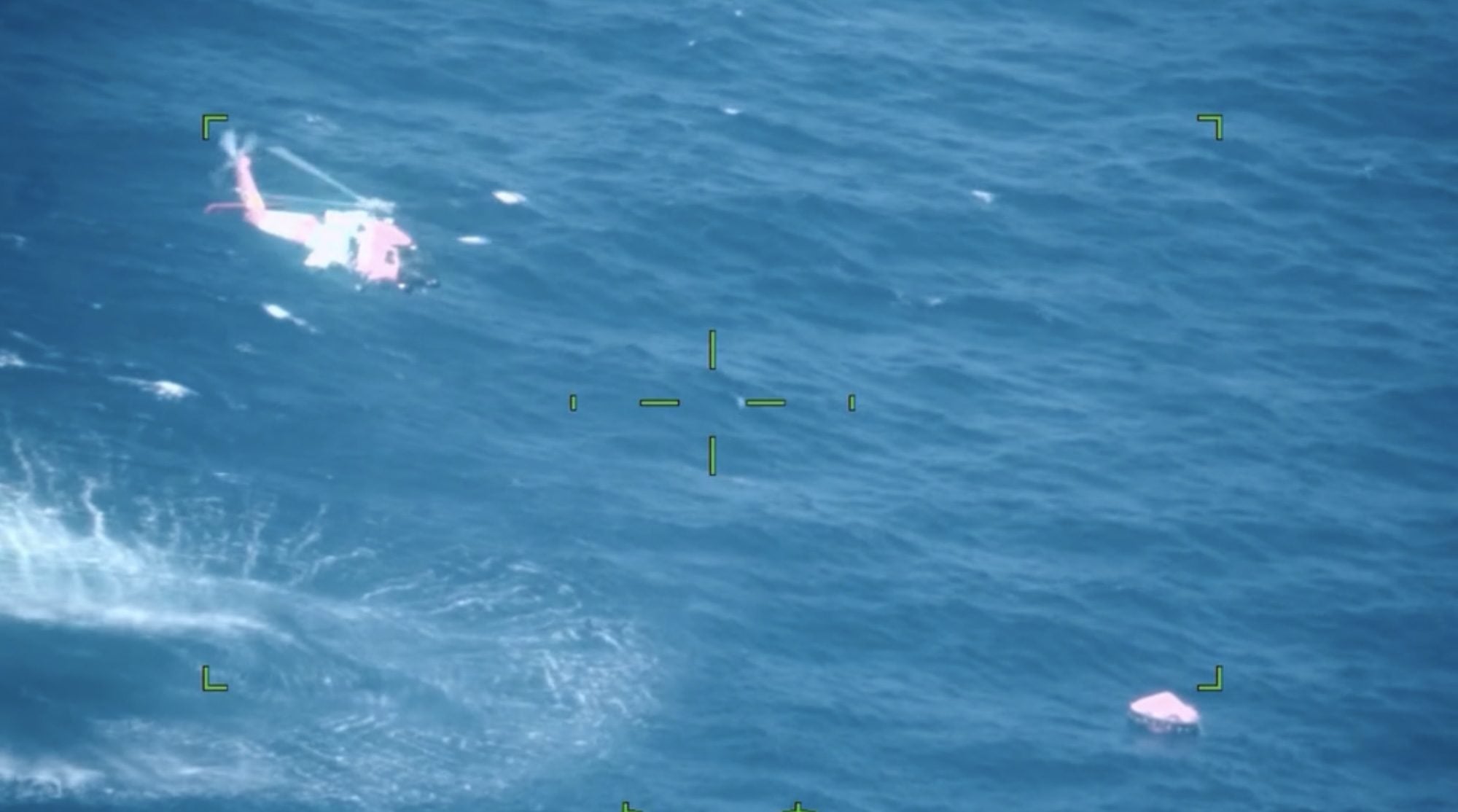
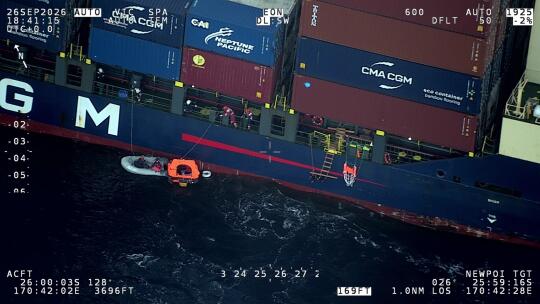
The motor vessel Seaways Kenosha, located about 100 miles away, responded and diverted to assist. At approximately 3:30 a.m. Sunday, the vessel arrived on scene and successfully recovered all 27 mariners from the lifeboat.
No serious injuries were reported. One previously noted injury was assessed as non-life-threatening. Weather conditions at the time of rescue were reported as 5-foot seas and 10-knot winds.
“The outcome of this case is a direct result of the vigilance and professionalism of our watchstanders,” said Capt. Patrick Dill, chief of incident management for the Coast Guard’s Southwest District, crediting both the coordination effort and the rapid response by Seaways Kenosha.
A planned HC-130 deployment from Air Station Sacramento to deliver emergency supplies was later stood down following the successful recovery. The Coast Guard’s National Command Center continues to monitor the situation as arrangements are made to transfer the survivors ashore.
The rescue once again underscored the importance of the AMVER program, a voluntary global ship-reporting system sponsored by the Coast Guard that allows commercial vessels to serve as critical rescue assets in vast ocean areas far beyond the reach of immediate government response.

 Join The Club