Jun 6, 2026 (Bloomberg) —Container shipping rates jumped over the past week amid higher fuel costs, congestion at some Asian ports and a pickup in demand heading into a peak season for booking ocean freight.
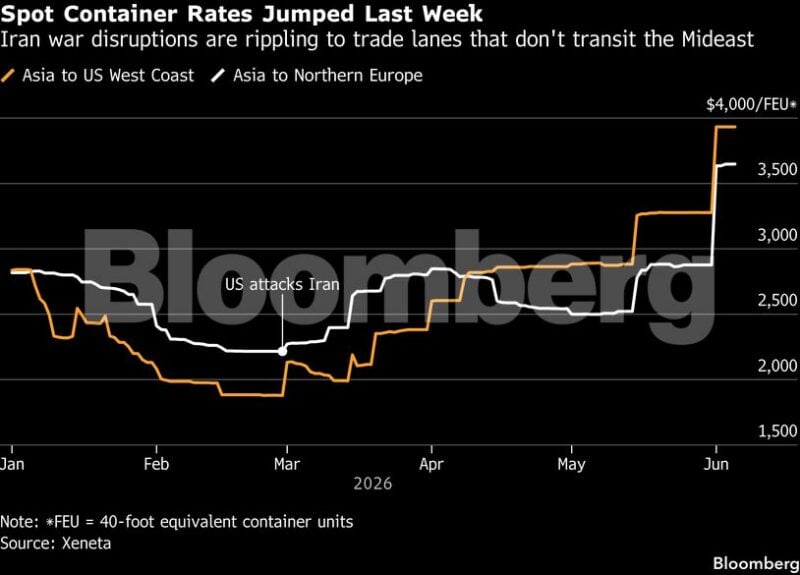
The spot rate for a 40-foot container to northern Europe from Asia rose to $3,649 as of Friday, a 27% increase from week earlier, according to Xeneta, an Oslo-based freight platform. The cost to the US West Coast from Asia was up 20%, to $3,933.
The numbers align with Drewry’s latest composite reading for several long-haul routes, which also showed short-term rates posting a steep jump over the past week to the highest level in about a year.
Xeneta’s figures showed rates to the US from Asia are up 109% since the US war with Iran started on Feb. 28, while charges for Europe-bound containers are up more than 50%. Carriers are adding fuel surcharges and forcing importers to shoulder costs tied to the energy crisis.
On top of those added fees is tighter capacity heading into busy months for inventory restocking — July and August. Shipments rerouted because of the blocked Strait of Hormuz are causing backups at Southeast Asian hubs including Singapore and Malaysia’s Port Klang, spreading the capacity pressures to trade lanes far from the Persian Gulf.
“Port disruption is toxic for supply chains, especially at transshipments hubs with global significance in Southeast Asia,” said Peter Sand, chief analyst with Xeneta. “So this is driving massive market spikes on trades such as the transpacific which does not transit the Middle East.”
With fears growing that oil prices will stay elevated into the second half, the rate surge may have more room to run, he said.
“The wave of freight rate increases is gathering momentum,” Sand said. “If shippers do look to front-load imports, then carriers will look to push rates higher and higher, so the market may yet be far from its peak across trades globally.”
Shares of A.P. Moller-Maersk A/S, the world’s second-biggest container line, advanced about 13% this week.
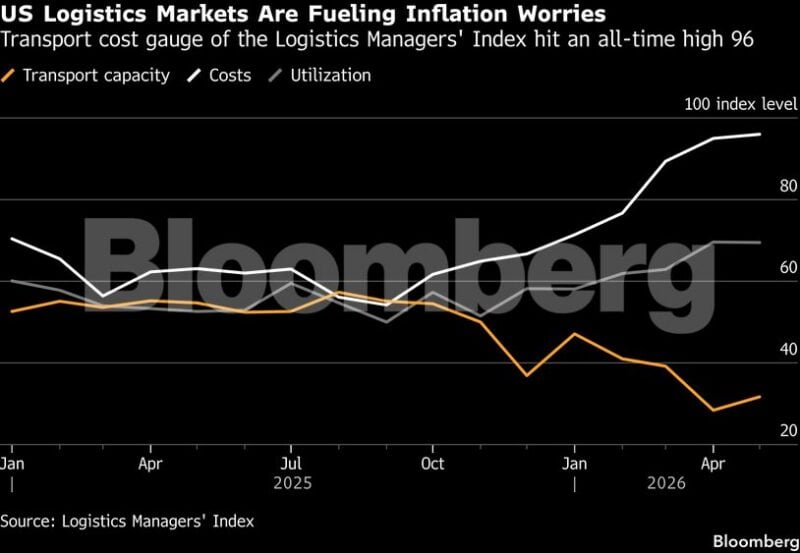
The surging cost of freight isn’t confined to seaborne cargo. The May reading of US transport costs in the monthly Logistics Managers’ Index showed the fastest rate of expansion for any metric in the 10-year history of the report.
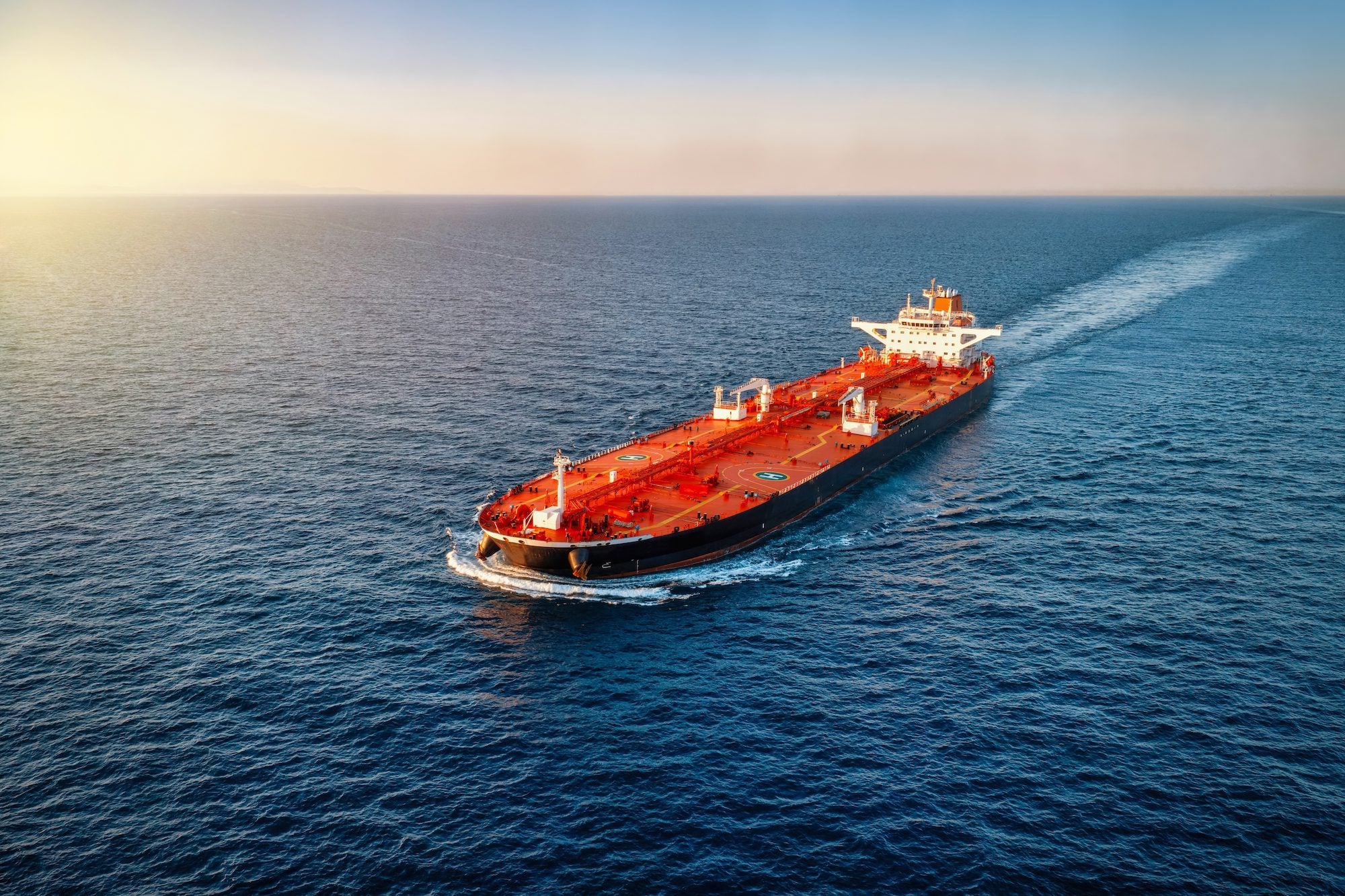
US crude oil exports to Asia are set to hit multi-year lows after the Iran war disrupted global shipping and pushed the cost to lease a tanker for the Pacific journey to a record of almost $80 million.
The Greek finance ministry said on Thursday it was implementing sanctions in place linked to Iran and that it backed efforts to effectively combat money laundering and the financing of terrorism.
Iran’s Revolutionary Guards claimed Thursday that seven commercial vessels were struck overnight in the Persian Gulf and Strait of Hormuz, including four ships conducting oil transfers, prompting President Donald Trump...
October 22, 2026
Total Views: 777
Get The Industry’s Go-To News
Subscribe to gCaptain Daily and stay informed with the latest global maritime and offshore news
— just like 106,406 professionals
Secure Your Spot
on the gCaptain Crew
Stay informed with the latest maritime and offshore news, delivered daily straight to your inbox
— trusted by our 106,406 members
Your Gateway to the Maritime World!
Essential news coupled with the finest maritime content sourced from across the globe.

 Join The Club