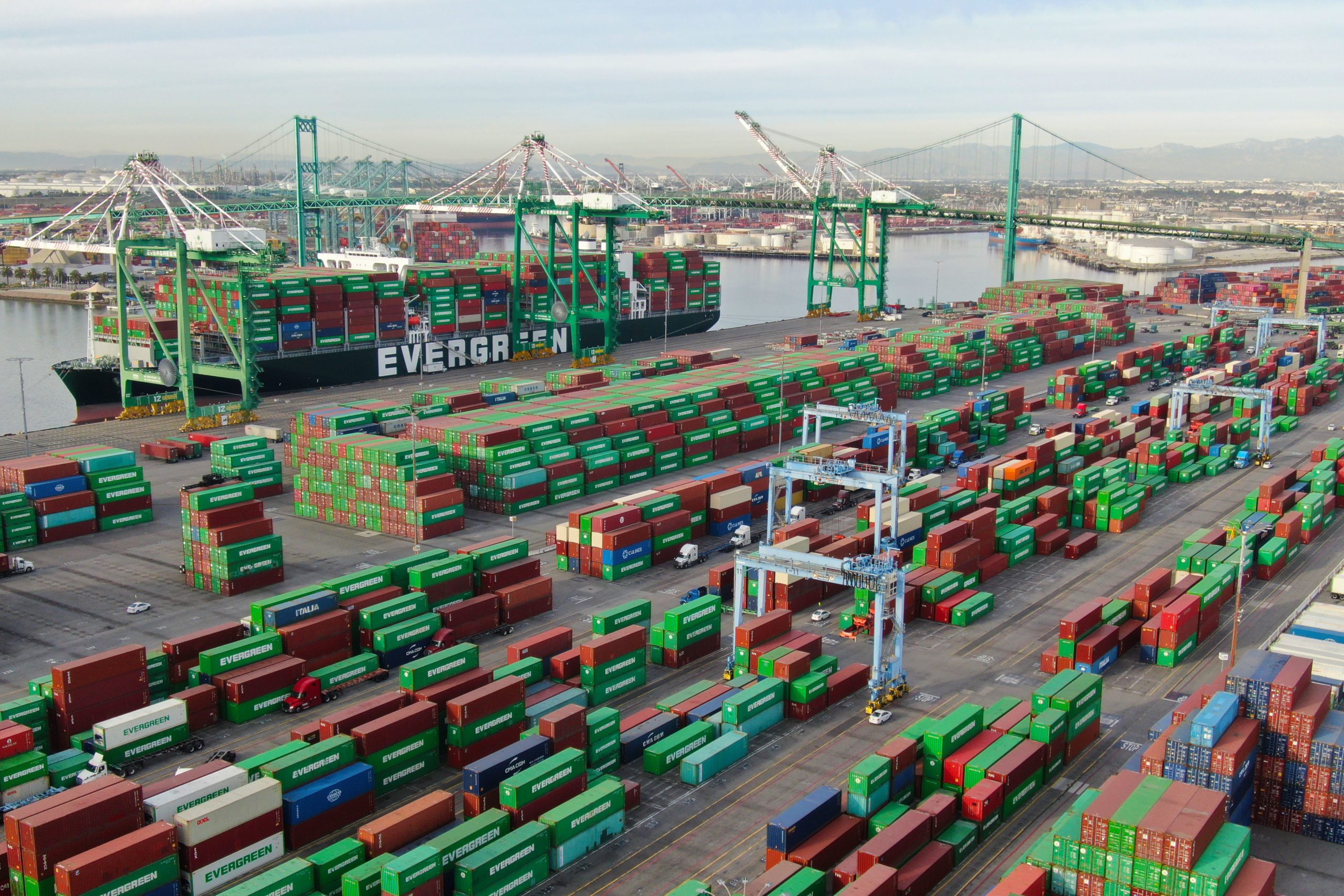
A federal appeals court has upheld a closely watched Federal Maritime Commission ruling against Evergreen Marine over container detention charges, in a decision that could reinforce regulatory scrutiny of carrier fee practices and strengthen the Commission’s “freight fluidity” standard.
In a decision issued Tuesday, the United States Court of Appeals for the District of Columbia Circuit denied Evergreen’s petition for review and upheld an FMC order finding the carrier acted unreasonably by charging a trucker detention fees during a three-day closure of the Port of Savannah.
The dispute stemmed from a relatively small $510 charge, but the stakes reached far beyond the invoice.
At issue was whether ocean carriers can impose detention charges when a trucker has no practical ability to return equipment — a question that has sat at the center of broader industry fights over demurrage and detention since the supply chain turmoil of the pandemic era.
The court backed the FMC’s conclusion that the charges violated the Shipping Act’s requirement that carrier practices be “just and reasonable,” and in doing so gave judicial support to the Commission’s view that such fees must do more than simply punish delay — they must serve their intended purpose of promoting freight fluidity.
“The intended primary purpose” of detention charges is to promote freight fluidity, the court wrote, endorsing the Commission’s interpretation that charges imposed when empty containers cannot be returned are “likely to be found unreasonable.”
The case arose from a 2020 shipment for Yamaha Motor Company moving through the Port of Savannah. A COVID-related plant shutdown delayed the trucker’s ability to retrieve the container, while a planned three-day port closure prevented its return once it was available. Evergreen assessed detention charges anyway.
The FMC had ruled those charges unreasonable, finding they could not incentivize faster return under those circumstances. Evergreen challenged that reasoning, arguing the Commission improperly elevated a broader “freight fluidity” concept over the incentive principle embedded in the FMC’s 2020 interpretive rule.
The appeals court rejected that argument outright.
“Freight fluidity has always been integral to the incentive principle,” Judge Harry Edwards wrote for the panel, adding the Commission’s approach was not a departure from the rule but a direct application of it.
The ruling is notable because it affirms the FMC’s discretion to weigh not just contractual terms or whether free time expired, but whether a charge actually serves a legitimate operational purpose.
The court also dismissed Evergreen’s argument that contractual agreement alone justified the fees, backing the FMC’s view that carrier contracts remain subject to Shipping Act reasonableness standards. It further noted Evergreen conceded it suffered no costs from the delay — undercutting any argument the fees were compensatory.
While the case centers on a narrow fact pattern, maritime lawyers and cargo interests are likely to read it more broadly.
The decision appears to strengthen the legal footing beneath the FMC’s detention and demurrage enforcement agenda, which has expanded in recent years through rulemakings, investigations and enforcement actions aimed at carrier billing practices.
For motor carriers, beneficial cargo owners and shippers, the ruling could bolster challenges to fees assessed when operational conditions make compliance impossible.
For ocean carriers, it may signal courts are willing to give substantial deference to the FMC in disputes over what constitutes “unreasonable” practices under the Shipping Act.
And for the Commission, it amounts to a significant judicial endorsement of one of its central post-pandemic regulatory doctrines.
For an agency that has spent years arguing detention charges should improve cargo flow rather than function as revenue generators disconnected from performance, the court’s message was unmistakable: freight fluidity remains the governing principle.

 Join The Club