Don’t Miss Your Daily Briefing for the Maritime Industry
Join the leading maritime news network
— trusted by our 107,009 members
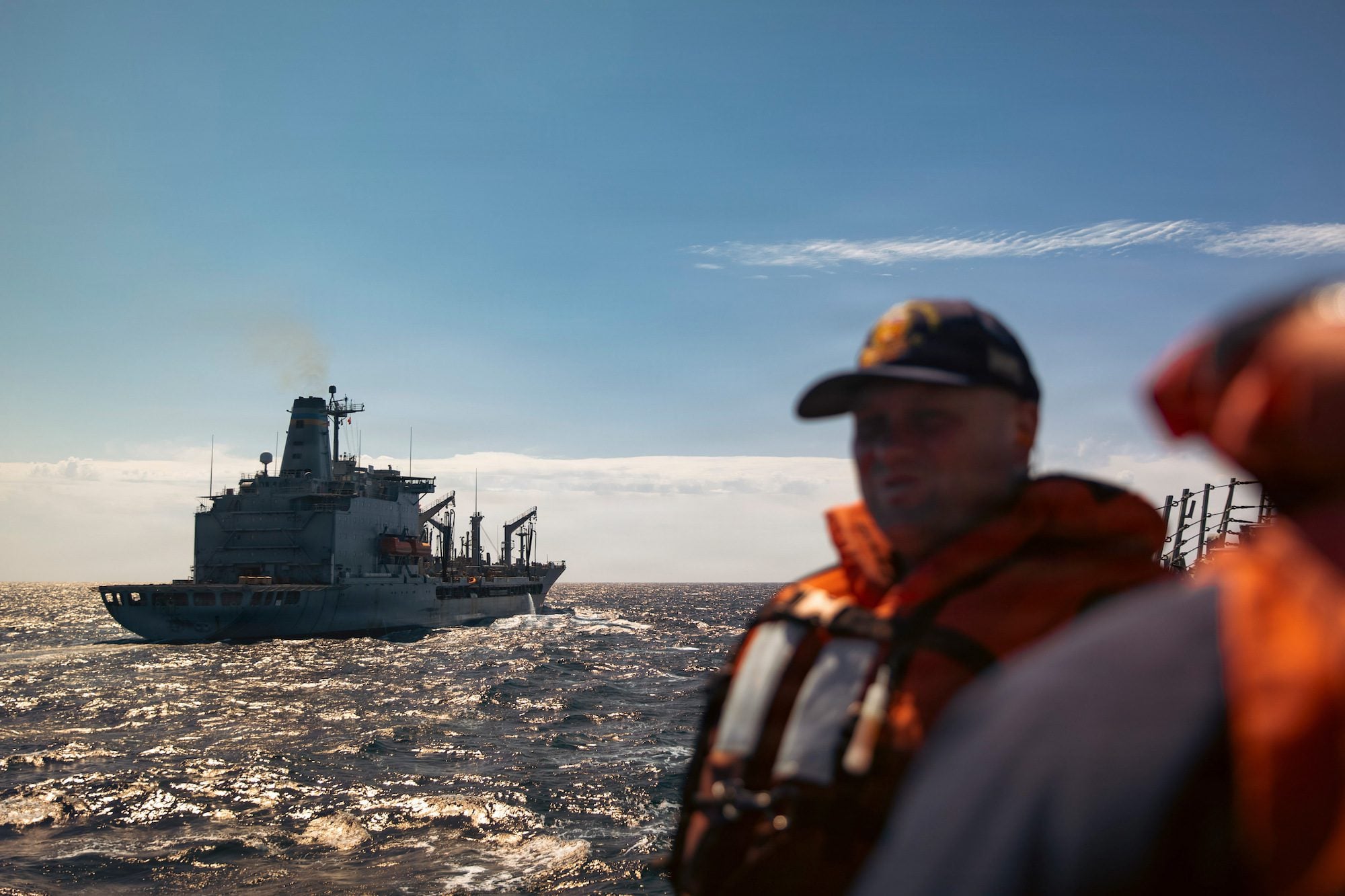
The Arleigh Burke-class guided-missile destroyer USS Winston S. Churchill (DDG 81) conducts a replenishment-at-sea with Henry J. Kaiser class fleet replenishment oiler USNS Kanawha (T-AO-196), Mar. 17, 2026. (U.S. Navy photo)
America Is Finally Remembering the Merchant Mariners Who Carry Its Power
On July 17, history quietly turned on the waterfront.
Admiral Karl Thomas, Commander of U.S. Fleet Forces Command, presented the first Presidential Unit Citation ever awarded to a civilian-crewed ship in Military Sealift Command’s 77-year history. The ceremony marked far more than a military milestone. It represented one of the highest national honors ever bestowed upon America’s merchant mariner, reflecting a broader national rediscovery of their strategic importance.
When the crew of USNS Kanawha accepted the Presidential Unit Citation, awarded by President Donald J. Trump to both USNS Kanawha and USNS William McLean, I found myself thinking about another president who understood the importance of America’s merchant mariners.
President Franklin D. Roosevelt famously called America’s wartime merchant ships the “Ugly Ducklings.” He also described the Merchant Marine as the Nation’s “Fourth Arm of Defense.” While history remembers the battleships and celebrates the generals, Roosevelt remembered something else.
The mariners and ships that helped win World War II were not built for glory. They were built for cargo.
The Ugly Ducklings Who Sustained the Allied War Effort
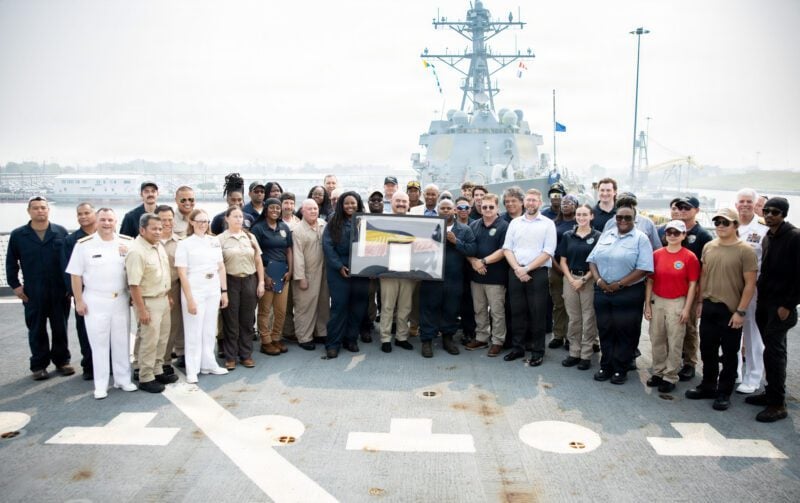
Norfolk, Va. (July 17, 2026) – Rear Adm. Ben Nicholson, commander, Military Sealift Command (MSC, left, and the crew of the Henry J. Kaiser-class replenishment oiler USNS Kanawha (T-AO 196) pose for a photo with the Presidential Unit Citation award and pennant aboard during an award ceremony at Naval Station Norfolk, Virginia, July 17, 2026. The USNS Kanawha was recognized for outstanding performance and dedication to duty, as part of the USS Gerald R. Ford Carrier Strike Group, solidifying the vital role MSC plays in sustaining global maritime security and American sea power. (U.S. Navy photo by Ryan Carter)
They crossed submarine-infested oceans carrying fuel, ammunition, food, tanks, and aircraft. They carried the industrial power that ultimately defeated tyranny.
Every voyage carried the constant threat of enemy submarines, mines, aircraft, storms, and the unforgiving sea. Yet they sailed because without them America’s fighting forces could not fight, and the Allied war effort could not be sustained.
When the war ended, America celebrated its victory. But Roosevelt’s “Ugly Ducklings” gradually faded from the national memory.
Quiet Service in Uncertain Waters
The merchant mariners never stopped serving.
Their ships continued carrying America’s commerce. They supported military operations from Korea and Vietnam to the Middle East. They delivered humanitarian aid after disasters, replenished carrier strike groups, and quietly ensured American power could reach wherever it was needed.
Even when few noticed, merchant mariners never stopped showing up for America. In 2026, America finally showed up for them.
America Takes Notice
On National Maritime Day, in May 2026, Secretary of Transportation Sean Duffy and Maritime Administrator Steve Carmel brought merchant mariners back into the national spotlight when they presented the Gallant Ship Award to the crew of the Stena Immaculate.
Established by President Roosevelt in 1944, the Gallant Ship Award recognizes extraordinary civilian courage at sea. In more than eighty years it has been presented only about forty times, making it among the rarest honors in American maritime service.
The 23-member Crowley crew earned it for their response to a 2025 collision in the North Sea, fighting a fire fueled by military jet fuel long enough to evacuate safely and prevent a far greater disaster.
An Unprecedented Modern Honor for Civilian Mariners
Then came an honor without modern precedent.
President Donald Trump awarded one of the Nation’s highest military unit honors to the civilian crews of Kanawha and William McLean, who sustained the USS Gerald R. Ford Carrier Strike Group as it conducted combat operations against Iran during Operation Epic Fury.
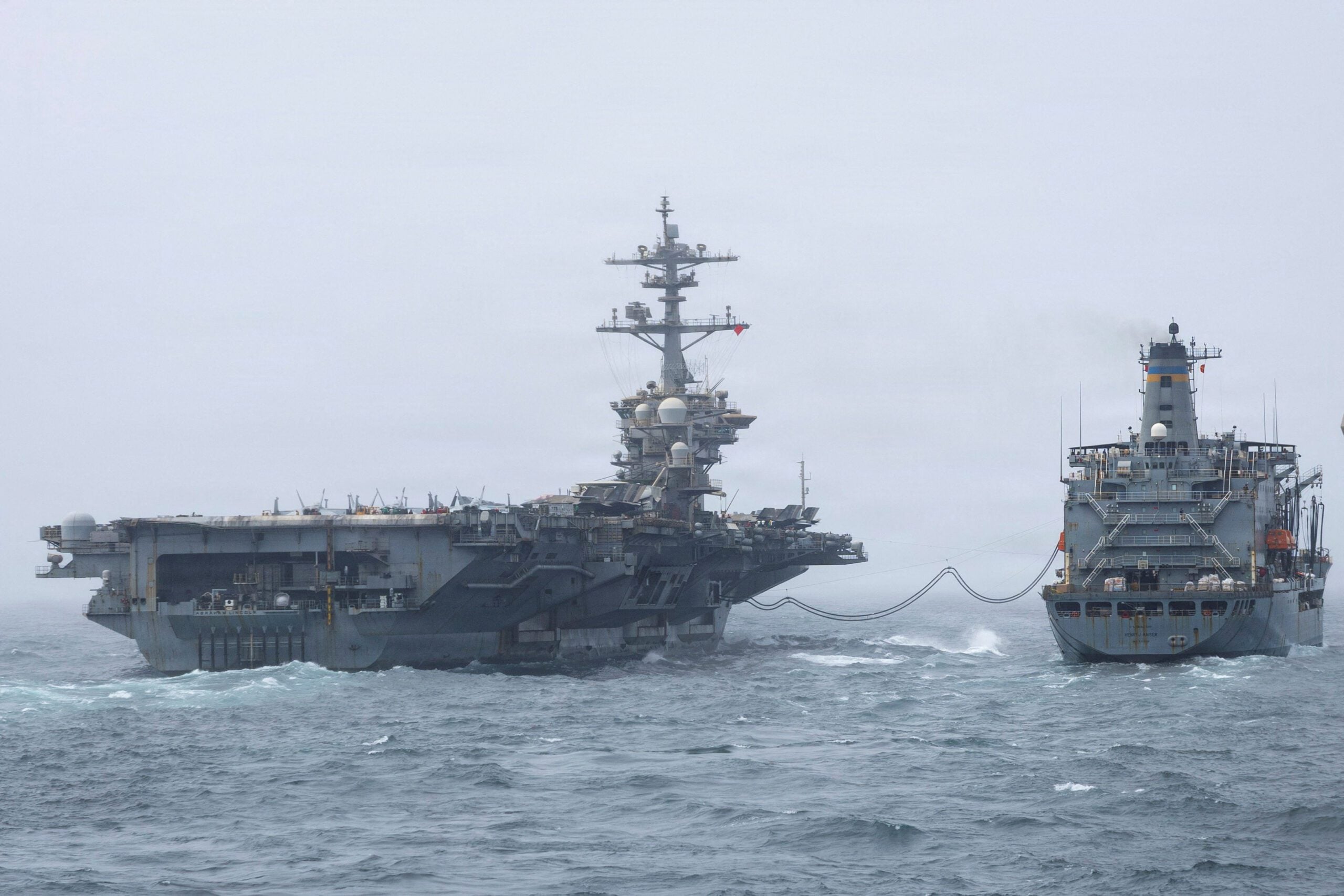
They completed 41 underway replenishments and transferred millions of gallons of fuel and thousands of pallets of cargo. It was the relentless, unglamorous work that allowed American warships to remain on station, aircraft to keep flying, sailors to stay fueled and fed, families to remain connected through mail from home, and the mission to continue without interruption.
Like the crews of Roosevelt’s “Ugly Ducklings” before them, they made history without firing a shot.
Recognition Must Become Renewal
Taken together, these two rare honors are about more than recognizing extraordinary civilian crews. They reflect something larger: a growing recognition across the federal government that America’s Merchant Marine is not a historical artifact.
It is a strategic necessity.
President Trump has made rebuilding American maritime strength a national priority through his Executive Order Restoring America’s Maritime Dominance and the White House Maritime Action Plan. Maritime Administrator Steve Carmel has emphasized that ships alone do not create maritime power. We need trained mariners too.
Secretary Sean Duffy has put the issue even more plainly: “the strength of our maritime forces propelled us through World War II, and it will be the strength of mariners that safeguards us in future conflicts.” This general understanding now extends across the national security community.
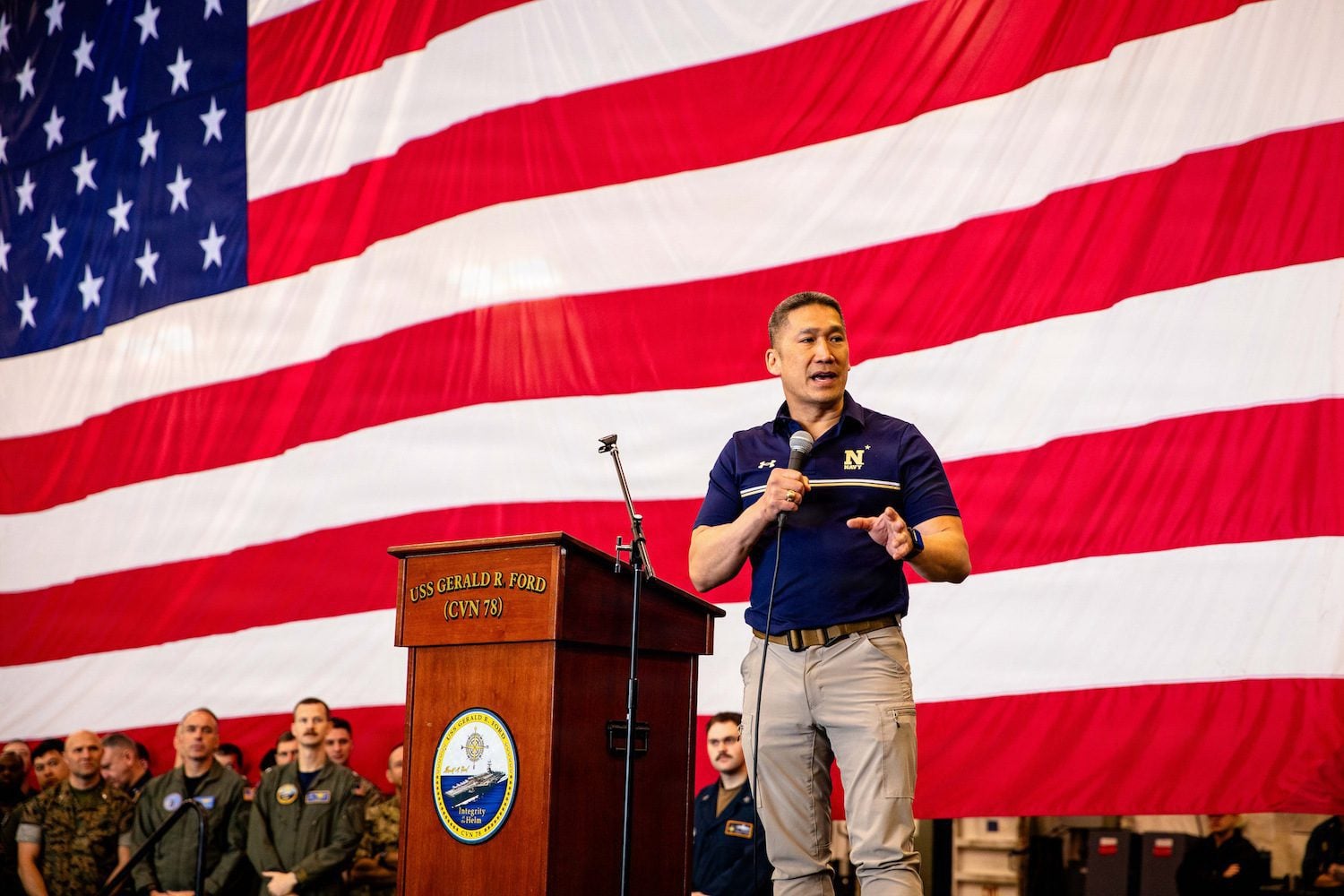
Acting Secretary of the Navy Hung Cao called America’s mariners “the strongest and best U.S. Merchant Mariners in the world.” He has also pointed to America’s remarkably small U.S.-flag international trading fleet as evidence that the Nation can no longer take its maritime strength for granted. Chief of Naval Operations Adm. Daryl Caudle has made contested logistics—the ability to sustain forces at sea under combat conditions—a defining priority in his Fighting Instructions.
Different departments. Different missions. The same conclusion.
The Work That Recognition Demands
Recognition matters, especially when it marks the acceleration of national renewal.
That is why Congress is advancing the bipartisan SHIPS for America Act led by Senators Mark Kelly (D-AZ) and Todd Young (R-IN), and Representatives John Garamendi (D-CA) and Trent Kelly (R-MS).
It is why the Navy’s shipbuilding programs and the White House Maritime Action Plan matter as much as the medals themselves, because the leaders behind these initiatives understand that American sea power begins long before the first missile is launched.
Our nation’s sea power begins with the civilian mariners who build, supply, sustain, and move the force.
Carrying American Power
Perhaps history will remember 2026 not simply as the year merchant mariners received long-overdue respect, but as the moment America remembered why they matter.
Long before a carrier sails into contested waters, before Marines step ashore, before humanitarian aid reaches a disaster zone, and before American commerce crosses an ocean, an American merchant mariner has already gone to sea.
Their names are rarely remembered, and their victories are measured not in battles won, but in missions made possible.
For generations, Roosevelt’s “Ugly Ducklings” have carried America’s cargo. In doing so, they have quietly carried America’s power, too.
Commander Bruce Kimbrellis a career naval officer with deployments in Europe, Africa, the Middle East, and Asia. He has deployed with U.S. Carrier and Expeditionary Strike Groups. He previously served as a Director with the National Security Council at the White House and has supported strategic maritime initiatives as staff for the Office of the Chief of Naval Operations and the Office of the Secretary of the Navy. He also served as a national security and defense staffer for U.S. Congressman Michael Waltz of Florida’s 6th Congressional District.
The views expressed are those of the author and do not reflect the official policy or position of the U.S. Navy, the Department of Defense, or the U.S. Government.
What (Acting) Secretary Hung Cao’s First Five Months Tell Us About the Job Ahead By Bruce Kimbrell (Policy Op-Ed) President Trump has nominated the Honorable Hung Cao to become the...
By Jennifer A. Dlouhy and María Paula Mijares Torres Sep 6, 2026 (Bloomberg) –US Navy escorts that are helping tankers cross the Strait of Hormuz are essential to sustaining crude flows...
Sept 6 (Reuters) – The U.S. aircraft carrier Abraham Lincoln left Thailand on Sunday after a five-day port visit, ending a respite from an extended deployment that included operations in the Middle East, the U.S. Navy said. “We...
September 6, 2026
Total Views: 2012
Get The Industry’s Go-To News
Subscribe to gCaptain Daily and stay informed with the latest global maritime and offshore news
— just like 107,009 professionals
Secure Your Spot
on the gCaptain Crew
Stay informed with the latest maritime and offshore news, delivered daily straight to your inbox
— trusted by our 107,009 members
Your Gateway to the Maritime World!
Essential news coupled with the finest maritime content sourced from across the globe.

 Join The Club