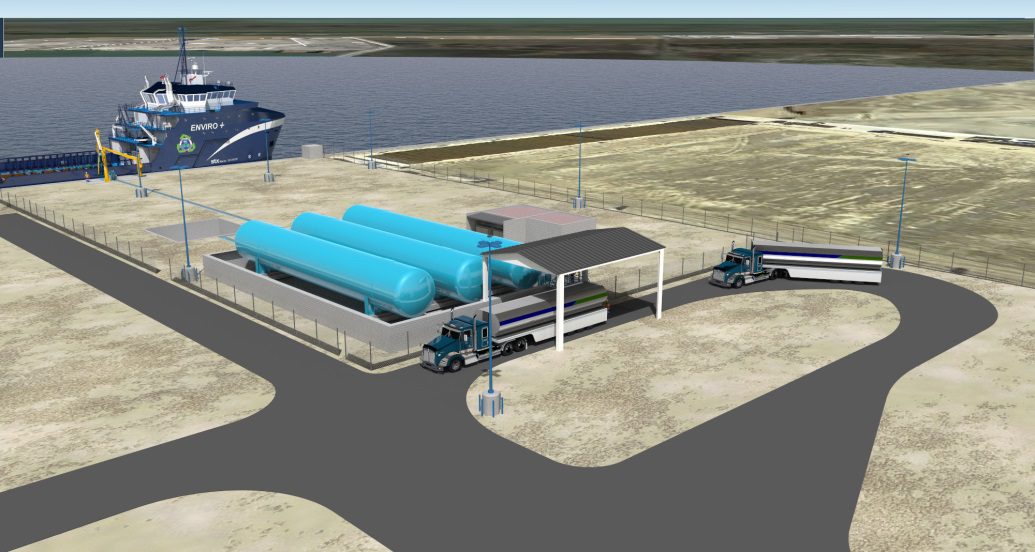
An illustration of Harvey Gulf’s LNG fueling facility, the first in the U.S., at Port Fourchon. Image courtesy Harvey Gulf
For prospective owners and operators of LNG-powered merchant vessels, the lack of unified guidance and regulations on how to refuel their vessel in North American ports has been a bit of a stumbling block.
First off, there are a number of different ways to load bunkers, whether it be via a floating barge, truck, containerized or bunkering vessel. In addition, the configuration of each ship is usually quite different, further complicating things.
Depending on the methods, about a half dozen different CFRs come into play.
At the Connecticut Maritime Association conference in Stamford, CT, the American Bureau of Shipping released new guidance aimed at simplifying the process for those seeking to obtain regulatory approval of projects in North America.
The report, developed by ABS and ABS Group, takes a broad look at the requirements of various regulatory bodies including the IMO, U.S. Coast Guard, Transport Canada, U.S. Environmental Protection Agency and the many state and local authorities involved in a bunkering project. Included in the report is a recommended process for meeting those requirements and obtaining approval for the LNG bunkering infrastructure project.
REPORT: Bunkering of Liquefied Natural Gas-Fueled Marine Vessels in North America – Download
“As the potential for LNG fueled vessels in North America continues to grow, uncertainty exists on how to meet various regulatory requirements,” says ABS Vice President for Global Gas Solutions Patrick Janssens. “It has become very clear to us while conducting this study that the visionary projects teams who properly plan their path to compliance can be successful.”
“This report lays out an integrated approach to addressing the federal, state, provincial and local requirements that may impact LNG bunkering infrastructure. The ABS Global Gas Solutions team is prepared to help stakeholders successfully address each level of regulatory compliance,” Janssens added.
The report touches on a number of key considerations for any LNG bunkering project, including reviewing potential bunkering options; identifying potential hazards and risks and recommending potential safeguards; presenting state, local and port-specific issues; and summarizing applicable regulations and outlining a process for meeting those requirements and ultimately obtaining project approval.
“This is the first comprehensive study of its kind that clearly identifies a path forward for regulatory approval of LNG bunkering practices and infrastructure in North America,” says ABS Group Vice President for Global Initiatives Chuck Mitchell. “This report is only one step in the continued development of robust LNG service offerings of ABS and ABS Group. As we learn more from each project, and as regulatory requirements mature, we will continue to update this report in order to provide industry-leading advice to stakeholders in the LNG fuel market.”

 Join The Club