The viral social media post claimed Donald Trump had just “killed the British Empire” in a matter of minutes. The truth is simultaneously more complicated, more interesting, and in some ways more consequential than that.
By Paul Morgan (gCaptain) – The broad story is real. When US and Israeli forces launched coordinated strikes on Iran in late February 2026, triggering what Tehran declared a full closure of the Strait of Hormuz, the first system to buckle was not military but actuarial.
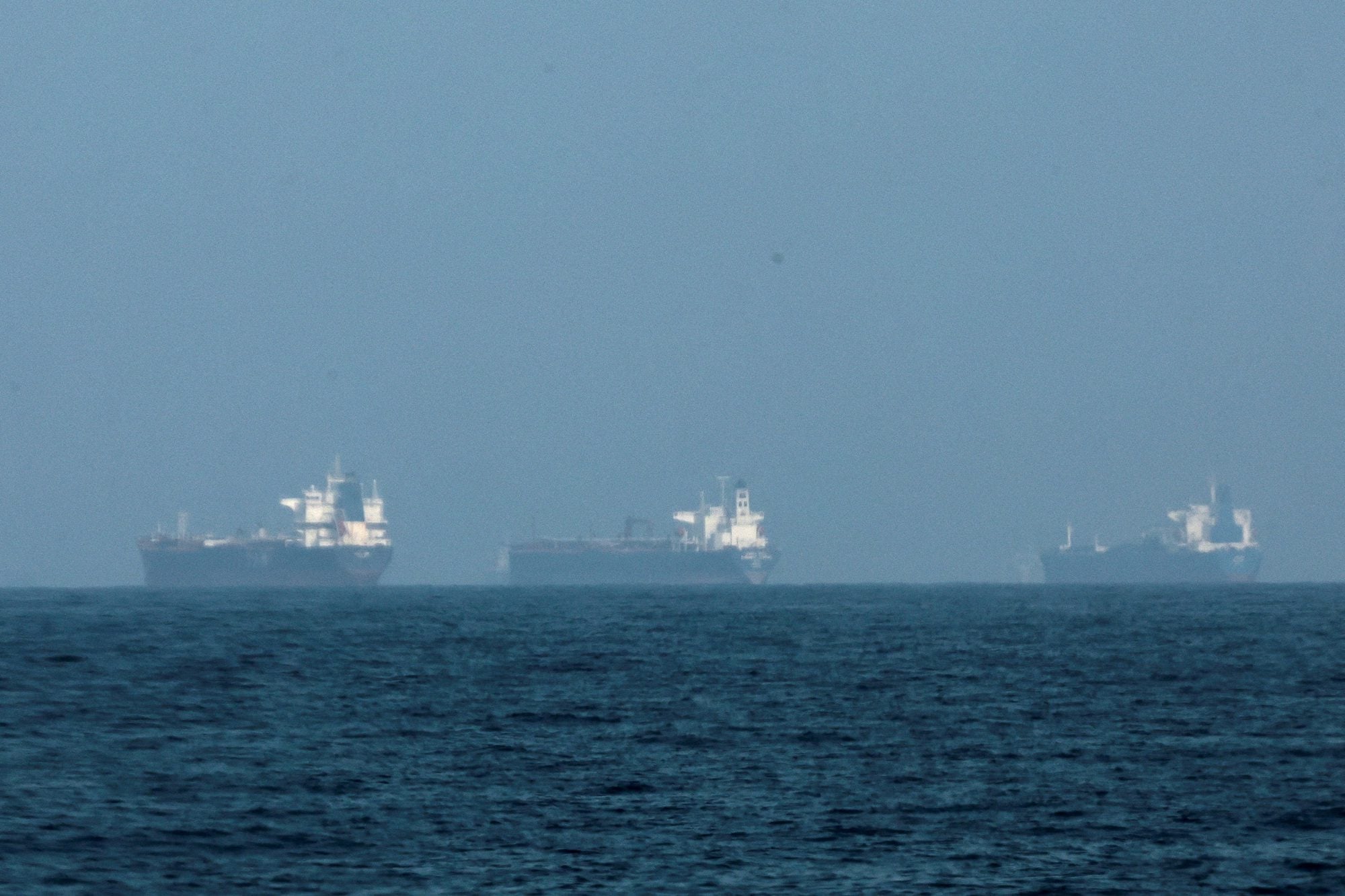
Within 72 hours, the world’s largest marine insurance mutuals, Gard, Skuld, North-Standard, the London P&I Club, Steamship Mutual and others, issued notices cancelling war risk extensions for vessels entering the Persian Gulf. Transit volumes through the strait collapsed by more than 80 percent almost immediately. The waterway that carries roughly 20 per cent of the world’s oil supply, and a significant proportion of its liquefied natural gas, had been shut not by mines or missiles but by the withdrawal of a piece of paper.
Trump’s response was characteristically blunt. Posting on Truth Social, he announced that the US International Development Finance Corporation (DFC) would “effective IMMEDIATELY” provide political risk insurance and guarantees for all maritime trade in the Gulf at a “very reasonable price.” He added that the US Navy would escort tankers through Hormuz “if necessary.” The message was unambiguous: Washington was stepping into the breach.
That much is confirmed and factually solid. What the viral breakdown got wrong, and it got several things significantly wrong, matters enormously if the story is to be understood rather than simply celebrated.
The claim that Lloyd’s of London is “the only company in the world big enough to insure all the oil tankers” mischaracterises how the marine insurance market actually functions. Lloyd’s is a marketplace, not a single insurer, and it sits at the apex of a complex ecosystem that includes P&I clubs, commercial hull underwriters, Nordic mutuals and reinsurance pools spread across London, Bermuda, Singapore and beyond. Lloyd’s writes between 70 and 80 per cent of the world’s war risk business, but it did not unilaterally “pull” coverage on the Gulf.
The cancellations came from the P&I clubs, mutual protection and indemnity associations, acting on the withdrawal of their reinsurance support. The distinction matters: it was a cascading market failure driven by Solvency II capital requirements and two years of accumulated war risk losses in the Red Sea, not a strategic edict from the Lloyd’s Room.
Indeed, the Lloyd’s Market Association’s own chief executive, Sheila Cameron, responded to the crisis by welcoming Trump’s DFC engagement and confirming that the vast majority of the roughly 1,000 vessels then trapped in Gulf waters were still covered through the London market. Cover had not been cancelled wholesale. It had become prohibitively expensive and structurally uncertain.
The viral post also attributed to Lloyd’s a figure of 2 per cent of British GDP and 50,000 jobs, framing it as a tool Lloyd’s wields for geopolitical leverage. The numbers are broadly accurate, the London Market Group’s own 2024 research puts the wider London insurance market’s contribution at approximately £50 billion, around 2 per cent of UK GDP, employing 60,000 people, but they describe the entire London commercial insurance market, not Lloyd’s alone. And characterising the insurance pullback as a deliberate act of geopolitical sabotage against Trump finds no supporting evidence. The withdrawal of war risk cover was a mechanical response to market conditions: reinsurance capital was exhausted, modelled loss probabilities spiked under Solvency II frameworks, and insurers had the contractual right to cancel with as little as seven days’ notice.
The claim that Lloyd’s dates its geopolitical power to “the 1600s” is at least directionally correct, the coffee house on Tower Street where Edward Lloyd hosted the underwriters who would form the market opened in 1688, though connecting that heritage to a deliberate anti-Trump manoeuvre requires a considerable leap.
What Trump’s DFC intervention does represent is genuinely significant, if incomplete. The DFC, a federal development finance agency with a statutory risk exposure of approximately $205 billion as of late 2025, has been tasked with providing political risk insurance that covers losses arising from war, violence and political turmoil. JPMorgan analysts estimated the total insurance exposure for vessels currently operating in the Persian Gulf at approximately $352 billion, considerably more than the DFC’s statutory ceiling. Should losses materialise at scale, the gap between what the DFC can cover and what the market needs could require an act of Congress to bridge.
The US Navy escort pledge carries its own caveat. Behind closed doors, Navy officials told tanker executives in the days following the announcement that no escorts were immediately available, with no guarantee of future provision. The current drone and missile threat zone extends roughly 1,000 nautical miles, from Kuwait in the north to Duqm in the south. With an estimated one-third of the deployed US fleet already engaged in the Middle East on strike and air defence missions, adding a tanker escort commitment is not a trivial proposition.
None of this diminishes the importance of the DFC move. The precedent it sets, a US government agency acting as insurer of last resort for global energy trade, is structurally novel and potentially durable. It echoes Operation Earnest Will in 1987, when the US reflagged Kuwaiti tankers and provided naval escorts during the Iran-Iraq Tanker War, a mission that kept Gulf oil flowing at the cost of considerable diplomatic complexity. What it does not represent is the instant, permanent displacement of the London insurance market. The LMA is actively engaged with Washington on a coordinated solution. Brokers including Marsh have been in direct talks with DFC officials to structure a public-private framework that could complement rather than replace existing market capacity, drawing on the model used to underwrite grain exports from Ukraine’s Black Sea ports in 2023.
-The Strait of Hormuz crisis of 2026 has exposed a structural vulnerability that war-gaming exercises had long identified but that markets had never fully priced: a thin layer of private institutional trust, capable of withdrawal within 72 hours, underpins the movement of a fifth of the world’s energy supply. Trump’s intervention was fast, forceful and politically necessary given the pressure building on US pump prices. Whether it permanently reshapes the geopolitics of marine insurance, or simply buys time for the London market to reprice and re-enter, will depend on how long the shooting continues.
The British Empire was not killed last Tuesday. But the insurance industry’s assumption that it could sit above geopolitical turbulence, pricing risk from the City of London with sovereign detachment, has taken a blow it will not easily forget.
Editorial Standards · Corrections · About gCaptain

 Join The Club