Don’t Miss Your Daily Briefing for the Maritime Industry
Join the leading maritime news network
— trusted by our 106,115 members
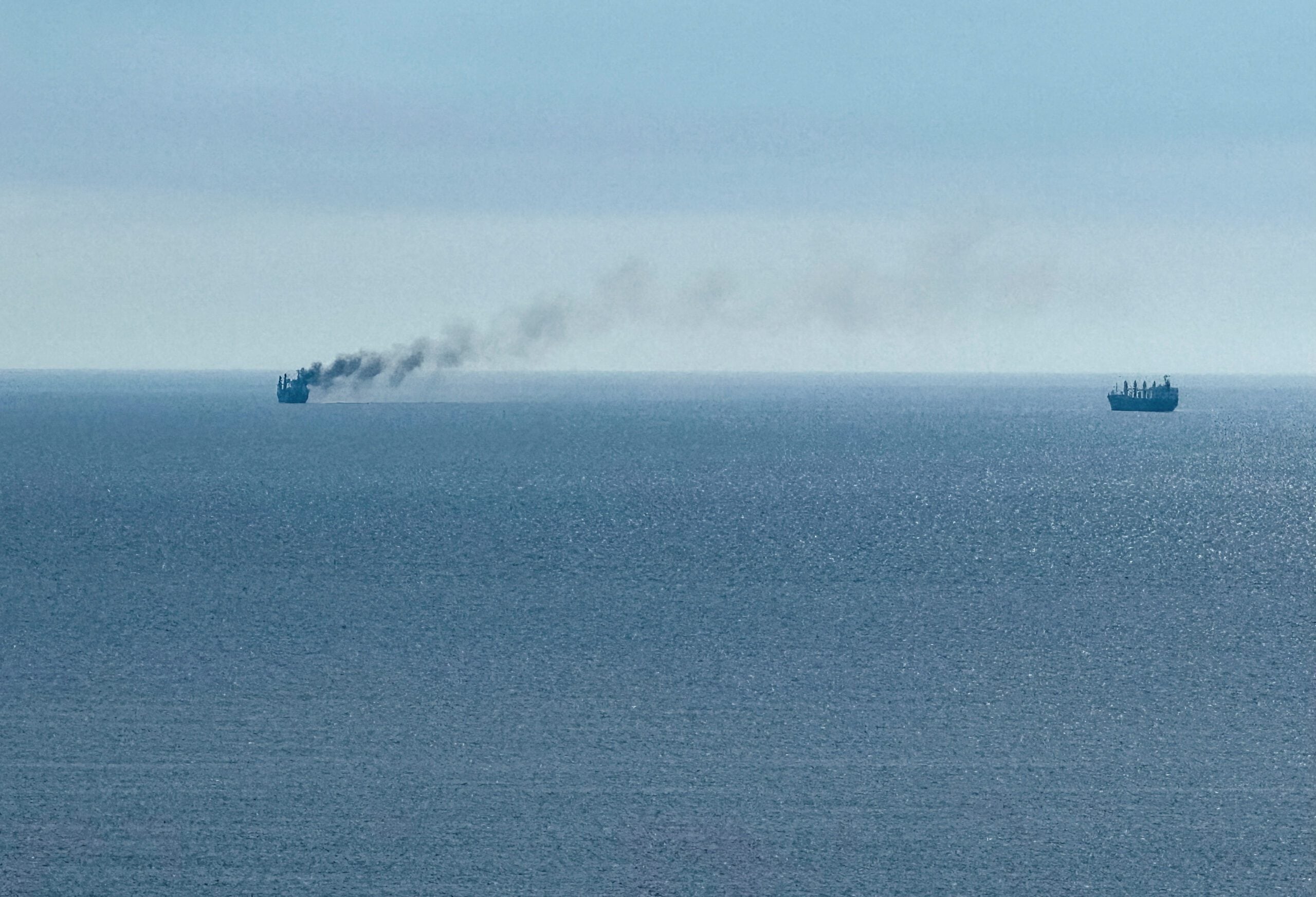
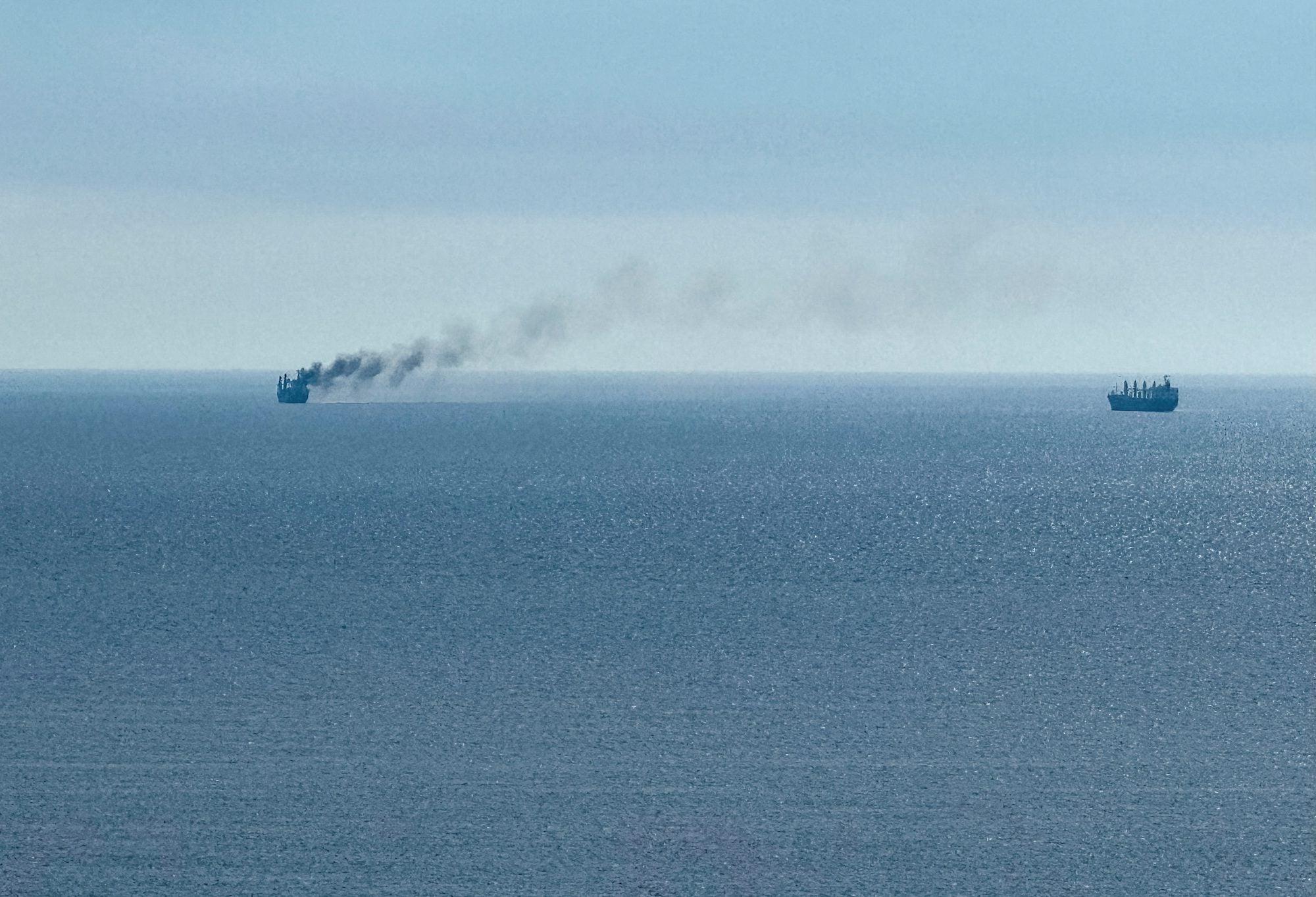
A civilian vessel is on fire, as Ukraine's navy spokesman reported a Russian military strike on a civilian vessel, amid Russia's attack on Ukraine, near the Black Sea port of Odesa, Ukraine, July 14, 2026. Picture taken with a mobile phone. REUTERS/
War Comes to NATO’s Black Sea Coast, and Shipping Starts Saying No
By Lori-Ann LaRocco – Maritime experts warn that the westward spread of attacks between Russia and Ukraine, toward NATO coastlines, is now having commercial consequences.
“The sinking of Contship Jet off Bulgaria last week has crystallized those concerns,” said Richard Meade, editor-in-chief of Lloyd’s List. “We understand that analysts are being approached over potential charter-party disputes, as some owners are essentially seeking to refuse orders to Romanian and Bulgarian ports. That suggests to me that the calculation is shifting from how much the risk costs to whether owners, charterers and crews are prepared to accept it at all.”
A series of drone attacks on vessels off the coasts of NATO members Romania and Bulgaria has heightened concerns about maritime risk.
In a Lloyd’s List briefing, Ambrey, a global maritime security, risk management and offshore support company, said it has recorded 696 security events in the Western Black Sea alone, about 537 of them in Ukrainian waters.
“From July onwards, the cadence of the operations by both Russia and Ukraine has been unprecedented,” said Tomas Alexa, senior analyst at Ambrey. “With the start of Operation MoLoChKa, we have seen a significant rise in the number of attacks.”
That includes direct attacks on merchant vessels in Romanian, Bulgarian, Turkish and Georgian waters. All three countries are members of the North Atlantic Treaty Organization (NATO).
“We have observed a significant increase in the number of strikes by Russian forces as well, whether it is against ports in Ukraine or merchant vessels; we are now observing the geographical spread of these attacks,” Alexa said. “Therefore, all vessels operating in the Western Black Sea are now facing heightened threat and greater exposure.”
Between Oct. 5 and Oct. 28, Ambrey recorded 10 strikes on ships at sea: eight by aerial drones and two by uncrewed surface vessels. All were attributed to Russia.
Alexa said Ambrey still assesses the threat of direct strikes on vessels with no link to Ukraine from negligible to low. Separately, it raised the risk of vessels conducting search-and-rescue operations from low to moderate.
“Overall, there is a heightened risk to all vessels across the Western Black Sea at the moment,” Alexa said.
He said vessels taking part in rescues face the risk of secondary strikes and secondary explosions. “This can increase the risk of collateral damage,” he said. Operating close to a vessel that has been hit, or being misidentified, could also make a rescue vessel a target.
Ambrey considers a vessel to fit the targeting profile if its owner, manager, charterer, cargo, or last or next port of call has a Ukrainian link.
Alexa said the attack on the Liberian-flagged, Greek-owned Contship Jet off Bulgaria shows that cargo possibly bound for Ukraine may be enough to make a ship a target. The firm is still investigating whether the vessel carried dual-use cargo that would eventually have been delivered to a Ukrainian port.
Russia has described Ukraine-bound cargo ships as carrying military or dual-use cargo. Ambrey said it has seen no evidence of this on any vessel struck in Romanian or Bulgarian waters.
“While the attacks against vessels in Romania are not something new, they were very sporadic and rare,” Alexa said. “The majority of them took place off the coast of Sulina, where vessels were waiting for transits to Ukrainian waters, the Danube River Delta or the seaports.”
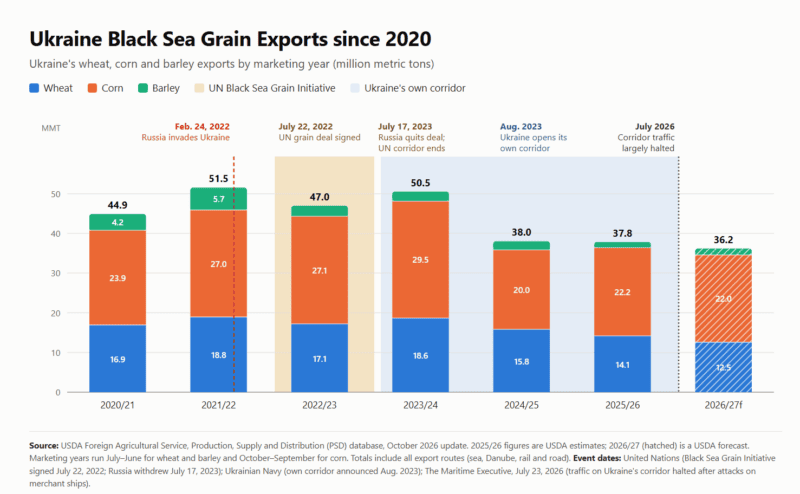
Russia’s attacks on Ukrainian ports and infrastructure have cut Ukraine’s ability to export from its seaports by up to 95%, according to Ambrey data. The attacks have shifted Ukrainian grain exports, and Ambrey has tracked a significant push toward Sulina and the Danube River Delta ports.
“We’ve been able to link nine out of the 10 vessels that have been attacked in Romanian and Bulgarian waters to Ukrainian trade,” Alexa said. “Whilst there is a greater geographical spread of attacks against merchant vessels into Romanian and Bulgarian waters, the Russian intent remains the same. It is to degrade the capability of Ukrainian authorities or Ukraine itself to import and export cargo, and that assessment stands.”
Owners and crews reassess
The expansion of attacks has led a number of owners and operators to contact Ambrey.
Alexa said that over the past two years, risk assessments were largely for Ukrainian ports, Russian ports and eastern Turkey, where a number of vessels bound for Russia had been attacked.
“There definitely is a significant escalation and change in threat perception,” Alexa said. “We now definitely see a heightened number of requirements for assessments for Romanian and Bulgarian ports and western Turkey, which was previously not the case. We are also aware that a number of crew members, masters, are now also reluctant to sail to Romania or Bulgaria. So that definitely is a heightened threat perception, and it is justified.”
International Transport Workers’ Federation (ITF) has said Russia’s war on Ukraine is the deadliest for seafarers since World War II.
Grain backs up
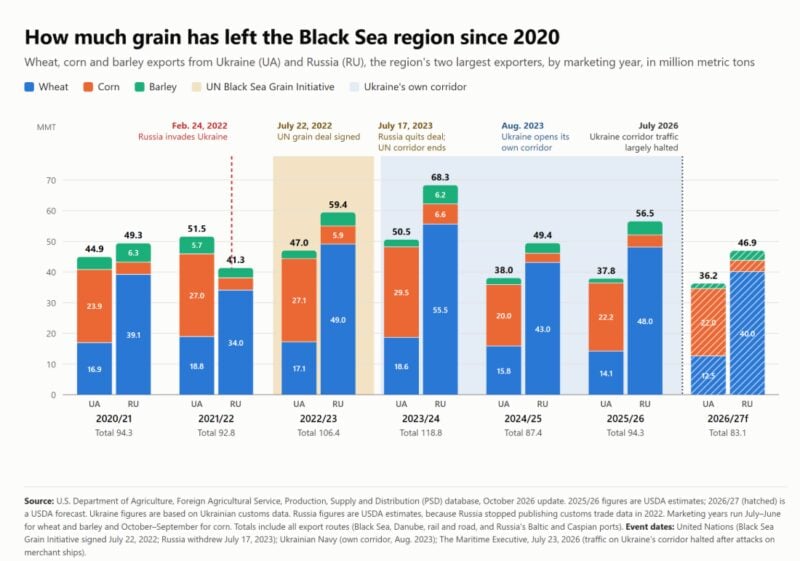
In August, the U.S. Department of Agriculture’s Foreign Agricultural Service office in Kyiv cut its forecast for Ukraine’s grain exports, citing the deteriorating security situation in the Black Sea.
The FAS forecasts that Ukraine’s ending stocks of wheat, corn and barley will roughly quadruple in the 2026/27 marketing year, to almost 25 million metric tons. Production of the three grains is expected to be the highest since 2021/22, the season in which the war began.
The office said Ukraine’s storage capacity should allow farmers to hold large stocks. Ukraine’s agriculture minister has warned that if disruptions continue, they may need 10 to 12 million metric tons of additional temporary storage.
Russia and Ukraine together account for about 27% of global wheat exports. The increase in attacks has sent wheat futures on the Chicago Board of Trade to their highest level since 2023, up 20% in the first nine months of the year.
No deal in sight
Alexa said Ambrey has assessed that Ukrainian President Volodymyr Zelensky, and his team are reaching out to Turkish and Indian operators, as well as the Indian government, to re-establish the grain corridor or propose a halt to hostilities across the Black Sea.
“However, at this point, the Russian conditions are not being met,” Alexa said. “The Kremlin is asking for not only cessation of strikes against grain vessels, but across all the energy infrastructure. Plus, they’re putting forward additional requirements.”
Alexa warned Russia sees the degrading of Ukrainian exports as a win from an economic battle standpoint.
Given the pace of Russian attacks, Ambrey expects the situation to continue for the next couple of months. While Ukrainian attacks have slowed, Ambrey warned they could pick up again if Russia does not stop its attacks.
“As always with Russia and Ukraine, until everything is agreed, nothing is agreed,” Alexa said.
Intensifying attacks by Russia and Ukraine ahead of the winter are further endangering navigational safety in the Black Sea, Turkish Foreign Minister Hakan Fidan said on Thursday, adding that world powers must not allow the region to be turned into a new front in the war.
European leaders have backed a stronger role for the European Union in the Arctic, with Finland pushing for a joint icebreaking capability as the region becomes increasingly important for commercial shipping, military mobility and competition with Russia and China.
President Donald Trump on Tuesday renewed his call for the United States to control Greenland, arguing the Arctic island’s strategic location makes it vital to U.S. national security as Washington intensifies efforts to counter growing Russian and Chinese activity in the High North.
July 7, 2026
Total Views: 1603
Get The Industry’s Go-To News
Subscribe to gCaptain Daily and stay informed with the latest global maritime and offshore news
— just like 106,115 professionals
Secure Your Spot
on the gCaptain Crew
Stay informed with the latest maritime and offshore news, delivered daily straight to your inbox
— trusted by our 106,115 members
Your Gateway to the Maritime World!
Essential news coupled with the finest maritime content sourced from across the globe.

 Join The Club