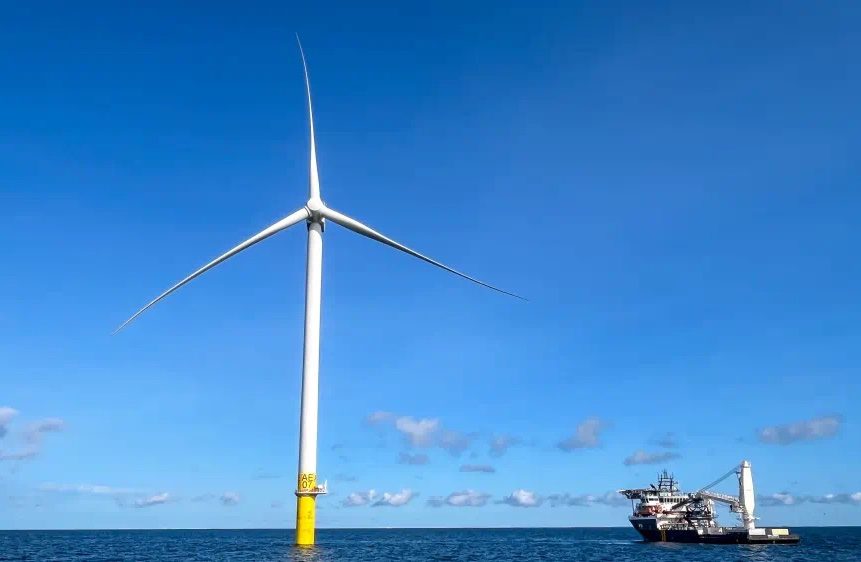
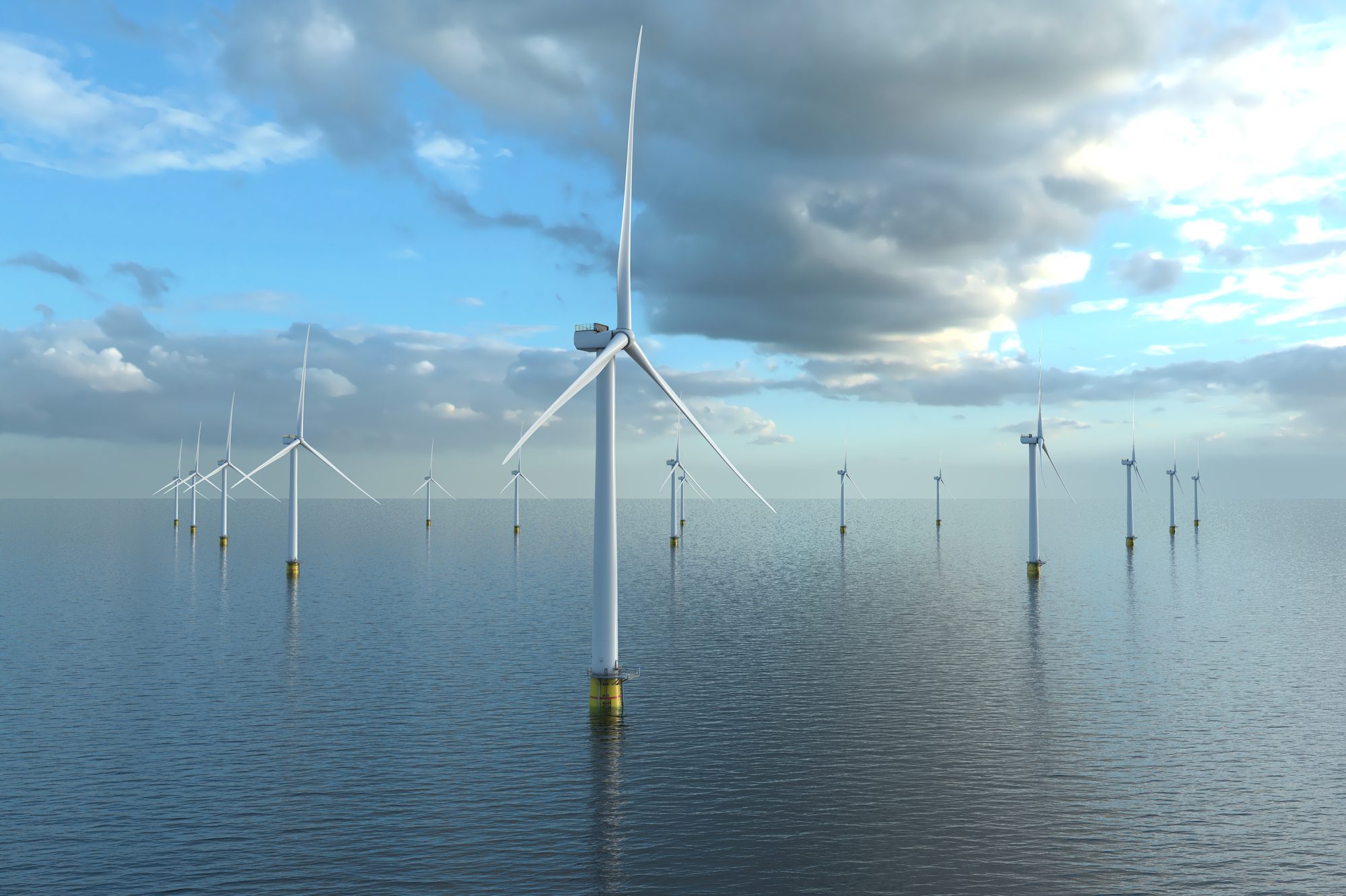
Danish offshore wind developer Ørsted has completed its 704-megawatt Revolution Wind project off the U.S. East Coast, marking a major milestone for a development that faced repeated shutdown orders from the Trump administration.
The company announced Thursday that Revolution Wind reached commercial operations in October under its power purchase agreements with utilities in Rhode Island and Connecticut, following the installation of its final wind turbines in September.
The project, a joint venture between Ørsted and Skyborn Renewables, consists of 65 offshore wind turbines capable of supplying enough electricity to power more than 350,000 homes in New England.
Its completion represents a significant turnaround for a project that spent much of the past year fighting to stay under construction.
The Trump administration first ordered work stopped in August 2025, citing national security concerns. A federal judge subsequently allowed construction to resume, but the administration issued another suspension order in December as part of a broader effort to halt five offshore wind projects under construction along the East Coast.
As gCaptain reported in January, Ørsted challenged the second suspension in federal court, arguing that the project had already invested or committed billions of dollars after undergoing extensive federal permitting and review.
At the time, Revolution Wind was approximately 87% complete. A federal judge later granted a preliminary injunction allowing work to proceed.
The project began producing electricity earlier this year and installed its final turbine in September before reaching full commercial operations the following month.
The milestone does not necessarily end the project’s regulatory challenges. The Interior Department sought court permission in October to reconsider its earlier approval of the wind farm’s construction and operations plan, raising further questions about the administration’s approach to already-operating offshore wind projects.
For Ørsted, however, Revolution Wind’s completion comes as the company reports improving operating performance across its global portfolio.
In its third-quarter earnings announcement, Ørsted said earnings before interest, taxes, depreciation and amortization (EBITDA), excluding new partnerships and cancellation fees, rose 19% to DKK 20.2 billion ($3.0 billion) in the first nine months of 2026, compared with DKK 17.0 billion a year earlier.
Third-quarter EBITDA on the same basis climbed 72% to DKK 5.26 billion, helped by stronger wind conditions, higher electricity prices and increased generation from newly completed offshore wind farms.
The company nevertheless recorded a third-quarter net loss of DKK 728 million, while profit for the first nine months fell to DKK 2.6 billion from DKK 6.5 billion. Ørsted attributed the decline largely to non-cash impairments associated with rising interest rates affecting its U.S. projects.
“We continue to deliver on our strategic priorities, which is translating into consistent strong financial performance,” said CEO Rasmus Errboe.
The company also reported progress at its other major U.S. offshore wind development, Sunrise Wind, where installation of all wind turbine foundations has been completed. The 924-megawatt project off New York remains under construction.
Elsewhere, Ørsted said Germany’s Borkum Riffgrund 3 offshore wind farm had also reached commercial operations, while construction continued at projects in Taiwan, Poland and the United Kingdom.
Ørsted maintained its full-year EBITDA guidance of more than DKK 28 billion, excluding new partnerships and cancellation fees, and lowered its expected gross investments for 2026 to DKK 45 billion to DKK 50 billion. The company said the reduction reflects changes in payment timing rather than lower overall project costs.
The completion of Revolution Wind is particularly notable given the uncertainty surrounding the U.S. offshore wind industry. While the Trump administration has moved aggressively to restrict new development, projects already under construction have continued advancing through legal challenges and regulatory disputes.
For Revolution Wind, those battles have now given way to commercial electricity production, even as questions remain about the future of offshore wind development in the United States.

 Join The Club