The Trump administration on Thursday completed the first-ever U.S. offshore critical minerals lease auction, drawing $6 million in high bids for more than 31.5 million acres of seabed off American Samoa despite mounting environmental opposition and a federal court ruling against a key part of the government’s environmental review.
The Department of the Interior announced that its Marine Minerals Administration (MMA) completed the sale of two lease areas in federal waters, marking a major step in President Donald Trump’s push to develop domestic sources of critical minerals and reduce dependence on foreign supply chains.
The two areas lie approximately 150 to 240 miles east of Pago Pago, in waters ranging from 4,630 to 20,100 feet deep. The $6 million in combined high bids matched the minimum asking price of $3 million for each area. Interior did not identify the winning bidders in its initial announcement.
“This is the first time the United States has held an offshore critical minerals lease sale in the Pacific and a historic step for America’s energy and mineral security,” Interior Secretary Doug Burgum said.
The leases are intended to support exploration for minerals contained in polymetallic nodules and ferromanganese crusts, which can contain metals used in batteries, electronics, defense equipment and other industrial applications.
The sale comes just three days after a federal judge in Hawaii ruled that the National Marine Fisheries Service violated the Endangered Species Act in its review of the proposed lease sale. Despite that ruling, Interior proceeded with Thursday’s auction.
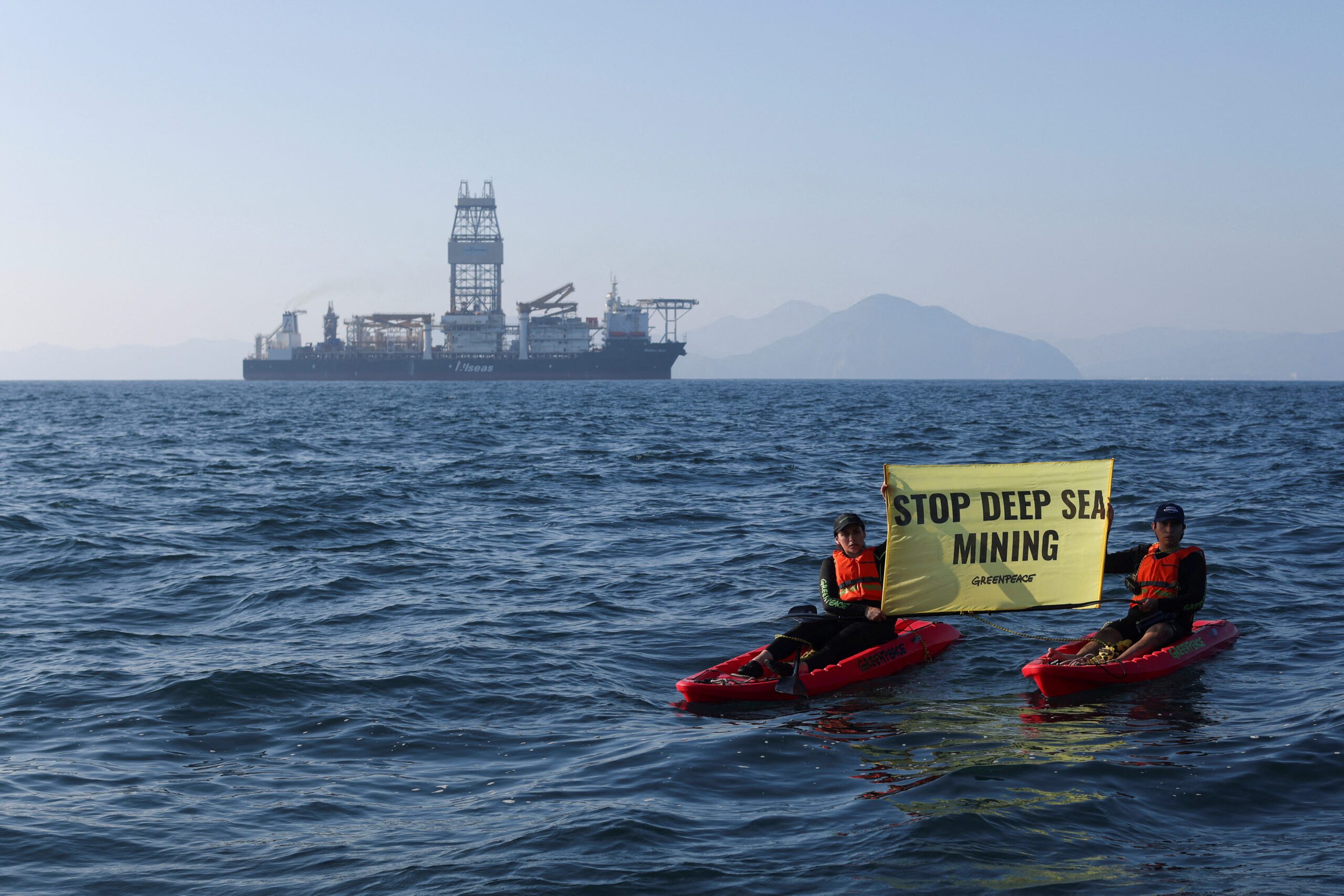
Environmental group Oceana condemned the sale, warning that the move could open vast stretches of U.S. waters to commercial seabed mining.
“The Trump administration has clearly put corporate interests above the health and well-being of our oceans,” said Julia Singer, Oceana’s defense campaign manager. “Mining in U.S. waters may begin off American Samoa, but make no mistake, it won’t stop there.”
The lease areas are near the Rose Atoll Marine National Monument, a protected marine area that supports sea turtles, whales and other vulnerable species.
Oceana said more than 76,000 public comments were submitted during an earlier stage of the leasing process, with the overwhelming majority opposing deep-sea mining. American Samoa Governor Pulaali’i Nikolao Pula has also expressed opposition to commercial mineral extraction in the territory’s waters.
The debate centers in part on the potential damage from mining the deep seabed, including disturbance of poorly understood habitats, sediment plumes and impacts on marine ecosystems.
The administration argues that access to offshore critical minerals could strengthen U.S. manufacturing and national security while reducing reliance on foreign suppliers.
Thursday’s auction does not authorize mining to begin. According to Interior, the leases would provide limited rights to conduct preliminary activities and an exclusive opportunity to submit plans for further exploration, testing and commercial extraction.
Those activities would require additional environmental reviews and regulatory approvals.
The leases carry a 20-year primary term, with royalties beginning at 2% of production value for the first five years of commercial production before increasing to 5%.
The auction also comes as the administration pursues additional offshore mineral leasing proposals near the Northern Mariana Islands and in federal waters off Alaska and Virginia.
For now, the American Samoa sale represents a historic step toward a domestic deep-sea mining industry, but one that faces significant hurdles before any commercial minerals are recovered.

 Join The Club