By Kate Duffy and Olivia Fletcher
Dec 5, 2025 (Bloomberg) –In 1976, welder Phil McClean won “Apprentice of the Year” at Harland and Wolff’s shipyard in Belfast, Northern Ireland. He was following in the footsteps of his father and grandfather, who also worked in the docks famous for building World War II warships and the Titanic.
Now, it’s McClean’s generation behind the UK’s shipbuilding ambitions, fueled by a multibillion-dollar European rearmament campaign meant to counter threats from enemies including Russia.
After years of stagnation in UK shipyards, the next challenge is building warships fast enough, and finding enough workers to do the job.
“We can generate the capacity,” said Babcock Chief Executive Officer David Lockwood. “I wouldn’t say it exists today.”
As the London-listed defense company pursues several international warship deals, including with Sweden, Denmark and Indonesia, it’s looking to invest in and expand its UK shipyards, Lockwood said in an interview after the company’s latest earnings.
The UK in September signed a £10 billion ($13.3 billion) deal with Norway to build at least five Type 26 frigates. UK Prime Minister Keir Starmer said he hopes the order will be the “first of many,” signaling a push for more defense contracts.
Turkey and the Netherlands could also clinch deals with the UK for warships.
During the late 1930s, the UK’s shipbuilding industry boomed amid the pressure on the Royal Navy to expand and modernize. Shortly after World War II, orders slowed down, and later competition from Japan and Korea’s bigger shipyards forced the sector into decline. The navy has also shrunk as defense spending slid from a record 7% of GDP in 1955 to an expected 2.4% today.
“A century ago, Britain was a world-leading shipbuilding nation,” said Andrew Lambert, a professor of naval history at King’s College London. “Chasing cheap ships and delaying warship orders has disrupted that system.”
Last year, the entire UK shipbuilding industry generated £2.7 billion in economic output, accounting for 0.1% of total UK GDP, according to a House of Commons Library report. But that was an increase of 72% from 2019, the report said.
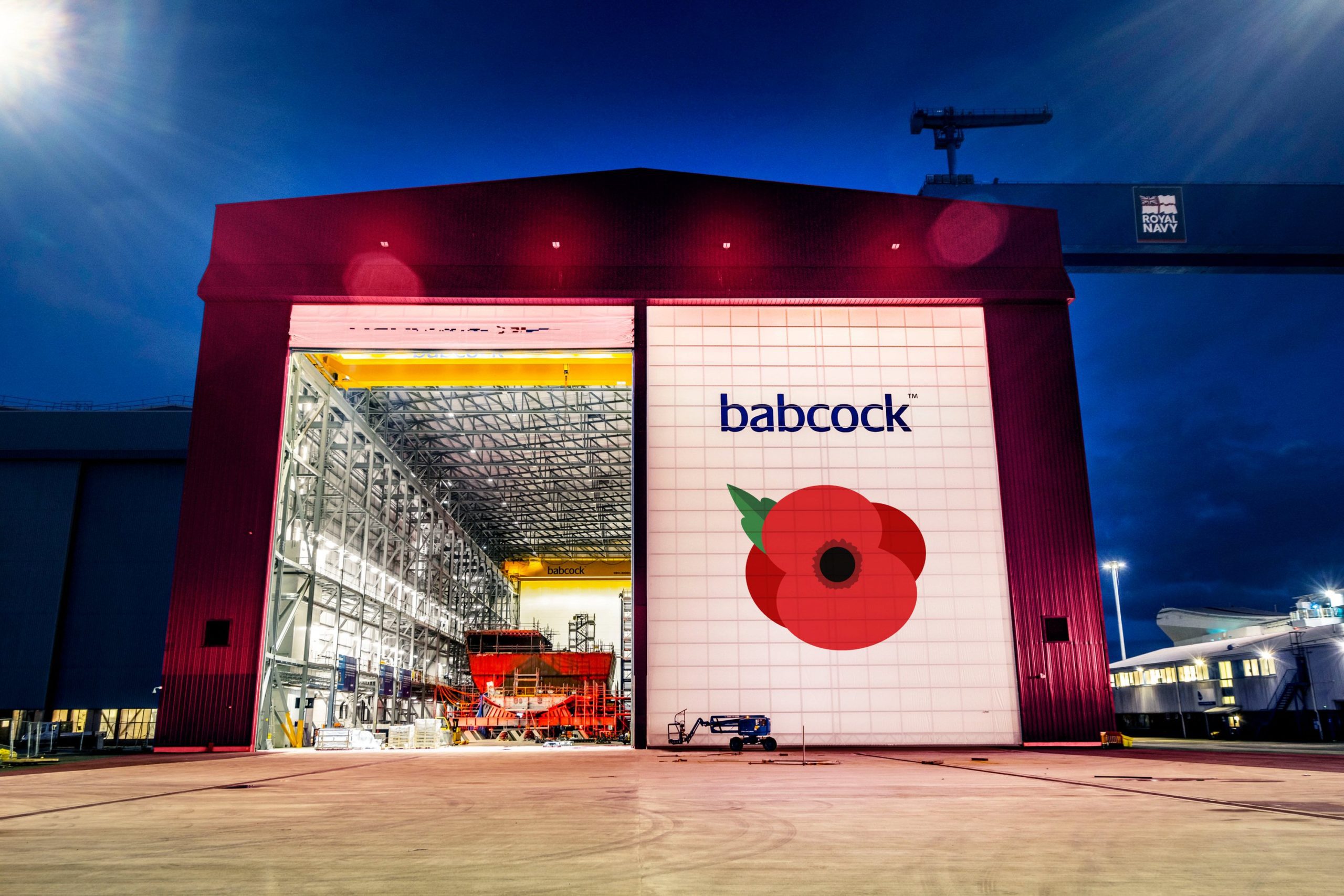
Babcock has invested more than £200 million in its Rosyth shipyard in Scotland over the past decade.
This year, BAE Systems Plc opened a shipbuilding hall in Glasgow big enough to build two of the 150-meter Type 26 frigates side-by-side under cover instead of outside in the Scottish weather. The £300 million investment has increased BAE’s capacity, improved production efficiency and created a better workplace, said Jen Blee, manufacturing director for naval ships at BAE Systems.
“It’s been over the last five years that these big investments have come into fruition,” Blee said. “We’ve certainly got enough capacity in our shipyard for our current order book.”
BAE also has 650 apprentices at its shipbuilding academy and expects to have about 850 early career employees when the Type 26 program reaches its peak, a spokeswoman said.
Navantia, a Spanish shipbuilder, is spending £115 million on modernizing its British shipyards. It rescued Harland and Wolff’s four UK yards in January for £93 million ($126 million). A UK government contract to build three 216-meter Fleet Solid Support ships for £2 billion is projected to keep those yards busy until at least 2031.
To avoid delays while the shipyards are renovated, Navantia is doing some of the work on the first Fleet Solid Support ship in Spain. The company will increase the UK share of production for the second two ships to offset this, it said. Assembly, integration and delivery, the most valuable phase of production, will happen in Belfast for all three vessels.
The competition for European orders is fierce. Italy’s Fincantieri SPA, France’s Naval Group SA and other global shipbuilders are also revitalizing yards and signing foreign contracts.
“Britain must avoid boom and bust approaches to shipbuilding,” Lambert said. “A steady program of long term building and refitting, with capacity to meet foreign orders, would be the spring board for a revival.”
The state of the UK shipbuilding industry echoes the US shipbuilding industry, which is also struggling to ramp up and train enough workers in the face of China’s growing dominance in shipping.
“As World War Two showed, it is too late to ramp up once conflict arises,” said David Andrews, professor of engineering design at University College London. “A massive increase in design and engineering capability is required in the Ministry of Defence and the industry, if we are to rise to adequately combat the expected increase in maritime conflict.”
Navantia is bidding to build six Multi-Role Strike Ships, which the government wants delivered by the mid-2030s, as well as other non-UK contracts.
The company is confident about investing in British shipbuilding amid a sharp increase in defense spending across Europe, said Navantia UK Chief Executive Donato Martinez.
“If we had any doubt, context has proven that it is the right time,” Martinez said.
Northern Ireland had the highest level of unemployment in the UK in the three months through September, at 26.8%, according to the Office for National Statistics.
When McClean started work, he said, there were 10,000 people working in the Belfast docks. Now about 1,100 people work across Navantia’s four yards, although the company says that number will nearly double by the early 2030s — including apprentice welders McClean will teach in Belfast.
“Down here it’s, it’s a way of life,” he said. “I say to the young ones, this is a learning. You’ll learn every day and you’ll keep learning.”
To contact the authors of this story:
Kate Duffy in London at [email protected]
Olivia Fletcher in Dublin at [email protected]
© 2025 Bloomberg L.P.
Editorial Standards · Corrections · About gCaptain
This article contains reporting from Bloomberg, published under license.

 Join The Club