U.S. Marines boarded and redirected an Iranian-flagged oil tanker in the Gulf of Oman on Tuesday as Washington continued tightening enforcement of its maritime blockade targeting vessels trading with Iran.
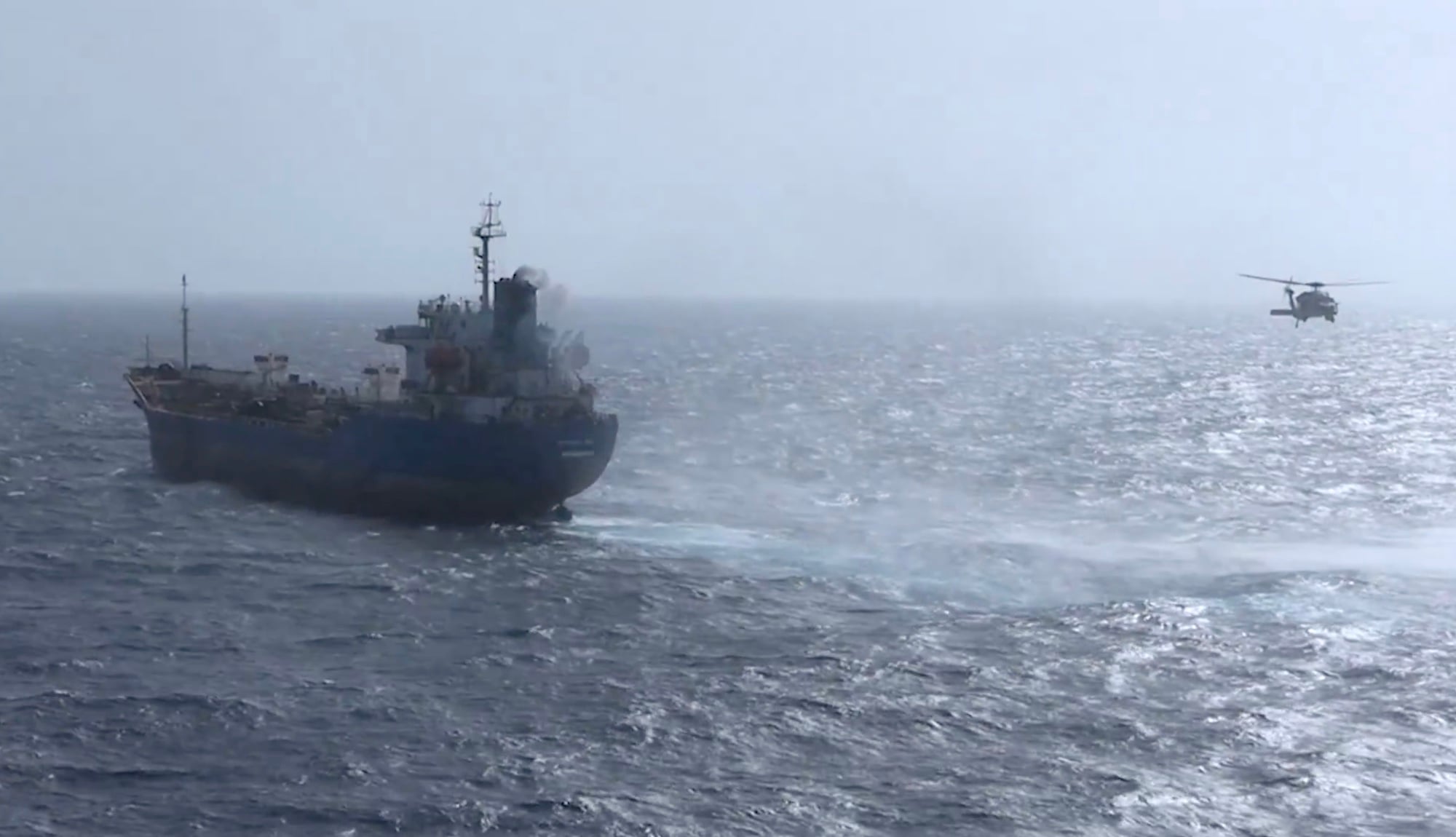
In a statement posted to X, the U.S. military’s Central Command said Marines from the 31st Marine Expeditionary Unit boarded the tanker M/T Celestial Sea after the vessel was suspected of attempting to violate the blockade by transiting toward an Iranian port.
“Earlier today in the Gulf of Oman, U.S. Marines from the 31st Marine Expeditionary Unit boarded M/T Celestial Sea, an Iranian-flagged commercial oil tanker suspected of attempting to violate the U.S. blockade by transiting toward an Iranian port,” CENTCOM said. “American forces released the vessel after searching and directing the ship’s crew to alter course.”
Video of the boarding appears to show the same vessel featured in an earlier CENTCOM post published Tuesday showing U.S. forces blocking an unidentified merchant ship as part of the blockade against Iran.
CENTCOM said U.S. forces have now redirected 91 commercial ships since enforcement operations began. As of May 20, American forces have also disabled four vessels accused of attempting to violate the blockade.
The Trump administration’s blockade, announced in April, targets vessels entering or departing Iranian ports while technically allowing commercial traffic transiting the Strait of Hormuz to non-Iranian destinations.
The maritime enforcement campaign intensified sharply earlier this month when U.S. Navy aircraft disabled multiple Iranian-flagged tankers operating near the Gulf of Oman.
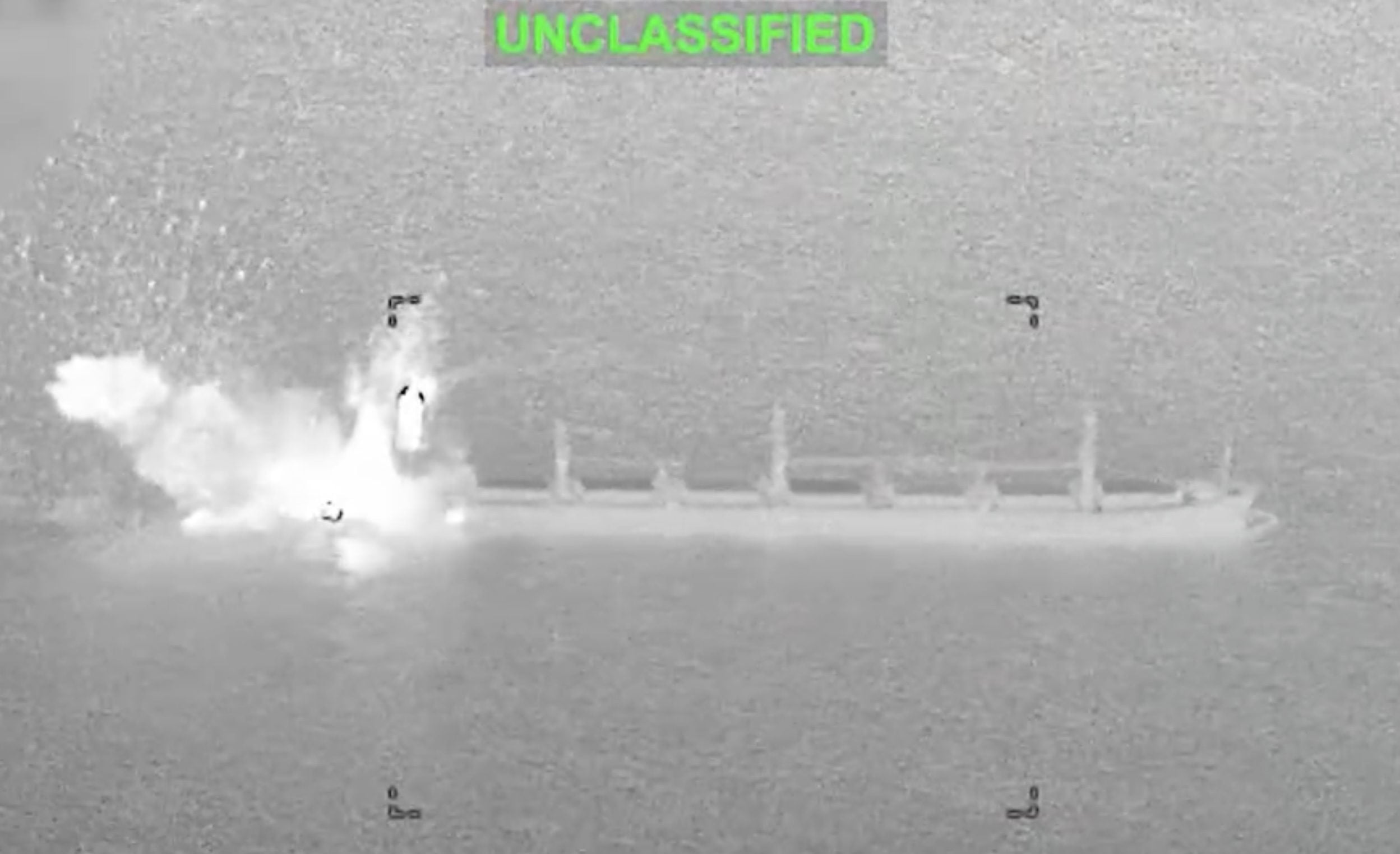
On May 8, CENTCOM confirmed that U.S. Navy F/A-18 Super Hornets launched from the aircraft carrier USS George H.W. Bush disabled the tankers M/T Sea Star III and M/T Sevda by firing precision munitions into the vessels’ smokestacks.
That operation followed a May 6 incident involving the tanker M/T Hasna, where an F/A-18 launched from USS Abraham Lincoln fired 20mm cannon rounds into the vessel’s rudder after it allegedly ignored repeated warnings from U.S. forces.
CENTCOM has repeatedly said the operations are intended to enforce the blockade and prevent vessels from entering Iranian ports.
The conflict continues to deepen disruption across global shipping markets and regional energy trade. Commercial traffic through the Strait of Hormuz remains severely reduced compared to pre-conflict levels as shipowners weigh missile threats, sea mines, drone attacks and soaring war-risk insurance premiums.
Industry groups including BIMCO and the International Chamber of Shipping have warned that commercial operators remain caught between rapidly evolving military operations, unclear transit guarantees and mounting security threats inside the Gulf.
BIMCO Chief Safety & Security Officer Jakob Larsen previously warned that abrupt operational changes — including the Trump administration’s suspension of “Project Freedom,” the short-lived U.S. escort initiative for stranded vessels — have made voyage risk assessments increasingly difficult for commercial shipowners.
Humanitarian concerns are also mounting for thousands of seafarers still trapped aboard vessels inside the Gulf region as operators continue delaying or avoiding Hormuz transits altogether.
May 20, 2026: Iran Draws New Maritime ‘Oversight Zone’ Across Strait of Hormuz
Iran’s self-declared Persian Gulf Strait Authority (PGSA) has published what appears to be the clearest geographic definition yet of the maritime zone it claims authority over in the Strait of Hormuz, escalating Tehran’s effort to formalize a permission-based transit regime through one of the world’s most critical shipping chokepoints.
In a new post on X, the PGSA said the Islamic Republic of Iran has defined the boundaries of its “Strait of Hormuz management supervision area” as extending from “the line connecting Kuh Mobarak in Iran and the south of Fujairah in the UAE in the east of the strait to the line connecting the end of Qeshm Island in Iran and Umm al-Qaiwain in the UAE in the west of the strait.”
The statement effectively describes a corridor spanning much of the Strait itself and adjacent approaches between Iran and the United Arab Emirates.
An accompanying map published by the PGSA appeared to depict broad areas of the Persian Gulf and Gulf of Oman under what it described as Iranian “armed forces oversight,” extending well beyond the narrow traffic separation scheme traditionally used by international shipping.
The group added that vessels operating on frequencies within the area “require coordination with the Persian Gulf Waterway Management and a permit from this entity” in order to pass through the Strait.
The latest declaration marks another step in Iran’s increasingly public effort to impose direct administrative control over commercial navigation through Hormuz amid the ongoing U.S.-Israel-Iran conflict and the collapse of normal shipping traffic in the region.
New industry guidance issued this month by major shipping organizations including BIMCO, INTERTANKO, OCIMF, and the International Chamber of Shipping warned that operating conditions in and around Hormuz remain highly unstable and potentially dangerous even if traffic resumes.
The guidance warned of simultaneous threats including GNSS jamming and spoofing, AIS manipulation, unmanned surface vessel attacks, limpet mines, missile and drone strikes, errant sea mines near the traffic separation scheme, and “extreme congestion traffic conditions” that could rapidly develop if vessels attempt to transit after prolonged delays.
Inside Iran’s Expanding Hormuz Transit System: Checkpoints, Diplomatic Deals and Passage Fees
The PGSA first emerged publicly earlier this month when it launched an official account on X claiming to serve as the “legal entity and representative authority of the Islamic Republic of Iran for managing the passage and transit through the Strait of Hormuz.”
At the time, the organization warned that any vessel transiting waters designated by Iranian authorities and the Iranian Armed Forces without “full coordination” would be considered to be operating illegally.
Previous reporting suggests that shipowners had been instructed to contact the PGSA directly to seek authorization for transits and requested to supply detailed operational information including cargo values, crew nationalities, vessel origins and destinations, and previous flag registrations.
Iranian officials on Wednesday also signaled they are attempting to build a broader regional framework around the emerging transit regime. Reuters reported that Iranian Foreign Ministry spokesperson Esmaeil Baghaei said Tehran is seeking to establish a mechanism with Oman to ensure “sustainable security” in the Strait of Hormuz and is prepared to develop protocols for safe shipping traffic in cooperation with other coastal states.
Separately, Iran’s Islamic Revolutionary Guard Corps navy claimed that 26 commercial vessels — including oil tankers, container ships and other merchant ships — transited the Strait over the previous 24 hours “in coordination with Iran,” according to Iranian state media. The IRGC said passage through the waterway was continuing with permits obtained and coordination carried out directly with Iranian authorities.
The move has raised alarm across the maritime industry, where operators remain deeply skeptical that any Iranian-administered transit regime can provide reliable or legally defensible passage guarantees.
Industry groups and maritime security advisors have repeatedly warned that risks in the Strait remain severe, particularly given ongoing concerns over sea mines near the traffic separation scheme, sporadic vessel attacks, GPS interference, and the growing legal exposure tied to direct coordination with Iranian authorities or entities linked to the Islamic Revolutionary Guard Corps.
The new industry guidance further cautioned that even if a transit window reopens, collision and grounding risks could materially increase due to compressed traffic flows, AIS saturation, erratic maneuvering, reduced military oversight, and elevated crew fatigue and stress levels during any large-scale resumption of shipping activity through the Strait.
Despite intermittent political signaling suggesting possible de-escalation, commercial traffic through Hormuz remains far below normal levels, with many shipowners still unwilling to attempt transits absent credible multinational security guarantees and verified mine-clearance operations.

 Join The Club