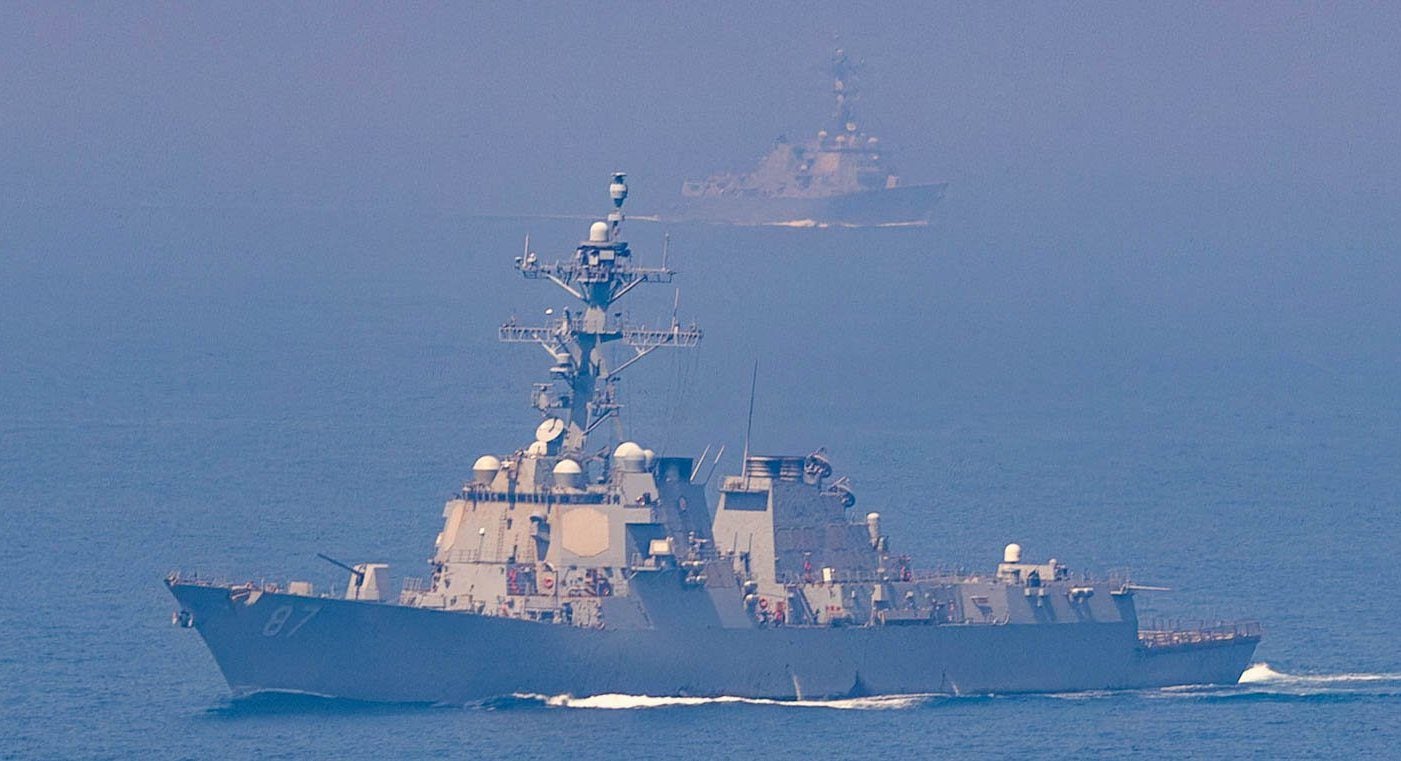
Three U.S. Navy destroyers came under missile, drone and small-boat attack while transiting the Strait of Hormuz on Thursday, according to U.S. Central Command.
In a statement released Thursday morning, CENTCOM said Iranian forces launched “multiple missiles, drones and small boats” at USS Truxtun (DDG-103), USS Rafael Peralta (DDG-115), and USS Mason (DDG-87) as the warships transited the strategic waterway into the Gulf of Oman. The U.S. military said no American vessels were hit.
“U.S. forces intercepted unprovoked Iranian attacks and responded with self-defense strikes,” CENTCOM said, adding that American forces targeted Iranian missile and drone launch sites, command-and-control facilities, and intelligence and surveillance nodes involved in the attack.
President Donald Trump later described the confrontation in dramatically more aggressive terms, claiming Iranian attacking forces were “completely destroyed.”
“Missiles were shot at our Destroyers, and were easily knocked down,” Trump wrote on social media. “Likewise, drones came, and were incinerated while in the air.”
Trump also claimed numerous Iranian small boats “went to the bottom of the Sea, quickly and efficiently,” while warning Tehran that the United States would respond “a lot harder, and a lot more violently” if Iran does not quickly agree to a broader deal tied to its nuclear program.
“Our three Destroyers, with their wonderful Crews, will now rejoin our Naval Blockade, which is truly a ‘Wall of Steel,’” Trump wrote.
The incident represents a sharp escalation in the Hormuz crisis and one of the clearest publicly acknowledged naval clashes yet between U.S. and Iranian forces.
Project Freedom Paused
The clash comes only days after the Trump administration launched “Project Freedom,” a U.S.-backed effort to help guide stranded commercial vessels out of the Persian Gulf through an enhanced security corridor in Omani waters. After evacuating two U.S.-flagged ships via Hormuz, President Trump abruptly paused the operation less than 48 hours after its launch, but the broader U.S. naval blockade targeting Iranian ports remains in place.
Iran had repeatedly warned this week that any U.S. military intervention in the Strait of Hormuz would be treated as a violation of the fragile ceasefire framework that has loosely held since April. Iranian officials and state media earlier claimed U.S. warships had been struck near the Strait, allegations repeatedly denied by CENTCOM.
Thursday’s exchange appears to be the first time the U.S. military has formally confirmed that American destroyers were directly targeted during a transit operation.
The confrontation also underscores the widening gap between military messaging and political rhetoric surrounding the crisis.
While Trump described Iranian forces as “lunatics” and framed the clash as part of pressure on Tehran to sign a deal “FAST,” CENTCOM emphasized in its statement that it “does not seek escalation” and remains focused on protecting American forces and maintaining freedom of navigation through the international waterway.
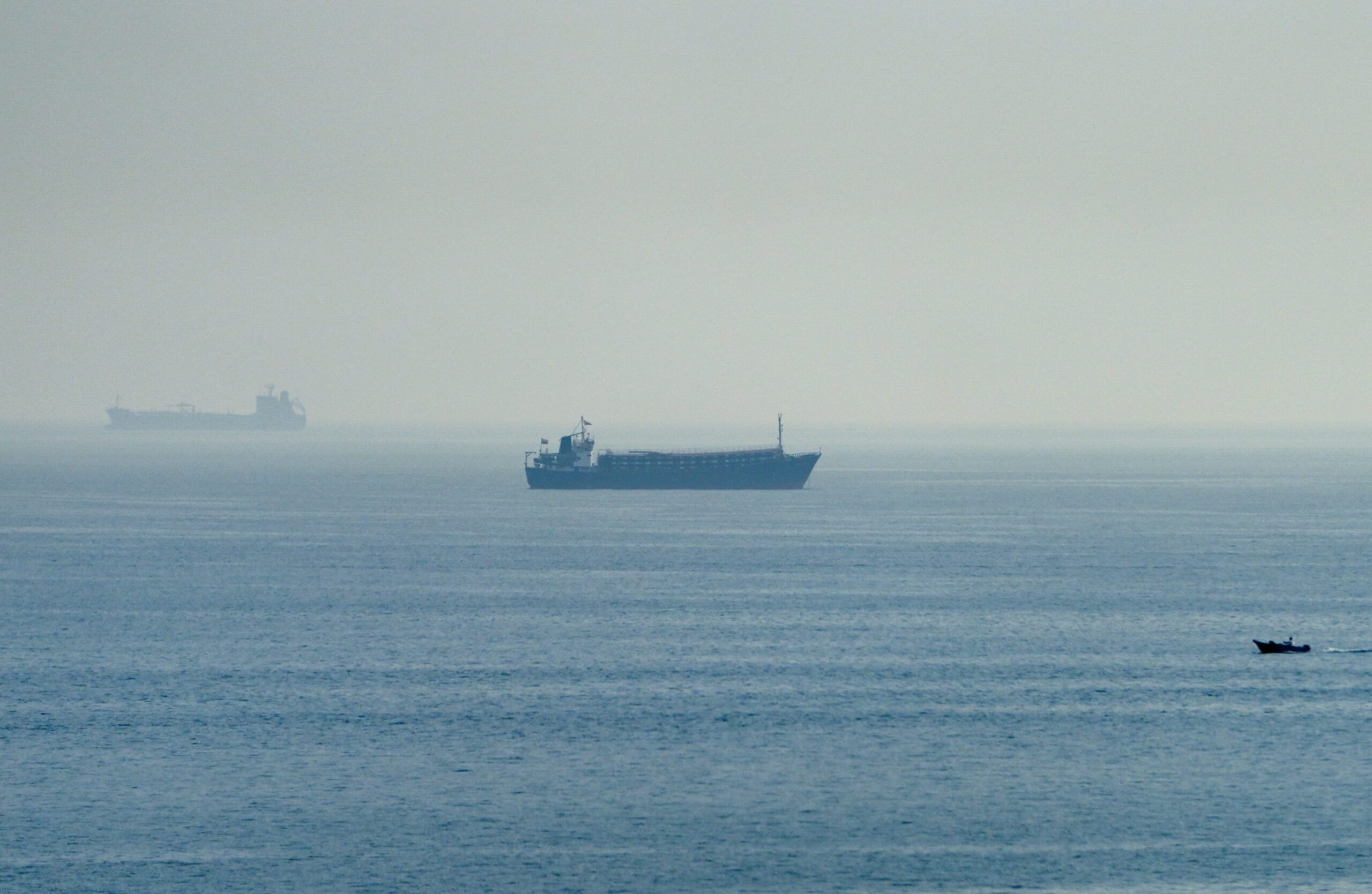
The Strait of Hormuz normally handles roughly one-fifth of global seaborne oil trade, but commercial traffic through the corridor remains largely paralyzed amid missile attacks, drone strikes, sea mine threats, and spiraling war-risk insurance costs.
CMA CGM Ship Attacked
The latest naval confrontation came as commercial shipping conditions in the region continued to deteriorate. French shipping giant CMA CGM confirmed Wednesday that its Malta-flagged containership San Antonio was struck while transiting the Strait of Hormuz, injuring multiple crew members and damaging the vessel. The International Maritime Organization said eight seafarers were wounded in the attack, marking the 32nd reported shipping incident since the conflict erupted.
Another CMA CGM vessel, the Saigon, successfully exited the Gulf this week after transiting along Oman’s coastline south of Muscat.
Shipping Warns Crisis Far from Over
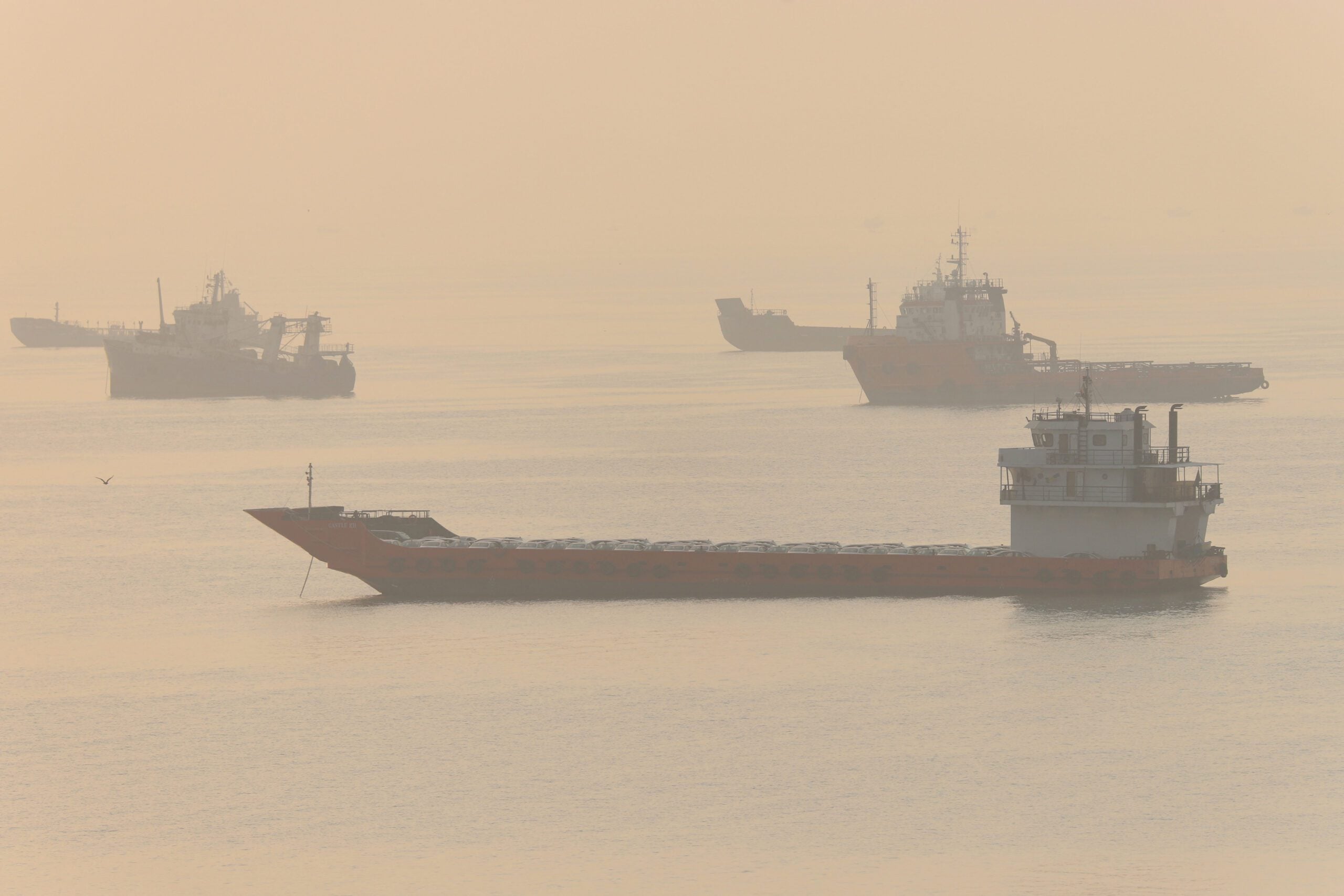
Industry group have repeatedly warned that commercial operators are unlikely to resume normal transits until security conditions stabilize and undersea threats are fully cleared.
BIMCO, the world’s largest shipping association, said Wednesday that the Trump administration’s abrupt decision to pause “Project Freedom” has complicated already difficult risk calculations for ships and crews attempting to leave the Persian Gulf.
In comments to gCaptain earlier this week, BIMCO Chief Safety & Security Officer Jakob Larsen said the short-lived U.S. escort initiative briefly enabled a small number of vessels to transit safely, but stressed that voyages through the Strait of Hormuz without coordination with Iran still carried “significant risk.”
Larsen added that sudden policy shifts and operational changes create additional challenges for commercial operators trying to assess security conditions and plan departures from the Gulf.
Iranian Tanker Disabled
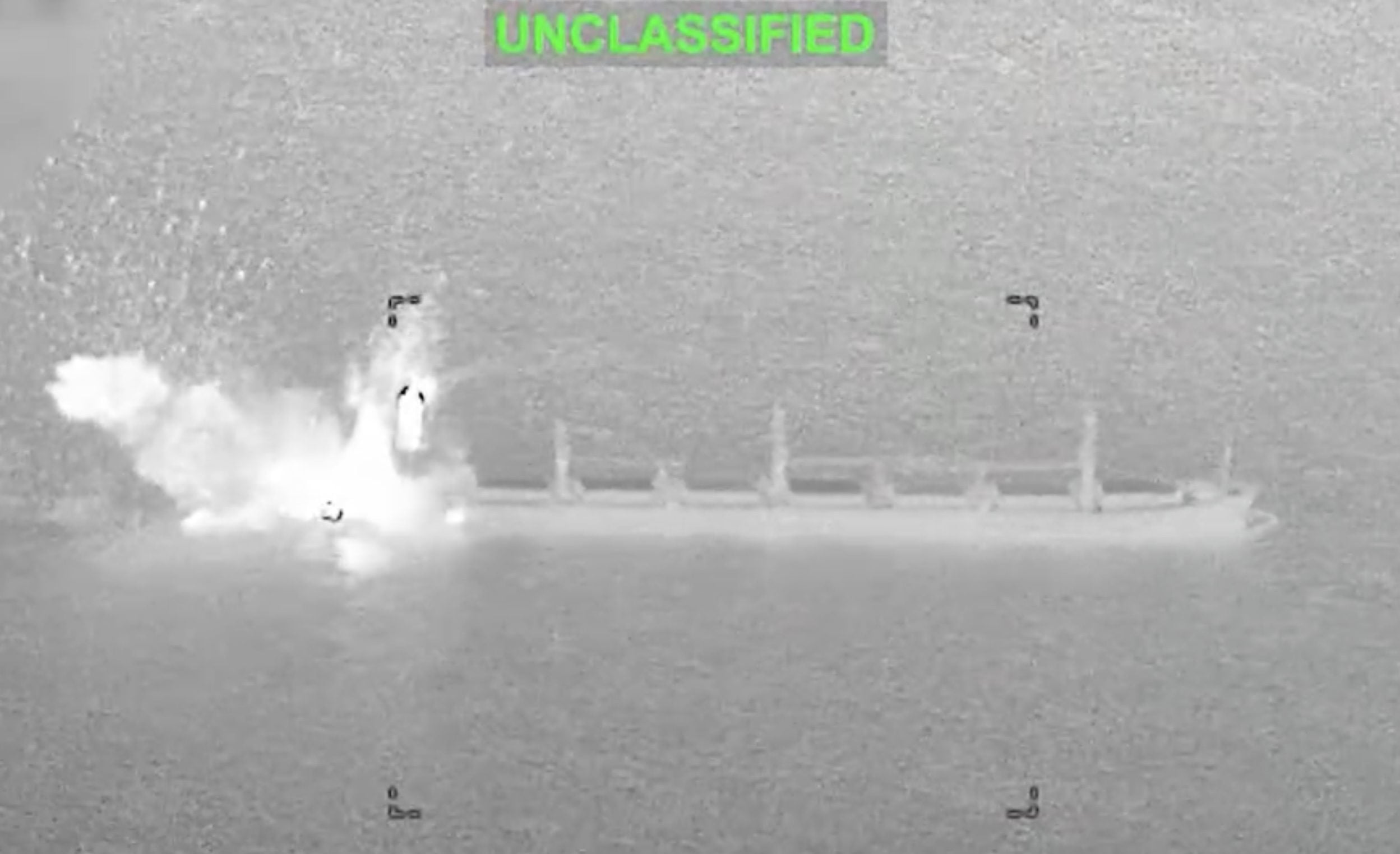
The naval clash also came less than 24 hours after U.S. forces disabled an Iranian-flagged tanker in the Gulf of Oman as part of Washington’s expanding blockade enforcement campaign.
According to CENTCOM, a U.S. Navy F/A-18 Super Hornet launched from USS Abraham Lincoln fired 20mm cannon rounds at the tanker M/T Hasna after the vessel allegedly ignored repeated warnings while attempting to transit toward an Iranian port in violation of the blockade.
The incident followed a similar April interdiction involving the Iranian-flagged M/V Touska and underscored that, despite the temporary suspension of “Project Freedom,” the broader U.S. naval blockade targeting Iranian maritime trade remains fully active.
Seafarers Trapped
The continuing violence is also taking a growing human toll on the thousands of seafarers still trapped inside the Gulf region.
In interviews published Thursday, Indian sailors stranded for weeks aboard vessels near Iranian ports described nightly missile and drone strikes, food shortages, and fears they would never make it home.
“Around 10 to 20 missiles struck every night. No one could sleep,” Indian seafarer Tithi Chiranjeevi told Reuters after escaping Iran via Iraq, Armenia and Dubai.
The Joint Maritime Information Centre estimates roughly 2,000 vessels remain trapped near the Strait of Hormuz, where normal traffic has collapsed since the conflict began. At least three Indian seafarers have reportedly been killed in the crisis so far, underscoring mounting warnings from industry groups and the IMO that civilian crews are increasingly caught on the front lines of the conflict.

 Join The Club