By Catherine Lucey
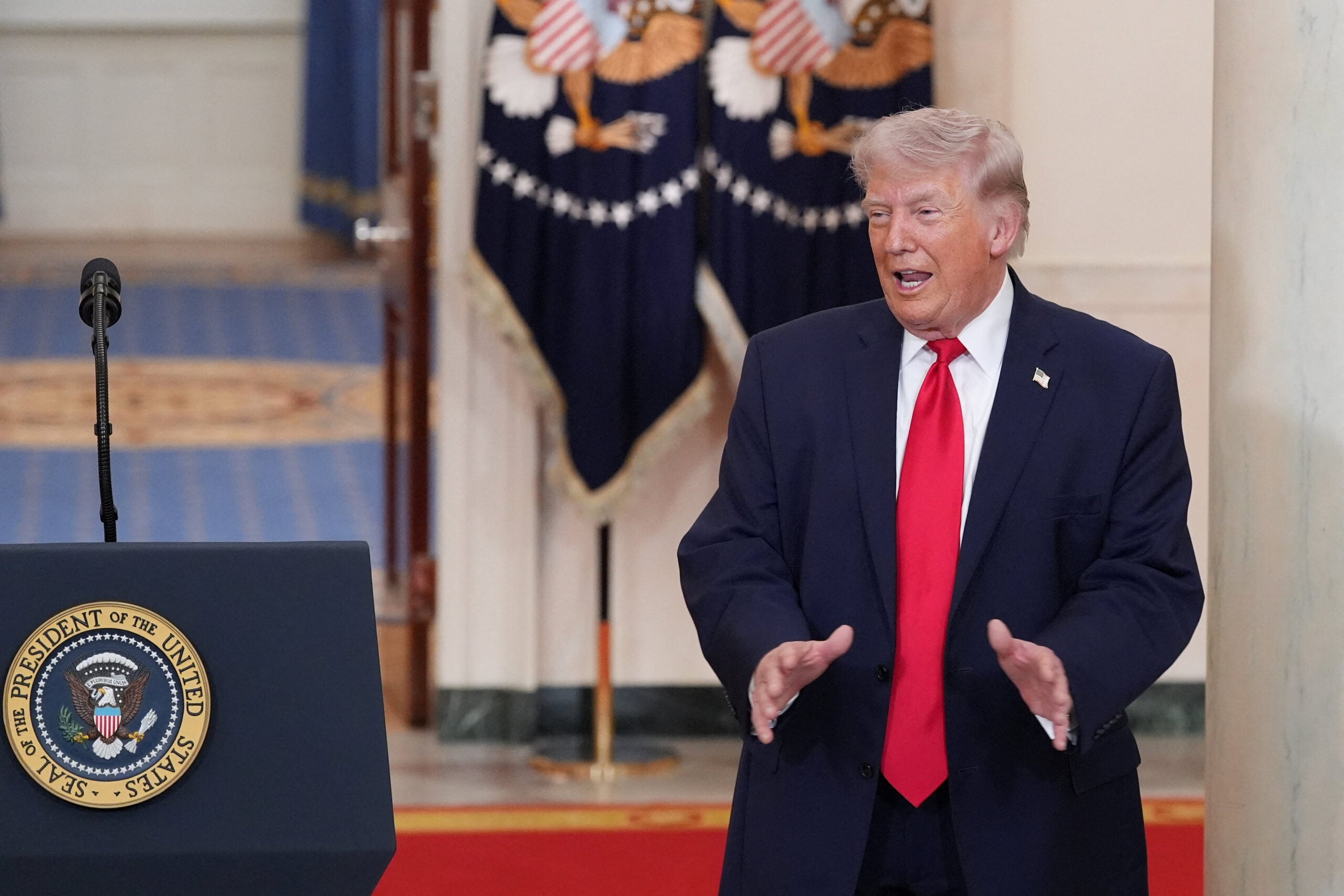
Apr 2, 2026 (Bloomberg) –President Donald Trump finally tried to sell the American public on his Iran war.
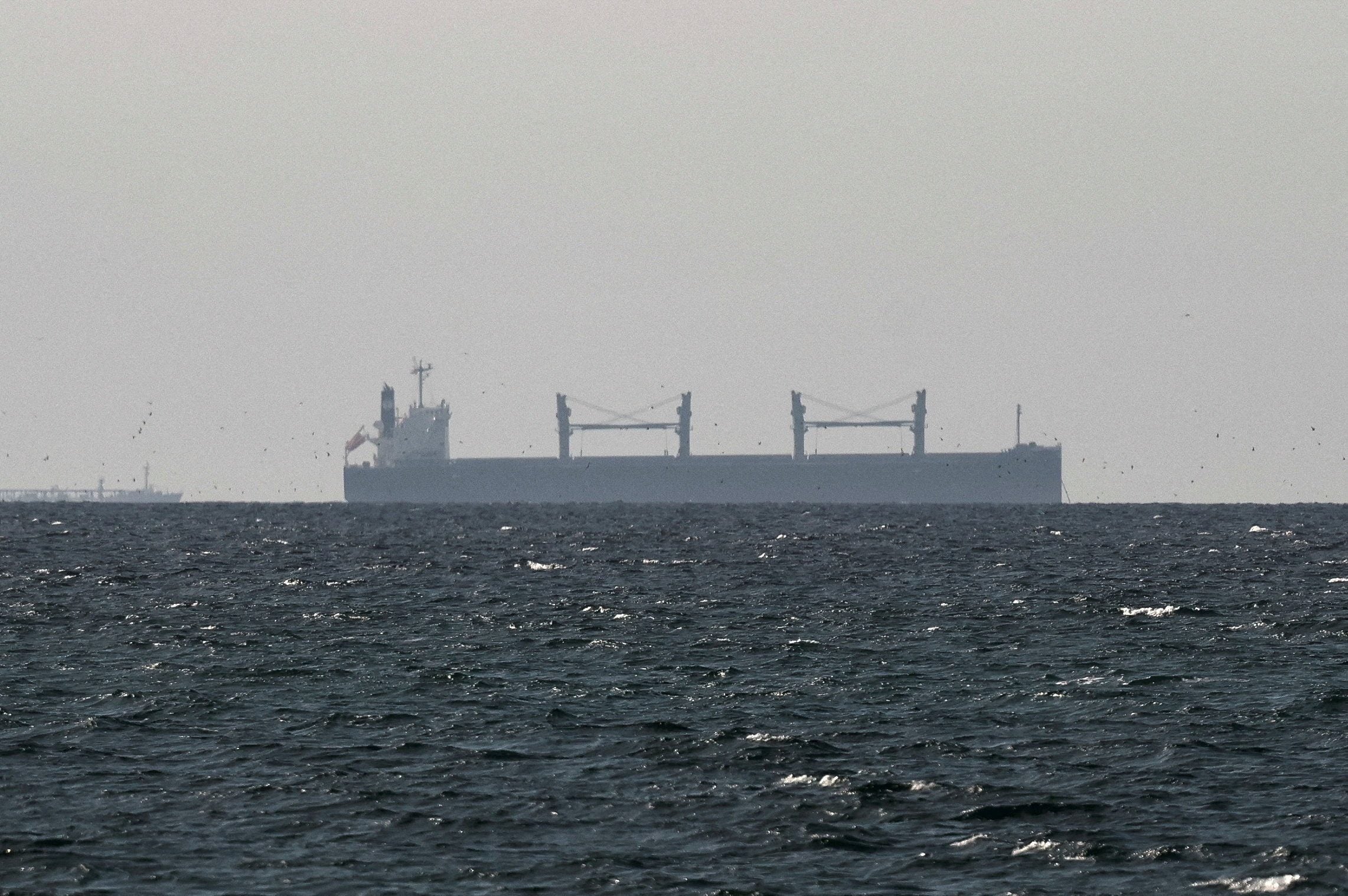
But his primetime address five weeks into the messy conflict instead underscored the US president’s growing defensive posture, as pressure mounts on global shipping routes, gas prices and his political party.
Trump said the US operation was close to completion, in an attempt to reassure a skeptical public. Still, the speech lacked new announcements — most notably a precise timeline for an exit. He also pledged more aggressive actions in the next two to three weeks, including potential strikes on electrical plants.
The president also did not present any new arguments or explanations for the war, instead reiterating his desire to destroy Iran’s military and nuclear capabilities. Likewise, there was no concrete plan for reopening the Strait of Hormuz, a vital energy thoroughfare. While he said diplomatic discussions continue, he shared no breakthroughs on ending the conflict.
Acknowledging the domestic political concerns gripping his party, Trump briefly addressed gasoline prices, a key psychological gauge of the US economy, which climbed above $4 a gallon in recent days. When the war ends, he declared, “the gas prices will rapidly come back down. Stock prices will rapidly go back up.”
Investors had the opposite reaction to the rhetorical scraps the president had to offer. Treasury yields climbed and the dollar pushed higher as Trump’s remarks triggered gains in crude oil. US equity futures retreated.
“The administration hoped this speech would calm markets and bring energy prices down but energy prices actually went up during the speech,” Marc Short, who served in Trump’s first administration, posted on social media. “If the U.S. isn’t going to secure the Strait of Hormuz, who is?”
Trump added of the nearly five-week-long conflict that has claimed thousands of lives: “We had to take that little journey to Iran to get rid of this horrible threat.”
Uncertain Timeline
Whether Trump’s two- to-three week horizon holds remains to be seen. Trump has made and broken such promises before, but he has grown increasingly frustrated with the war and the geopolitical fallout in recent days, which has his team eyeing a quick exit.
“The hard part is done, so it should be easy,” Trump said.
Still, even if Trump makes good on his apparent vision of winding down the conflict in the next few weeks, the military episode has already left a lasting stain on Trump’s economy and threatens his political standing.
As a candidate, Trump promised to bring down the cost of living and to avoid long-term military entanglements. His war with Iran has run counter to both of those promises, frustrating Americans concerned about so-called forever wars and the price at the pump. For Republicans running in November’s midterm elections, Trump’s actions have made an already challenging campaign year even harder.
A CNN poll released this week put Trump’s approval rating at 35% and support for his handling of the economy at 31%. That survey suggests that gas prices have frustrated Americans, with 63% saying higher costs have caused some financial strain in their household.
Since the US and Israel launched the war in late February, the economic fallout has been swift. The war has thrust one of the world’s most important oil- and gas-producing regions into tumult. US crude prices settled above $100 a barrel on Monday for the first time since 2022 in the aftermath of Russia’s invasion of Ukraine. That year was also the last time US gasoline prices topped $4 a gallon.
Market Pressure
Those pressures have also impacted financial markets. The $31 trillion US Treasuries market notched its worst monthly performance since late 2024 in March, with bond investors concerned that the war-driven surge in oil prices would ignite inflation and force the US Federal Reserve to take a more aggressive stance.
Still, ten-year yields are relatively little changed compared with where they were on Election Day 2024. The dollar has also soared since the conflict began, posting its strongest month in March since mid-2025.
And as much as the US and Israeli military strikes have degraded Iran’s military capabilities, the leadership in Tehran has publicly appeared unbowed. Iranian President Masoud Pezeshkian took the unusual step of releasing a letter addressed to Americans, warning that “continuing along the path of confrontation is more costly and futile than ever before.”
Trump has vacillated between appeals to and threats against Iran to make a deal, and has lashed out at allies for refusing to help reopen the strait. The president portrayed the US as being on the path toward victory and asserted that the strait was for other countries to resolve. Despite the vitriol he’s directed at NATO members and others on social media in recent days, his exhortations toward them during Wednesday’s speech were relatively mild.
“They must grab it and cherish it. They can do it easily. We will be helpful, but they should take the lead,” he said.
As he sought to project strength, Trump asserted that Iran’s nuclear capabilities will be eliminated, even though it remains unclear that Iran’s near-bomb-grade uranium stockpile has been moved or destroyed. Trump also again claimed that there had been regime change in Iran but Iran’s Supreme Leader Ayatollah Ali Khamenei, who was killed in the early hours of the war, has been replaced by his son.
He made no mention of his push early in the conflict for Iranians to rise up against the regime. Trump has largely stopped using that line, as an organized domestic effort to topple the government has failed to materialize.
“He merely extended and repeated what he’s been saying for days,” said David Axelrod, a Democratic strategist and longtime adviser to former President Barack Obama. “Same assertions, leaving the same questions.”
While the war may have achieved some US military and strategic goals, it has broadly appeared to be a diplomatic disaster for Trump: it has strained ties with key European allies, exposed wealthy Gulf monarchies to deadly Iranian drone and missile attacks, and raised food, fertilizer and fuel prices in Europe and poorer countries across Asia.
The US has also used up vast stores of costly and hard-to-replace missiles and air defense interceptors that could have been sent to Ukraine and Taiwan or used by the US against stronger adversaries, such as Russia and China.
© 2026 Bloomberg L.P.
Editorial Standards · Corrections · About gCaptain
This article contains reporting from Bloomberg, published under license.



 Members